Follow Us on Google

By Chinwendu Obienyi
Following the Central Bank of Nigeria (CBN)’s plan to increase the capital base of banks to service the proposed $1 trillion GDP economy in the next seven years, analysts say the move may necessitate an even higher range for capital base requirements for deposit money banks.
Their views were contained in a banking sector outlook report by CardinalStone Securities released recently.
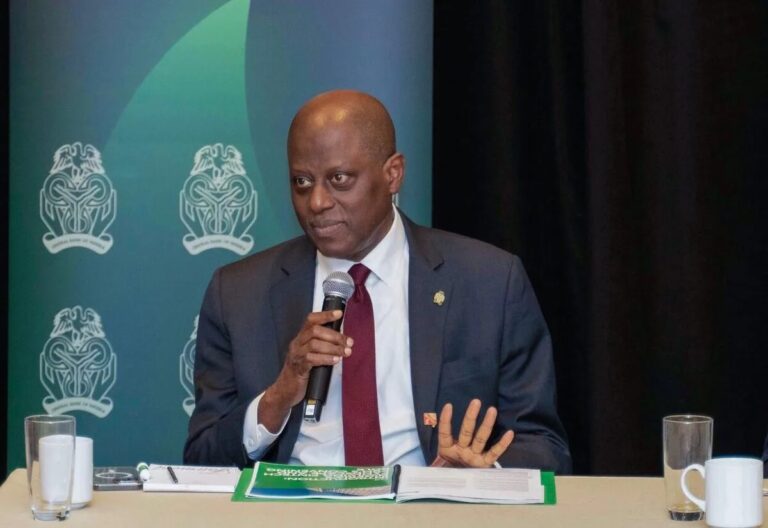
The CBN Governor, Olayemi Cardoso, earlier said that while there has been stability in the banking sector, banks in the country were not adequately capitalised to meet the need of a $1 trillion economy which the incumbent adminitration aims to achieve.
“Will Nigerian banks have sufficient capital relative to the finance system’s needs in servicing a one trillion dollar economy in the near future? In my opinion, the answer is no, unless we take action,” he said.
“Therefore, we must make tough decisions regarding capital adequacy. As a first step, the Central Bank will be directing banks to increase their capital.” Olayemi had said.
In its outlook for the banking sector titled; Nigerian banks: On the cusp of new dawn, analysts at Cardinal Stone Securities noted that while details on the planned recapitalisation are yet to be released, the current capital requirements for Nigerian banks (N50 billion for international banks, N25 billion for national banks, N10 billion for regional banks, and N5 billion for regional non-interest banks) have materially plunged from a range of 0.04 per cent to 0.22 per cent of dollar GDP (using prevailing dollar/naira rate of N132/$1) as at the 2005 recapitalisation to a band of 0.00 per cent and 0.01 per cent of dollar GDP in 2023.
The report said that the notable decline is a function of persistent naira devaluation and expansion in the level of economic activities and validates the CBN’s position that banks will have to scale up their capital base in order to meet the needs of a much larger economy, particularly considering that credit creation and deployment are expected to be major fulcrums for the government’s medium-term economic objective.
“Therefore, assuming the CBN opts to revert to the dollar ratios of capital bases to GDP targeted in 2005 (ranging from 0.04 per cent to 0.22 per cent), banks may be expected to boost capital base to between N181.85 billion (for regional banks) and N909.27 billion (for international banks), given 2024 real GDP of $472.6 billion and exchange rate of N841.61/$ as at December 20, 2023.
In this case, the majority of banks are likely to scale this hurdle, with some tier-1 banks even boasting capital bases in excess of 2.1x of the threshold implied by this scenario analysis and with Zenith Bank at the peak. However, the ambitious target of reaching an economic size of $1 trillion in 7 years may require even higher range for capital base requirements”, it said.
Furthermore, the report noted that tier-1 international banks like Zenith Bank and UBA are likely to surpass given the implied thresholds.
We will continue to monitor developments in this space to see what the apex bank eventually settles for as well as the structure of the directives and timelines.
Elsewhere, highlighting the recovery from pandemic-related interference and the emphasis on the bank’s capital adequacy, we believe there is a strong possibility for CBN to proceed with the implementation of the previously halted Basel 3 framework”, the report noted.