Follow Us on Google

• 3 in 4 children lack basic reading, numeracy skills, 40% of under-5 children stunted
No fewer than 18.3 million Nigerian children are out of school, while approximately three in every four children aged seven to 14 lack foundational reading and numeracy skills, raising fresh concerns over the country’s education crisis and its implications for national development.
The Nigerian Guild of Editors (NGE), United Nations Children’s Fund (UNICEF) and Diamond Awards for Media Excellence (DAME) have, therefore, called for urgent and coordinated action by governments, parents, communities, the private sector and the media to address the barriers denying millions of Nigerian children access to education, healthcare and opportunities for development.

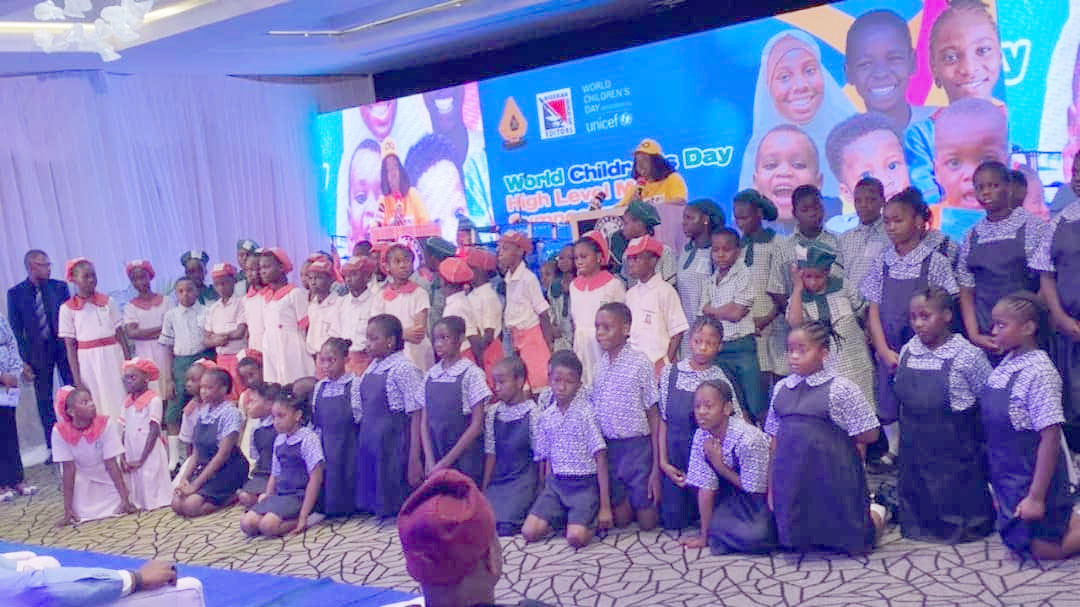
Speaking yesterday at a high-level media symposium organised by UNICEF in collaboration with the NGE and DAME in Lagos to commemorate World Children’s Day 2026, President of the NGE, Eze Anaba, described the alarming number of out-of-school children as a collective failure, challenging stakeholders to examine their contributions to addressing the crisis.
Anaba said tackling the problem required more than government intervention, stressing that parents, communities, corporate organisations and the media had equally important responsibilities in improving children’s access to education and opportunities.
He said the theme of the symposium, “Every Child Matters: Alive, Learning and Thriving, A Shared Responsibility,” underscored the collective obligation to ensure that every child had access to education, protection and opportunities to realise their potential.
He also questioned the rationale behind locating some public schools close to motor parks and bus stops, thereby exposing children to negative influences at a critical stage of their development.
UNICEF Representative in Nigeria, Wafaa Saeed, warned that the country’s ambition to become a prosperous and globally competitive nation would remain difficult to achieve without deliberate and sustained investment in its children.
She disclosed that Nigeria scored 0.36 on the World Bank Human Capital Index, meaning that a child born in the country could achieve only 36 per cent of his or her potential future productivity under prevailing health and education conditions.
Saeed said although under-five mortality had declined from 128 deaths per 1,000 live births in 2013 to 110 in 2023, neonatal mortality remained high, while 40 per cent of children under five were stunted and nearly one in three children aged 12 to 23 months had not received routine vaccination.
She also expressed concern over poor learning outcomes, citing data from the National Bureau of Statistics (NBS), which indicated that approximately three in every four children aged seven to 14 lacked foundational reading and numeracy skills.
According to her, getting children into classrooms was not enough unless they were able to read, write, comprehend and acquire the skills required to prepare them for the future.
She urged media organisations to sustain coverage of children’s issues beyond commemorative events, humanise statistics, highlight solutions and hold public institutions accountable for their commitments to children’s welfare and development.
Delivering the keynote address, wife of the Lagos State governor, Ibijoke Sanwo-Olu, described the exclusion of millions of children from the education system as a failure demanding urgent attention from all stakeholders.
Other News
She identified poverty, inadequate family support, insecurity and social pressures as some of the factors denying children access to education, urging governments, parents, community leaders, development partners and the media to work together to dismantle the barriers.
Sanwo-Olu also highlighted the Lagos Boy Child Initiative, established by her office in 2021, stressing that boys, like girls, deserved quality education, mentorship, emotional support and positive role models.
She maintained that children were not merely beneficiaries of government policies but individuals with rights, aspirations, talents and opinions whose voices must be reflected in decisions affecting their lives.
Permanent Secretary, Lagos State Primary Health Care Board, Ibrahim Mustapha, disclosed that the state had between 120,000 and 130,000 zero-dose children.
He said while about 40 per cent of Nigerian children under five were stunted, the figure in Lagos stood at 17 per cent, adding that the burden of unvaccinated children remained concentrated in informal settlements and hard-to-reach communities.
Mustapha identified the first 1,000 days of life, from conception to a child’s second birthday, as critical to brain development, health and future learning, warning that opportunities lost during the period could not be recovered.
He disclosed that the Lagos State Government, in partnership with UNICEF, had reached more than 100,000 previously unvaccinated children in Ikorodu and Alimosho, two local government areas with high concentrations of zero-dose children.
He called for increased domestic financing of primary healthcare, improved deployment of frontline health workers and equitable distribution of resources to communities with the greatest needs.
Director-General, Corporate Communications and Corporate Social Responsibility, Airtel Nigeria, Femi Adeniran, urged the private sector to extend investments in human capital development beyond universities and graduate training to early childhood development.
He said the foundation of the future workforce was laid from conception, calling for stronger private-sector investment in early childhood learning, caregiver training and inclusive infrastructure for children with disabilities and those from disadvantaged backgrounds.
During a panel discussion on out-of-school children, moderated by Bisi Deji-Folutile, a Lagos State education official, Amudat Shijuade-Siabiu, disclosed that the state’s Project Zero initiative, introduced after the COVID-19 pandemic, had facilitated the return of about 29,000 children to school through the provision of educational starter kits and support for vulnerable families.
She said Lagos had also entered into a $25 million co-funding partnership with the Education Outcomes Fund to improve enrolment, learning outcomes, retention and school completion for 200,000 pupils.
She warned that enrolling children in schools without ensuring they acquired basic literacy and numeracy skills amounted to a disservice to their future.
Earlier, DAME trustee, Lanre Idowu, disclosed that the two-year partnership between UNICEF, NGE and DAME had facilitated the training of more than 300 journalists in child rights and ethical reporting, strengthened evidence-based journalism and expanded recognition for excellence in child-focused reporting.
He urged media organisations to move beyond episodic coverage of children’s issues and devote greater attention to sustained investigations, editorials and accountability reporting.
UNICEF Goodwill Ambassador, Cobhams Asuquo, also unveiled a song on the first 1,000 days of life, using music to promote awareness of maternal and child nutrition, breastfeeding and immunisation.