Follow Us on Google
From Juliana Taiwo-Obalonye, Abuja
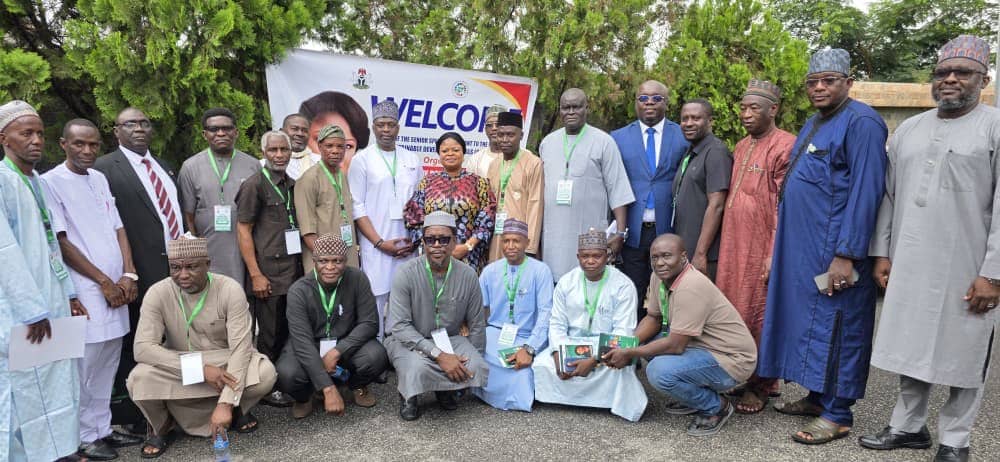
At a critical Roundtable Dialogue with State Sustainable Development Goals (SDGs) Focal Persons held in Abuja, Senior Special Assistant to the President on SDGs, Adejoke Orelope-Adefulire, delivered a candid assessment of Nigeria’s progress towards the 2030 Agenda. She revealed that 17 states have yet to domesticate the SDGs into their governance frameworks, underscoring this as a major obstacle to national success.
“There are 20 states that have domesticated and integrated SDG targets and indicators into their plans,” Orelope-Adefulire explained. “But we still have 17 states that are yet to bring forward their requests for domestication and integration. This is a national agenda, not a state or federal government agenda. It requires all tiers of government working in unison if we are to achieve the Sustainable Development Goals.”
The Senior Special Assistant emphasised the urgent need for these states to get on board. “This meeting is not just a dialogue, but a call to action for the remaining states. We encourage them to domesticate the SDGs so that budgets at all levels reflect the national development agenda. When you spend 10 Naira, we want to know what portion goes directly to No Poverty or Zero Hunger, or to education, healthcare, and job creation at the grassroots.”
Orelope-Adefulire stressed the importance of integration and accountability: “Development is bottom-up. Local governments have access to increased federal allocations, but the critical question is: Are these funds being used effectively? The President of the Council of Local Governments must ensure these allocations translate to tangible community benefits.”
Asked about how progress is tracked, she outlined a multi-tiered approach: “We monitor through three main sources: the National Bureau of Statistics; focal persons and planning officers in each state; and Ministries, Departments, and Agencies (MDAs) at the national level. This triangulation ensures data reliability as we advance towards 2030.”
Orelope-Adefulire wrapped up with a powerful call: “We have five years remaining to meet the 2030 targets. Our discussions must be honest, bold, and lead to results. The SDGs are not abstract—they represent real lives, real communities, and real change. Every state must play its part, and for those 17 states yet to domesticate, the time to act is now.”
The roundtable has thrown into sharp relief the critical need for unified action across Nigeria’s states. As the clock ticks towards 2030, the fate of the nation’s sustainable development depends heavily on subnational governments embracing and implementing the SDGs with urgency and accountability.
Other News
This report incorporates extensive quotes and insights from H.E. Princess Adejoke Orelope-Adefulire, Julius Okunbor (Edo State DG for SDGs), Kenechukwu Nwosu (Abia State SDG Advocate), and Oneri Ndungisa (Abia State Special Advisor), highlighting the ongoing challenges and promising innovations in Nigeria’s SDG efforts.
Director-General for Sustainable Development Goals in Edo State, Julius Okunbor, described the roundtable as “an eye-opener.” He emphasised the misconception that funds primarily come from external donors, stating, “Many believe there’s a lot of money in the SDG office coffers. The truth is, we must work with what we have available, minimise leakages, and manage budgets prudently. Borrowing excessively risks indebting us without real development gains.”
Okunbor also took pride in the progress Edo State has made: “Governor Monday Okpebholo revived the SDGs, which were dormant for about seven years. It’s now my duty to intensify advocacy and awareness at the local government level—to help communities understand the SDGs are not donor gimmicks but a framework for inclusive development.”
Special Adviser on Basic and Secondary Education in Abia, Kenechukwu Nwosu, on his part, assured that the state’s success is emerging as a national exemplar with strategic integration of the SDGs into all sectors. He praised the state’s broad initiatives: “From road reconstruction, urban mass transit, to healthcare, agriculture, and water sanitation, Abia is accelerating sustainable growth. The partnerships and investments we have made are delivering results.”
He elaborated on local government collaboration: “We have strong ‘handshakes’ with municipal governments and local chieftains. Everything—from teacher recruitment to school security—requires effective consultation with local government. Social mobilisation and grassroots engagement are critical to our success.”
Regarding funding, Nwosu added, “We conduct rigorous risk-based assessments to ensure funds add real value to projects. Abia State’s financial engineering means we meet counterpart funding without resorting to loans.”