Follow Us on Google
- Task legislators to strengthen oversight of VAPP Act
- As NASS concern over 28,000 reported SGBV cases since 2020
- Delta, Katsina, Imo, 11 others yet to domesticate Discrimination Against Persons with Disabilities (Prohibition) Act
From Juliana Taiwo-Obalonye, Abuja
The United Nations Development Programme (UNDP), the European Union (EU), and other stakeholders have urged the Federal Government of Nigeria to allocate sufficient funds to provide safe spaces for victims of sexual and gender-based violence (SGBV) as the country joins the rest of the world in commemorating the 16 Days of Activism Against Sexual and Gender-based Violence which started Friday.
They also National Assembly to enhance its supervision over the execution of the Violence Against Persons Prohibition (VAPP) Act of 2015.
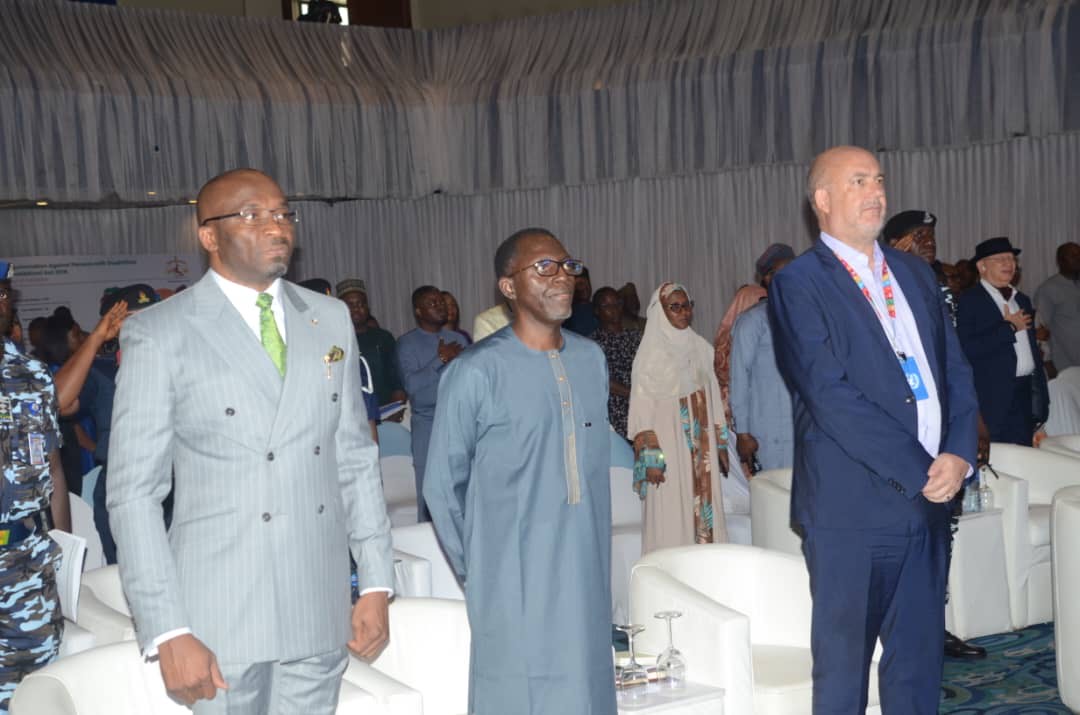
EU Ambassador to Nigeria and ECOWAS, Samuela Isopi stated this on Friday at a Parliamentary Zummit in commemoration of the 16 Days of Activism against SGBV 2023, in Abuja, organised by the EU-funded Rule of Law and Anti-Corruption (RoLAC Phase II) Programme of International IDEA, in collaboration with the United Nations Development Programme (UNDP) under the EU-UN Spotlight Initiative.
Isopi bemoaned the lack of funding allocated for the VAPP law’s implementation, pointing out that this has increased the workload for institutions that are required to comply with the law and further traumatised SGBV survivors.
She said, “I would like to make an urgent appeal to the National Assembly here to strengthen oversight on the implementation of the VAPP law so that survivors can access the services they need or ensure the effective prosecution of offenders.
“A challenge is the funding of line Ministries, Department and Agencies (MDAs) responsible for the provision of SGBV services. Dedicated budgetary allocation is needed to create more sexual assault referral centres and more shelters to provide safe havens for victims in immediate danger of harm or death.”
“We also need more medical facilities that are sensitive to the needs of vulnerable survivors. There is no budgetary provision for the implementation of the VAPP law,” she pleaded.
Also, Resident Representative, UNDP Nigeria, Simon Ridley, emphasised the legislature’s crucial role in ensuring that organisations that address gender-based violence receive adequate funding while also reiterating the international organization’s commitment to ending the threat.
“The legislature has an important role to play to ensure that institutions that attend to gender-based violence are properly funded,” he stressed.
On his part, the Deputy Speaker of the House of Representatives, Benjamin Kalu, lamented the growing numbers of incidents of violence against women and girls in Nigeria. He expressed grave concern for the state of affairs but insisted that a coordinated effort was required to stop the threat.
He expressed concern about the more than 28,000 cases of Sexual and Gender-Based Violence (SGBV) recorded in the last three years.
Data collated on SGBV from the National Situation Room/Dashboard housed by the Federal Ministry of Women Affairs revealed that from 19 August 2020 to 23 November 2023, a total number of 28,428 was reported, with less than 450 convictions across the country.
According to Kalu, approximately 30% of Nigerian women and girls experience physical, emotional, or sexual abuse in their lifetimes, and a distressing 55% of survivors do not receive the support they urgently need. From harmful traditional practices to economic violence, gender-based violence takes on many forms.
He noted that, “as Parliamentarians, we have the unique role to legislate, allocate funds, and hold the executive branch accountable for the implementation of laws and policies that prevent and address gender-based violence. We must utilize this power to its fullest extent, ensuring that sufficient resources are allocated to support survivors, raise awareness, and provide the necessary training and capacity building for law enforcement agencies and judicial systems.
“The renewed commitment of parliamentarians to the effective implementation of the VAPP Act is evident in the revitalized oversight and funding efforts that will emanate from this summit. The need for parliamentary work to be responsive and proactive in addressing gender-based violence is now more important than ever, so we therefore implore this summit to set a target for parliamentarians to work with and we are waiting for your feedback.”
“The 16 Days of Activism Against Gender-based Violence is a call to action, a call for change. Let us, as parliamentarians, rise to the occasion. Our commitment to funding, oversight, and legislative action will shape a future where women and girls live free from fear and violence,” the speaker added
In the same vein, Head of Programme, Nigeria RoLAC II, International IDEA, Danladi Plang, said the objective of the summit was to sensitise and bring to the knowledge of parliamentarians, the persistent issues that continue to limit access to justice and support services for survivors of Gender-based Violence (GBV) in Nigeria.
He added that the aim was to also update lawmakers on the progress achieved so far in the GBV response sector and recommend actions that must be taken to enhance and sustain progress, including the establishment of a parliamentary mechanism for VAPP implementation monitoring and sensitise parliamentarians to the critical role they play in ensuring appropriate allocation of funding and resources for implementation of the VAPP Act.
Also speaking, Professor of
Law at the University of Nigeria Nsukka & Former United Nations Special Rapporteur, Joy Ezilo, underscored the importance of having a significant budget to address the unmet justice needed for survivors.
She said, the cost-benefit analysis also demonstrates that investing in the justice sector makes economic sense to ensure access to justice for all, irrespective of gender or type of violation in a contest or dispute.
“A victim of domestic violence needs as much help as a suspect detained, including wrongful detention, to seek enforcement of his or her fundamental rights. In the case of domestic violence, the right to life is at stake and for a woman victim of sexual harassment- it amounts to not only discrimination but a violation of her bodily integrity and reproductive self-determination. Her right to education and a safe environment, dignity and bodily integrity in effect cumulatively violated.”
Project Manager, Access to Justice Rule of Law and Anti-Corruption (RoLAC Phase II) Programme, International IDEA, Oluwatoyosi Giwa and Onyinye Ndubuisi
Gender Human Rights Programme Lead
United Nations Development Programme (UNDP) under the EU-UN Spotlight Initiative in a joint statement, disclosed that, over the past six years, RoLAC Phase I, UNDP under the EU-UN Spotlight Initiative, and various partners have made significant strides in establishing and implementing mechanisms that offer enhanced protection for survivors of violence and strengthened institutional frameworks for ensuring appropriate punishment for perpetrators. Notably, 36 out of 36 states in Nigeria have adopted the Violence Against Persons Prohibition (VAPP) Act 2015, compared to 17 states six years ago.
“However, challenges persist with low prosecution rates of SGBV cases due to the gross underfunding of the SGBV response sector. The slow pace of criminal justice administration denies survivors the justice and social support they deserve, enabling perpetrators to commit crimes with impunity.”
Giwa further disclosed in her presentation that while 14 states are yet to domesticate the Discrimination Against Persons with Disabilities (Prohibition) Act, 13 have signed into law, 10 assented and two awaiting governors’ assent.
She listed the 14 states yet to pass the legislation to include: Delta, Bayelsa, Osun, Kebbi, Niger, Katsina, Borno, Adamawa, Taraba, Benue, Enugu, Ebonyi, Imo and Akwa Ibom.