Follow Us on Google


• Sets 15m non-oil exports, 40% health insurance coverage, credit access for half of economically active Nigerians as targets
______________________________________________________________________
From Juliana Taiwo-Obalonye, Abuja
The All Progressives Congress (APC) has outlined ambitious targets for 2031, including halving youth unemployment and the number of out-of-school children, expanding health insurance coverage to 40 per cent of Nigerians and extending access to credit to half of the economically active population.
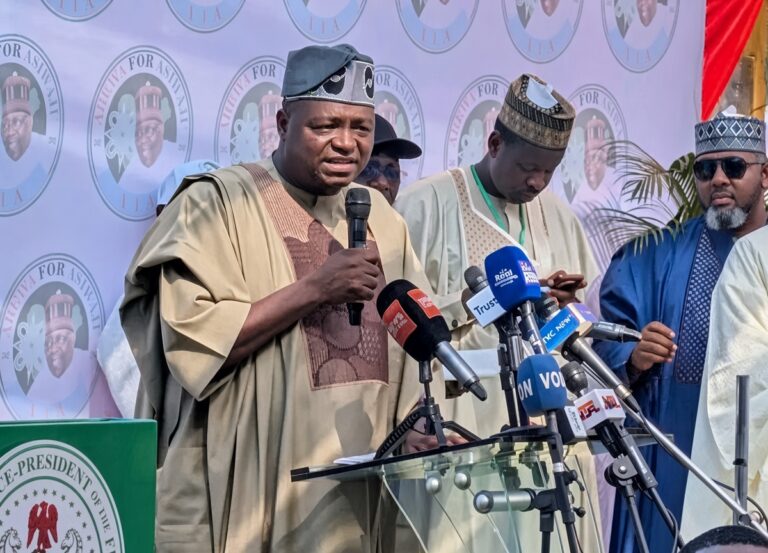
The Minister of Industry, Trade and Investment, Olajumoke Oduwole, disclosed this while presenting the key components of the party’s 2027 presidential election manifesto at a media pre-sensitisation briefing ahead of its official launch.
Oduwole, who is Deputy Director of the APC Manifesto and Policy Committee, said the manifesto was designed to translate the economic and structural reforms of President Bola Tinubu’s administration into measurable improvements in the living conditions of Nigerians.
She explained that the document, themed ‘Translating Reforms to Shared Prosperity’, provides a framework for moving from economic stabilisation and structural reforms to inclusive growth, job creation and improved living standards.
The minister said the manifesto was not merely a statement of political intentions but a framework against which the administration’s performance would be assessed, with specific targets and measurable commitments.
She identified eight priority areas underpinning the document: national security; economic growth and lower living costs; agriculture and food security; energy and infrastructure; industrialisation, trade and investment; education, health and social investment; diversification through digital, creative industries and sports; and effective and accountable governance.
Under the economic prosperity agenda, she said the administration was targeting annual economic growth of at least six per cent, at least $15 billion in non-oil exports and one million export-linked jobs for young Nigerians by 2031.
The plan also includes establishing at least one anchor industrial hub in each of the six geopolitical zones and increasing manufacturing’s contribution to the country’s gross domestic product to at least 12 per cent.
On education and social development, Oduwole said the manifesto commits to halving the number of out-of-school children by 2031, recruiting and training an additional 20,000 teachers and expanding access to affordable healthcare.
The health sector target includes increasing active health insurance coverage to 40 per cent of Nigerians, while the government also plans to ensure that at least 90 per cent of primary healthcare centres are functional.
Other News
She further disclosed that the manifesto targets access to equitable credit for half of all economically active Nigerians, while expanding opportunities for women, young people and vulnerable groups.
On infrastructure and energy, she said the administration intends to improve electricity generation, transmission and distribution, extend clean energy access to underserved communities and strengthen transportation networks to connect farms, factories and markets.
The minister also highlighted plans to improve food security through increased domestic production, storage and processing, while reducing post-harvest losses and making staple foods more affordable.
On security, she said the manifesto prioritises stronger protection against terrorism, banditry and kidnapping, alongside improved policing and alternative dispute resolution mechanisms to address farmer-herder conflicts and other community disputes.
Oduwole said the document was developed with input from stakeholders across the country and was intended to reflect the aspirations and expectations of Nigerians rather than simply reproduce government policies.
She stressed that its commitments were designed to be verifiable, with performance indicators that would enable Nigerians to assess progress.
According to her, the central objective of the manifesto is to ensure that economic reforms translate into tangible benefits, including better-paying jobs, higher household incomes, affordable housing, accessible healthcare, quality education and reliable electricity.
She said the administration recognised the patience and resilience of Nigerians through the reform process, adding that the next phase of the Renewed Hope Agenda would focus on ensuring that the gains of economic reforms were reflected in the daily lives of citizens.
The manifesto, a 109-page document covering the 2027–2031 period, is anchored on four broad pillars and eight national priorities.
Oduwole urged the media to help communicate the commitments to Nigerians and ensure that the document remained accessible for public scrutiny and accountability.