Follow Us on Google

From Scholastica Hir, Makurdi
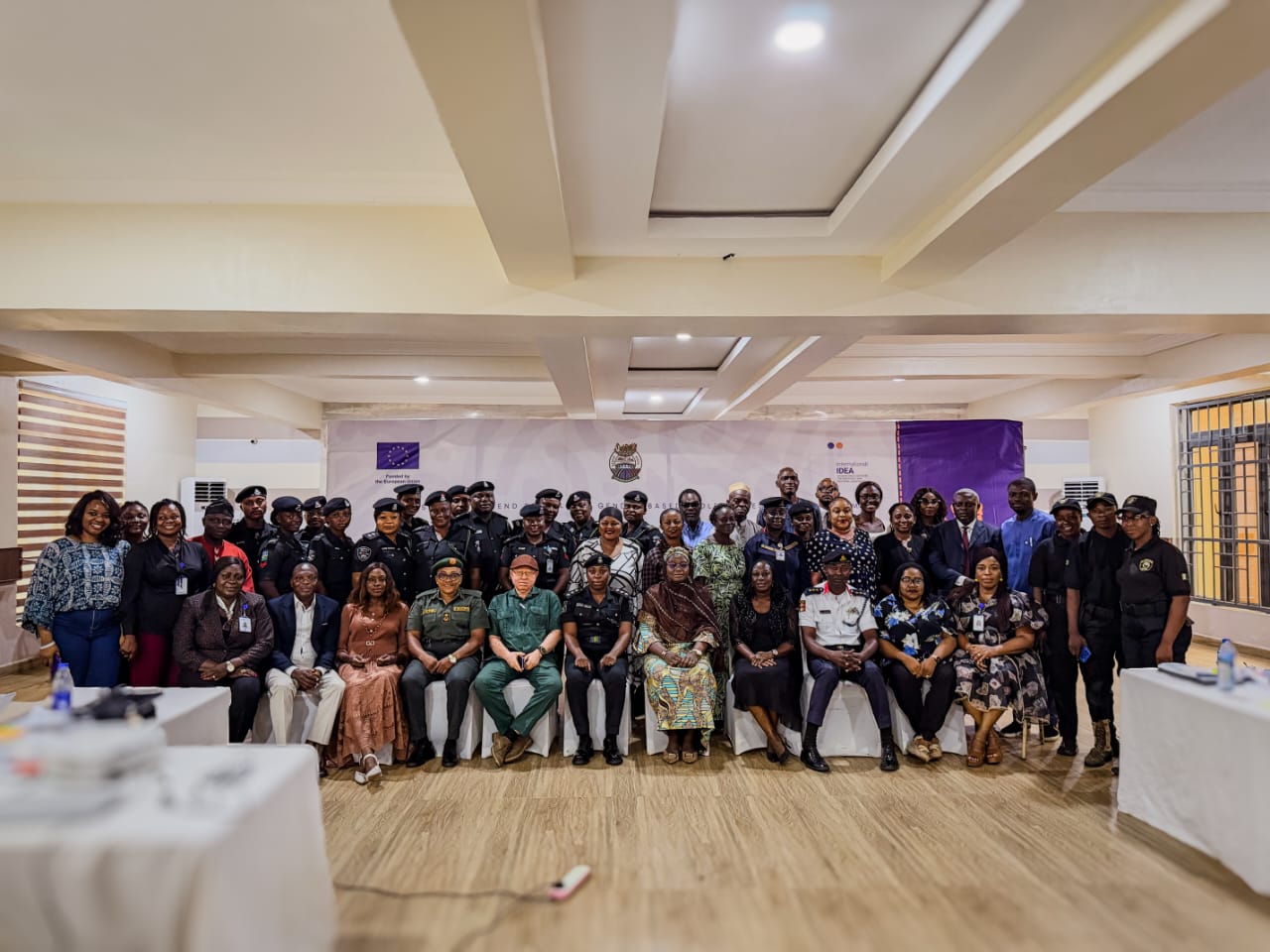
The International Institute for Democratic and Electoral Assistance (International IDEA), with support from the European Union (EU), has commenced a four-day Training of Trainers (ToT) programme for law enforcement and justice sector officials in Benue State to strengthen the response to sexual and gender-based violence (SGBV) in the state.
The training, themed “Strengthening Survivor-Centered SGBV Investigation, Prosecution and Justice Outcomes Through a Multi-Agency Training of Trainers for Law Enforcement and Justice Sector Institutions in Benue State”, is organised under the European Union-Support to End Sexual and Gender-Based Violence (ESGBV) Programme, implemented by International IDEA.
It is aimed at equipping participants with the knowledge and practical skills required to handle survivors, conduct proper investigations, preserve evidence and ensure effective prosecution of perpetrators.
In her opening remarks, the Senior Programme Manager, ESGBV, International IDEA, Dr Mufuliat Fijabi, welcomed participants to the training and thanked the Benue State Government, civil society organisations (CSOs) and all stakeholders, saying their commitment to promoting justice, accountability and survivor-centred protection remained critical to the collective effort to end SGBV in Benue State in particular and Nigeria at large.
She noted that SGBV is a major violation of human rights affecting individuals, families and communities, as it undermines social cohesion, weakens trust in institutions and poses barriers to social and national development.
She said addressing the menace required coordinated, operational and survivor-sensitive approaches, a development she said prompted the ESGBV Programme to prioritise strengthening institutional capacity and sustainable systems to improve SGBV investigations and response in the state.
She advised the participants, as trainers of trainers, to pay attention so as to increase their understanding of survivor-centred approaches and international best practices in SGBV response, and to transfer the knowledge to colleagues for stronger institutions and effective SGBV case investigation and response in Benue State.
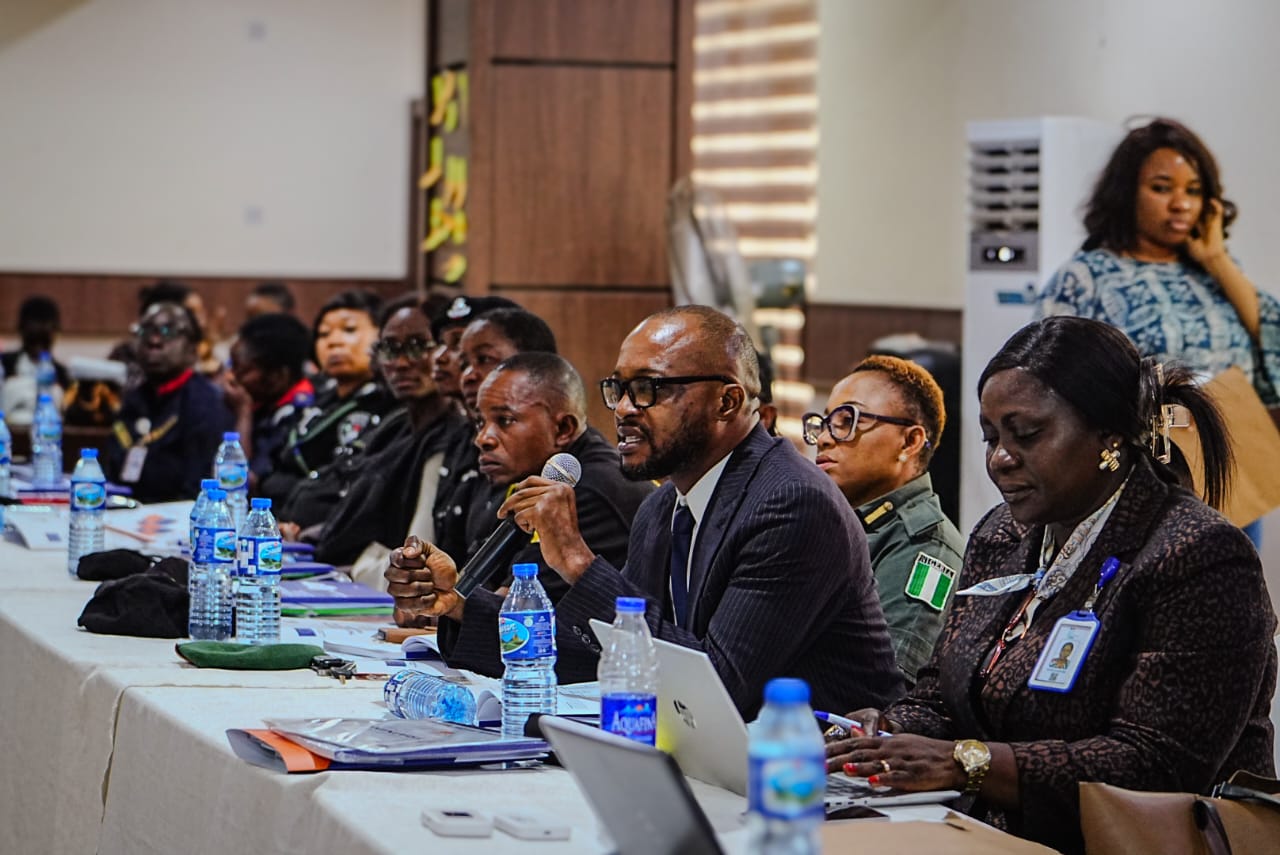
Speaking during the programme, the GBV Cross-Sector Service Provision and Protection Specialist with International IDEA, under the ESGBV Programme, Juliet Olumuyiwa-Rufai, said the training was designed to strengthen the capacity of service providers, particularly the police, civil defence and other law enforcement agencies, to respond effectively to cases of sexual and gender-based violence.
Olumuyiwa-Rufai explained that the ESGBV programme has three components, focusing on strengthening legislation to tackle SGBV, expanding service provision for survivors, and working with communities and civil society organisations to change social norms that promote gender-based violence.
She said the training falls under the second component of the ESGBV Programme, which focuses on improving services available to survivors, stressing that law enforcement personnel must be equipped to receive complaints and interact with survivors in ways that respect their dignity and humanity.
She said: “We recognise that providing services to survivors of sexual and gender-based violence is very important to help them recover from the trauma of abuse. Equally important is building the capacity of those responsible for providing these services, including health, justice, psychosocial support and referral services.”
According to her: “Members of the Nigeria Police Force, the Nigeria Security and Civil Defence Corps and other law enforcement agencies are important partners in responding to SGBV.
“We recognise their importance and want to work with them to build their capacities and strengthen their skills, to make sure that they have the right knowledge and skills to receive survivors and talk with them in ways that respect their dignity and acknowledge their humanity, in ways that survivors would come and feel safe enough to make disclosures to them so that justice can be served.”
According to her, the four-day training will also prepare participants to step down the knowledge acquired to their colleagues across the different local government areas and divisions in the state to ensure wider coverage and improved service delivery.
Also speaking, the Director of Public Prosecutions in the Benue State Ministry of Justice, Dooshima Ortserga, who represented the Attorney-General, Prof. Timothy Ornguga, said the training would strengthen the state’s response to SGBV through improved case management, investigation, evidence preservation and prosecution.
She explained that successful prosecution of SGBV cases does not begin in court but starts from the receipt of complaints by the police, through investigation, medical referrals and the proper collection and preservation of evidence.
Other News
Ortserga lauded International IDEA for bringing all relevant stakeholders together, saying it would promote a coordinated approach, harmonise procedures and improve the chances of successful prosecution of perpetrators.
The Commissioner of Police in the state, CP Cletus Nwadiogbu, represented by the Head of the Gender Unit, CSP Helen Jande, described the training as timely, saying it would improve officers’ capacity to handle survivors and prepare investigating police officers to give effective testimony during court proceedings.
The police representative also observed that reported cases of SGBV remained high in the state, attributing the increasing number of reports partly to growing public awareness, which has encouraged survivors to speak out, including those reporting incidents that occurred several years earlier.
She disclosed that the police had strengthened their referral arrangements with the Ministries of Women Affairs and Justice to ensure that reported cases receive appropriate attention rather than being handled in isolation.
Similarly, the GBV Officer at the State Ministry of Women Affairs and Social Welfare, Selumun Jagudu, identified underreporting, stigma and fear of retaliation as major challenges confronting the fight against SGBV.
Jagudu said the ministry provides psychosocial support to survivors and refers them to relevant institutions, including the police, the Ministry of Justice and medical facilities, depending on their needs.
She called for increased public sensitisation to encourage survivors to report abuses, assuring that support services provided through the established referral system are free of charge.
In her contribution, the Executive Director of House of Hilkiah Foundation, Dorothy Akende, said civil society organisations had continued to support survivors through referrals, shelter provision, medical assistance and collaboration with relevant government agencies.
Akende, who disclosed that her organisation runs a shelter, said they have rescued 13 girls from child marriages and provided shelter for them over the years, while also empowering and offering shelter to more than 24 women.
She said: “Because we operate a shelter, we have been able to rescue 13 girls from child marriages over the last few years and provide shelter for them. We have also empowered and provided shelter for more than 24 women. In addition, we helped rescue a woman who was about to sell her child in a suspected trafficking incident. We also work with NAPTIP and Médecins Sans Frontières (Doctors Without Borders) to ensure that survivors of gender-based violence receive the necessary support and services.”
Also speaking, the Chairman of the Joint National Association of Persons with Disabilities (JONAPWD), Benue State Chapter, Onah Adeyi, commended International IDEA for including persons with disabilities (PWDs) in the training, arguing that persons with disabilities were particularly vulnerable to rights violations because many were unaware of their rights, while some members of society failed to recognise their entitlement to equal protection and dignity.
He disclosed that SGBV was a serious concern among persons with disabilities, citing a recent case in which a person with hearing impairment allegedly trafficked another person with hearing impairment from Konshisha LGA to Lagos for begging and prostitution.
He said the association was collaborating with security agencies, NAPTIP and other relevant organisations to address such cases, adding that the training would equip participants to follow appropriate procedures when responding to incidents involving persons with disabilities.
Other participants who spoke at the event expressed optimism that the training would strengthen collaboration among law enforcement agencies, justice institutions, government ministries and civil society organisations, while improving access to protection and justice for survivors of sexual and gender-based violence in Benue State.
On day one, trainers were taken through module sessions such as “Adult Learning Principles, Facilitation Skills and Training Delivery Techniques” by the Gender and Social Inclusion Development Specialist and Transformative Leadership Strategist, Chibogu Obinwa; “Understanding SGBV: Key Concepts and Definitions” by the GBV Cross-Sector Service Provision and Protection Specialist with International IDEA, under the ESGBV Programme, Juliet Olumuyiwa-Rufai; and “Law Enforcement at the Center of Diversities and Approaches; Reported GBV Cases to Law Enforcement” by a law enforcement professional and certified GBV trainer, Kenneth Emegwamor, among others.