Follow Us on Google
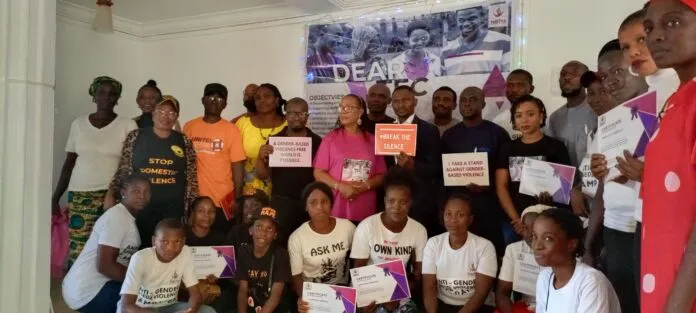
- …Inaugurates Anti-GBV Community Champions
From Ajiri Daniels, Abuja
The fight against sexual and gender-based violence has received a significant boost as foremost humanitarian organisation, Tabitha Empowerment Centre, stepped up its anti-GBV campaigns with the launch of its advocacy project, “DEAR TEC.”
The group also inaugurated a team of Anti-Gender Based Violence (GBV) Community Champions to serve as grassroot activists in local communities within the Federal Capital Territory (FCT-Abuja).
The event commemorates this year’s 16 Days of Activism calendar and is part of the organisation’s effort to combat sexual violence and other forms of abuse against women and girls. It was planned in collaboration with other humanitarian organisations.
Advocacy Officer and In-house Lawyer at Tabitha Empowerment Centre (TEC), Barr. Gladys Emmanuel, spoke during the project launch in Abuja. She explained that the goal of the “Dear TEC” project is to establish a platform where people can look for information, ask questions, and get professional advice on sexual and gender-based violence (SGBV). According to her, the effort, which places a strong emphasis on building a network of online advocates, seeks to enable people to speak out against gender-based violence and, in the process, make society safer.
Her words: “DEAR TEC was birthed with the intention of dismantling the pervasive culture of silence, particularly in some of the communities we help. In addition to speaking out and taking forceful action against the rise in sexual and gender-based violence (SGBV) in society, the initiative aims to rethink how people use social media by assembling a virtual network of advocates who can provide expert responses to concerns and queries raised by members of the public.
“This project, amongst other things, seeks to disseminate anti-GBV messages leveraging social media. Studies have it that about 31.6 million people are on the social media space. That includes Facebook, Instagram, LinkedIn, TikTok, YouTube, etc. It is our desire to use these platforms to spread anti-GBV messages.
“The project also aims to provide confidentiality for individuals, especially victims of GBV and also to signpost these individuals to various support services, all to be done from the comfort of their homes or the use of their mobile devices.”
She said the purpose of the selection and training of Anti-GBV champions is to intensify community-wide advocacy efforts to eradicate SGBV, noting that the champions were chosen from FCT villages and that among them were Kuje, Kurudu, Karu, Jikwoyi, and Ungwa Gede.
She continued by stating that the organization is currently collaborating with the Network Against Domestic Violence Foundation, Hope Alive Driven Campaign Initiative (HADCI), She Missions Initiative (TSM), wives of traditional rulers in the Federal Capital Territory (FCT), Men Engage Nigeria (MEN), and New Life Specialist Hospital and Rehabilitation Centre (NLSHARC), and other humanitarian organisations in order to create a network of advocates who would speak out against SGBV regardless of their gender or location.
Christina Uzo-Okamgba, the Founder and Executive Director of Tabitha Empowerment Centre, also spoke and underlined the critical need to combat the culture of silence around SGBV.
She presented the “Dear TEC” project as a holistic approach to promote communication, offer expert responses, guarantee victim privacy, and enable timely referrals.
Uzo-Okamgba emphasized that everyone must work together to address gender-based violence (SGBV), as it has severe effects on families and society as a whole and necessitates a multi-sectoral response.
She pointed out that parents play a critical role as the children’s first teachers and called for a change in behaviour.
“Parents are the first teachers to the children; we advise parents to be models to their children because the family is the first place that is affected by this menace, so we need to do more.”
During her speech, Mrs. Edoamaowo Udeme, the founder of the Network Against Domestic Abuse Foundation, underlined two crucial areas where the government could improve its handling of domestic abuse cases: To guarantee targeted attention, separate courts that are only for instances involving gender-based violence (GBV) should be established. Second, in order to better understand and address the complexities of domestic abuse concerns and create a more supportive atmosphere for survivors, government staff in organizations like the National Human Rights Commission must undergo thorough training and retraining.
Speaking further, Bassey Emmanuel, the Program Officer of the Association of Wives of FCT Traditional Rulers, emphasized that it is imperative to address women’s access to justice because some women are reluctant to disclose problems out of concern for a lack of understanding. Being financially independent is essential since women’s economic standing has a big impact on how vulnerable they are to abuse. Crucial interventions against this widespread issue include community activities, awareness-building, and the development of economic skills that promote self-reliance.
In a similar vein, Mr. Obi Onyeigwe, Lead, North-Central, MEN, stressed that boys and men need to take up the cause of speaking out against sexual harassment and detrimental traditional practices. He claimed that by doing this, the fight against SGBV would be more inclusive and successful.
Mr. Ibrahim Saidu, Executive Director of the Hope Alive Campaign Initiative, thanked Tabitha Empowerment Center in his speech for starting the effort to address gender-based violence. He described the main objective of the group, which is to assist victims of violence—especially girls—in returning to school.
Saidu appreciated the partnership with Tabitha Empowerment Center and underlined the startling dropout rates in rural schools. “Seeing how we can get them back to school, the victims or survivors of gender-based violence, especially the girls,” he said, was the organization’s primary goal.