Follow Us on Google
By Henry Akubuiro
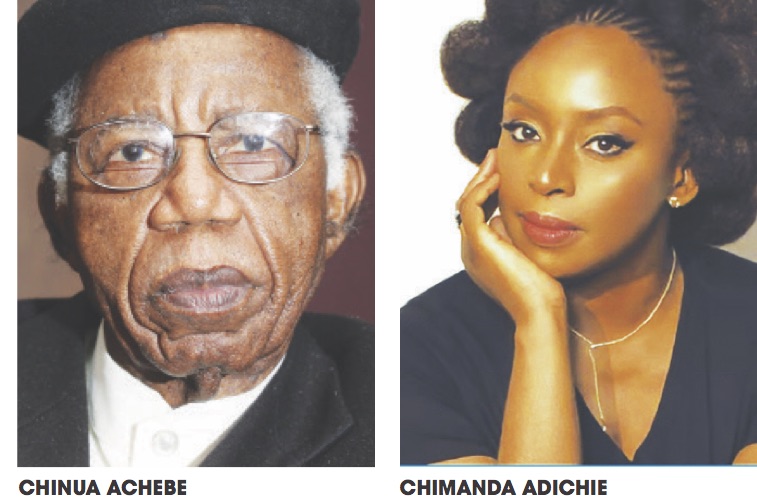
Thirteen years after his death, legendary Nigerian writer, Professor Chinua Achebe, has continued to influence African writers. It is an affirmation of his genius, vision and nous of what was to become African literature. Achebe has rightly been described as the father of modern African literature. That isn’t a chieftaincy little awarded by a community king to a kinsman in whom all is well pleased; it is a validation earned at home, in Africa and across the world on the strength of his early literary works, which has continued to hold a certain spell on readers and critics. What’s more, Achebe has metamorphosed, over time, to a literary Brahmin – one in whom old and younger writers have followed his trail.

Things Fall Apart (1958), his most popular work, is regarded as the most widely read, studied, and translated African novel. His subsequent work – No Longer at Ease (1960) Arrow of God (1964), constituting the “African Trilogy”, have become canonical texts. His later novels – A Man of the People (1966) and Anthills of the Savannah (1987) have been studied across the world, enriching African literary scholarship. The linguistic collocabilities of his novel point to an overwhelming influence from his Igbo oral tradition. Transliteration became a hallmark and proverbs and anecdotes were elevated in his prose. Though syntax was altered in his writings, compared to conventional English, he succeeded in creating a unique style.
Also, folktale, a narrative heritage common to sub-Saharan Africa, was incorporated in his writings, teaching morals and carving a felicitous prosaic niche. Like his novels, his short stories (Girls at War and Other Stories) were influenced by the Igbo oral tradition. The moral bent of the stories were deliberately written as a teaching tool outside the village square and under moonlit nights. At the height of the African literature and language debate in the 1950s, Achebe made a case for non-colonial narrative, and Afrocentric use of English language. He didn’t dismiss the use of English language totally, which was why in his “English and the African Writer” essay, he noted that colonialism offered colonised Africans “a language with which to talk to one another”. In a multiethnic country like Nigeria with hundreds of languages, Achebe elected to use “the one central language enjoying nationwide currency” – English. His position is diametrically opposed to Ngugi’s who preferred writing in indigenous languages. Using the colonial medium in his writing has helped. Aside from being read immediately in anglophone nations, Achebe’s novels gained wider leadership through translations to European and other languages worldwide.
Nevertheless, readers from different parts of the world connect with his writings. American TV star, Oprah Winfrey, said TFA was “one of the “Five books everyone must read at least once.” Lest we forget, TFA is predicated on the hero, Okonkwo, who was undone by the introduction of British colonialism and Cristian religion. Legendary South African Nobel laureate, Nadine Godimmer, said after Achebe won the 2007 Man Booker International Prize for fiction, his ” early work made him the father of modern African literature as an integral part of world literature.”
Achebe, who died at 82, was born in Ogidi near Onitsha in Anambra State. Both igbo and Christian cultures influenced his formative years in Nigeria. These are evidenced in his writings, which sometimes show a clash of cultures..was influenced by both Igbo culture and colonial Christianity. As a student at the University of Ibadan, he lampooned how African culture was subordinate to Western culture. Achebe’s relocation to Lagos as a journalist to work with the Nigeria Broadcasting Service after Ibadan was the catalyst to his writing. It afforded him the opportunity to interview culture custodians and visit landmark places. His debut novel, Things Fall Apart became an instant national and international hit, thanks to Heinemann, which went on to establish the Heinemann African Writers Series, a publishing platform that discovered and catapulted dozens of African writers to international limelight. Achebe’s editorial skills played a prominent role in this transformation. From the 1970s till his death in 2013, Achebe spent most of his life in the US, teaching and researching at Bard College and Brown University.
Other News
Tricia Adaobi Nwaubani, the author of the award-winning novel, I Do Not Come to You by Chance, admitted she was influenced by Achebe. “Like many contemporary Nigerian writers, I grew up on a literary diet that comprised a huge dose of Achebe’s works. My parents were so proud of his accomplishments, and quoted the Igbo proverbs in his books almost as frequently as they quoted Shakespeare.”
Undoubtedly, Achebe influenced different generations of African writers in breaking with Eurocentric perception of African literature, in keeping with the Achebean preoccupation with challenging “stereotypes, myths, and the image of ourselves and our continent.” Chukwuma Azuonye, former professor of African and African Diaspora Literatures at the University of Massachusetts in Boston, said “Achebe’s influence has been completely seminal and inspirational, and there are writers that have been called the School of Achebe who have imitated his style.” He said some of them had added contemporary issues, yet “they are working under the influence of Achebe in the sense that Achebe is the role model for what they are doing.”
It has been argued by Gillian Writers Group that “Achebe’s importance to modern literature lies in his ability to provide a counter-narrative to Eurocentric depictions of Africa. His works challenged the stereotypes perpetuated by colonial literature, particularly the portrayals of African societies as primitive or lacking in complexity. Achebe insisted on presenting a balanced, humanized perspective of African life, one that recognised both its strengths and its flaws. Through his writing, he redefined African literature, paving the way for subsequent generations of writers.”
Chimamanda Ngozie Adichie is one of the most celebrated writers of this generation. Copious references have been made about the influence of Achebe on her writing. So much impressed was Achebe with Adichie’s debut novel, Purple Hibiscus, that he wrote a moving blurb: “We do not usually associate wisdom with beginners, but here is a new writer endowed with the gift of ancient storytellers. Adichie knows what is at stake, and what to do about it. She is fearless or she would not have taken on the intimidating horror of Nigeria’s civil war.”
Adichie admitted that Achebe inspired her as a young writer: “ I grew up writing imitative stories. Of characters eating food I had never seen and having conversations I had never heard. They might have been good or bad, those stories, but they were emotionally false, they were not mine. Then came a glorious awakening: Chinua Achebe’s fiction. Here were familiar characters who felt true; here was language that captured my two worlds; here was a writer writing not what he felt he should write but what he wanted to write. His work was free of anxiety, and wore its own skin effortlessly. It emboldened me, not to find my voice, but to speak in the voice I already had.”
Two-time Booker Prize finalist, Chigozie Obioma, the author of Fisherman, Orchestra of the Minorities and Road to the Country, has been described as an heir to Achebe by the New York Times. He has been valorised for “blending Igbo cultural cosmology with post-colonial themes. Both incorporate Nigerian cultural beliefs and social issues, including the impact of Christianity and Western influence. However, Obioma combines realistic, often brutal narratives with surreal or spiritual elements (such as the chi or guardian spirit in An Orchestra of Minorities), a departure from Achebe’s typically strict realism, yet equally rooted in indigenous cosmology.
One of the least talked about among contemporary Achebe’s disciplines is Odili Ujubuonu, the author of the Igbo trilogy –Pregnancy of the Gods, Treasure in the Winds, and Pride of the Spider Clan. He said in an interview: “Chinua Achebe has influenced me to a great extent. I have heard people saying that I write like Achebe, but the point is that the setting of my story preceded the coming of the colonial masters. Achebe wrote his book during the colonial era, but I am a post-colonial writer and my book is a neo-colonial product. Pregnancy of the Gods is written with the mindset of a man who has experienced what it means to rule ourselves. Now, we are suffering a different kind of colonialism, where African literature is celebrated from the outside rather than from inside.”
It can’t be gaibsaid, Achebe’s lasting literary legacy goes beyond his creative words and seminal essays. It echoes in the voices of new writers who have found new ways of telling African stories by incorporating African worldviews, culture, traditions, and linguistic appropriations interspersed with modern reality.