Follow Us on Google
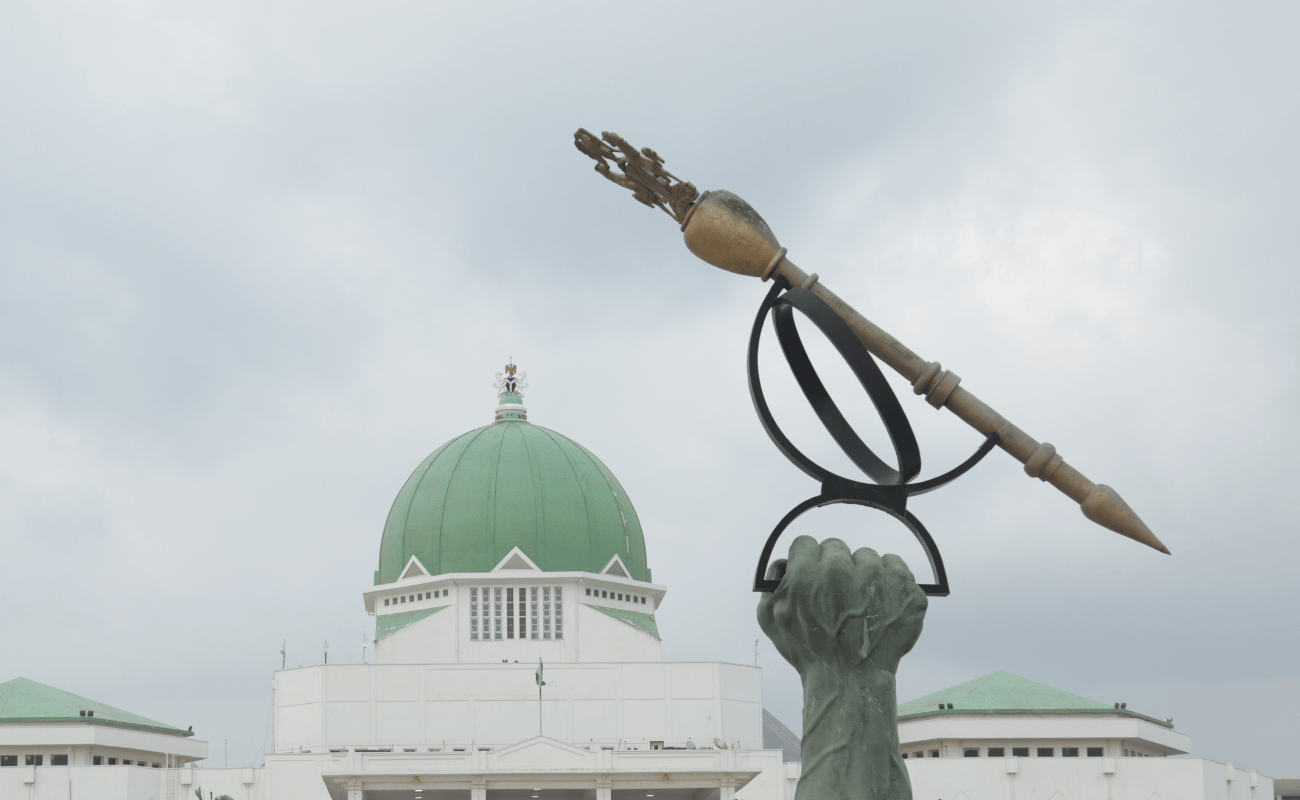
From Juliana Taiwo-Obalonye, Abuja
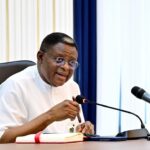
Executive Director of the Policy and Legal Advocacy Centre (PLAC), Clement Nwankwo, issued a stark warning at a high-stakes stakeholder roundtable: failure to pass the Special Seats Bill would brand Nigeria’s 10th National Assembly as a resounding failure in the eyes of citizens, overshadowing all other achievements.
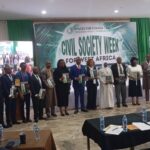
He said this at a stakeholder roundtable on the Special Seats Bill, hosted by PLAC, in collaboration with the House of Representatives Committee on Women Affairs, and with support from the European Union (EU).
Nwankwo, who noted that he has championed constitutional reforms since 2010—including Nigeria’s first amendment that year—framed the impending vote as his final mission. “This would be my last assignment, but if this bill is not passed… I think that Nigerians will decide that the 10th National Assembly is a failure if the Special Seats Bill does not pass,” he declared. He stressed the bill’s evolution into a national demand beyond women alone: “This is a bill that has now built into popular demand of Nigerians, not just women, Nigerians, regarding the responsibility of the National Assembly and the true response to citizens’ demands.”
Urging relentless advocacy, Nwankwo added, “The National Assembly represents us, and we, the citizens, are demanding of the National Assembly that they pass this special seats bill. If it is not, it would define the qualification of this National Assembly… Indeed, everything PLAC may not even be talked about even if they pass everything else except the Special Seats Bill.”
Other News
The roundtable, hosted by PLAC with the House Committee on Women Affairs and European Union support, came hours before the House debates the bill and the Senate takes up the Electoral Act Amendment Bill 2025.
Chairman of the House Committee on Women Affairs and Social Development, Kafilat Ogbara, rallied participants with optimism amid the tension. “As we count down to vote on the special seats bill for women in National Assembly… The special seats bill for women represents not just a legislative proposal, it embodies our collective commitment to ensuring that women have a rightful place in decision-making processes at all levels of governance,” she stated. Praising elite backing, Ogbara noted, “Let me take a moment to appreciate the mother of the nation, the First Lady of the Federal Republic of Nigeria, and her husband, President Bola Tinubu, for their support for this bill. The Vice President, the leadership of the National Assembly, and my honorable colleagues, especially the he-she that were all at the very highest level of advocacy dinner organized by Her Excellency the First Lady herself. I must say that that was the climax of our advocacy.” Confident in vote-counting efforts, she vowed, “We are hoping for the best. We have our agenda just in front of the house, and we have also set up at the ceilings, and we are already counting our votes… Even though some of my members have told me that they wrote their names, it’s not enough for me. But I know what to do when the time comes. As we prepare for the upcoming vote, let us remember that our work does not end here. We must continue to mobilize our communities, engage with policymakers, and raise awareness about the importance of this bill. Together, we can create a groundswell of support that cannot be ignored.”
European Union Deputy Ambassador to Nigeria and ECOWAS, Zissimos Vergos, positioned the bill as alignment with global inevitability. “We’re in the 21st century… This century is going to be the century of the African continent. I think we can all agree. 21st century will be the century of youth… It’s going to be the century of global awareness on the need to work all together for our global challenges… It’s going to be the century where women’s social, financial, and political inclusion will be a dominant process.
So women are going to prevail, dominate,” he asserted. Vergos highlighted Nigeria’s low women’s representation—7.4% in the National Assembly—and urged political parties as “gatekeepers” to reform internally, backed by EU’s €200 million electoral support. “There is need for an affirmative action legislation, such as the bill we’re talking about, the Special Seats Bill, coupled with a need for all political parties to adopt robust measures… Political parties are the real gatekeepers of women’s political empowerment… Gender equality and women’s rights remain a top priority… The European Union has provided support to women’s political participation since Nigeria’s return to democracy… over 200 million euros.” He concluded powerfully: “Human rights are women’s rights. And women’s rights are human rights. And let us not forget that among those rights are the right to participate in political life and the right to behave.”
Deputy British High Commissioner to Nigeria, Gill Lever also emphasised the critical importance of passing the Special Seats Bill.
She expressed gratitude to Nigerian civil society, women campaigners, traditional and religious leaders, the diplomatic community, and the First Lady of Nigeria for their support of the bill. She also praised the Speaker and Deputy Speaker of the House of Representatives, calling them real “he for she” advocates who have driven the bill forward. She acknowledged the role of young people in championing the bill as a vision for Nigeria’s future.
Highlighting gender representation, Lever noted the UK’s progress with women holding approximately 50% of seats in its House of Commons and many top government positions. However, she pointed out that “in the National Assembly in Nigeria, less than 5% of those 469 seats are women,” describing the situation as “not a good look” for the country’s political life, economy, or international standing. She observed that Nigeria ranks near the bottom of the gender equality index alongside countries like Afghanistan, a reality she said does not reflect Nigeria’s true potential.
Lever underscored the benefits of women’s political participation, including economic growth, improved social policies—because “women understand families, communities, children’s needs, and mental health”—and reduced corruption. She cited Zimbabwe’s experience with special seats, explaining such provisions encourage more women to participate despite challenges like online trolling and campaign criticisms.
She stressed the historic opportunity presented by the bill’s upcoming vote, calling it a “real legacy issue” and global leadership chance for Nigeria. “When I think about the special seats bill, I think of pass or fail, rise or fall, include or exclude. Women are excluded. This is an opportunity to include women in a very diverse country … Let’s go forwards. Let’s not go backwards. Let’s prosper. Let’s not struggle.”
Ending with a quote from South African politician and former UN Women executive Fumzile Mlambo-Ngcuka, Lever said, “There’s no greater force for change, for peace, for justice and democracy, or for inclusive economic growth than a world of empowered women.” She called for applause to celebrate the collective effort toward gender inclusion in Nigerian politics.
Sessions delved into the bill’s constitutional provisions, state dynamics, and final advocacy strategies, moderated by Barr. Ebere Ifendu of the Women in Politics Forum, with inputs from experts like John Mutu. As the clock ticks toward the vote—potentially on the 9th—Nwankwo’s verdict looms large: passage or infamy for the 10th Assembly.