Follow Us on Google
From Aniekan Aniekan, Calabar
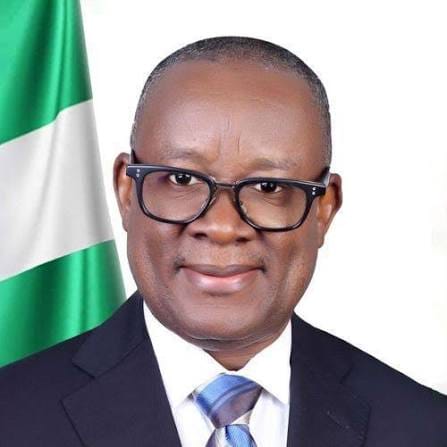
The Minister of State for Industry, Senator John Owan Enoh, has said the recent unveiling by the Federal Government of 100 electric buses assembled in Nigeria is proof that the National Automotive Industry Development Plan is delivering results.
The launch of the electric buses in Abuja was part of efforts by the Federal Government to provide affordable transportation for federal civil servants.
Speaking at the closing of the three-day 2026 Strategic Management Retreat of the National Automotive Design and Development Council, NADDC, in Calabar, Enoh said the success of the council would be measured by tangible outcomes on Nigerian roads.
“The success of the work of NADDC is not going to be measured by the local strategies that we come up with. It is going to be measured by the number of locally assembled vehicles on Nigerian roads, by the reduction of maintenance costs for our citizens, and the kinds of jobs that are created,” he said.
The retreat had the theme: “Driving Institutional Excellence: Aligning Capacity, Culture and Compliance with NADDC Corporate Mandate.”
The minister noted that the 100 electric buses handed over to federal civil servants in Abuja days ago were assembled locally and not imported.
“Those buses were not imported into Nigeria. Those buses were assembled in our dear country. That is going to be the measure of the work that you do,” he told NADDC management.
Enoh said the Tinubu administration has moved from “reform to impact” in 2026, and the automotive sector is central to that shift. He added that he leads by example, as his official vehicle in Abuja is also assembled in Nigeria.
Other News
“We unveiled the Nigeria Industrial Policy in February this year, and the National Automotive Industry Development Plan is a strategic component of that policy.
“If Nigeria can achieve self-sufficiency in vehicles and component parts, it will lead to job growth and reduce the use of scarce foreign resources for import,” he said.
On future plans, the Minister announced that Cross River State wouldl host a comprehensive electric vehicle manufacturing plant. He said an MOU has been signed with the Asian Economic Development Committee and the state government has donated land for the project.
He also listed other NADDC interventions in Cross River to include an automotive training centre at the Cross River University of Entrepreneurship in Akamkpa, a conversion centre and charging station at the University of Calabar, and the training of about 50 technicians.
The minister outlined three immediate priorities from the retreat: accelerating clean energy ecosystems, aggressively expanding electric vehicle manufacturing and CNG vehicle integration, and stimulating domestic demand for locally assembled vehicles.
He further called for the removal of bureaucratic bottlenecks. “Institutional excellence would require absolute discipline, aligning our workplace culture with public service reforms,” he said.
Director General of NADDC, Otunba Oluwemimo Osanipin, said the retreat was used to break down the council’s mandate into tasks and KPIs for every department.
“The expectation is that what we learn here will be put into practice. We want to start seeing results immediately,” he said.