Follow Us on Google
- calls for action to secure children’s education in Nigeria
From Juliana Taiwo-Obalonye, Abuja
A new United Nations Children’s Fund (UNICEF) report, the ‘Minimum Standards for Safe Schools (MSSS) Monitoring Report,’ has revealed that only 37% of schools across 10 states in Nigeria have early warning systems in place to identify threats such as school attacks.
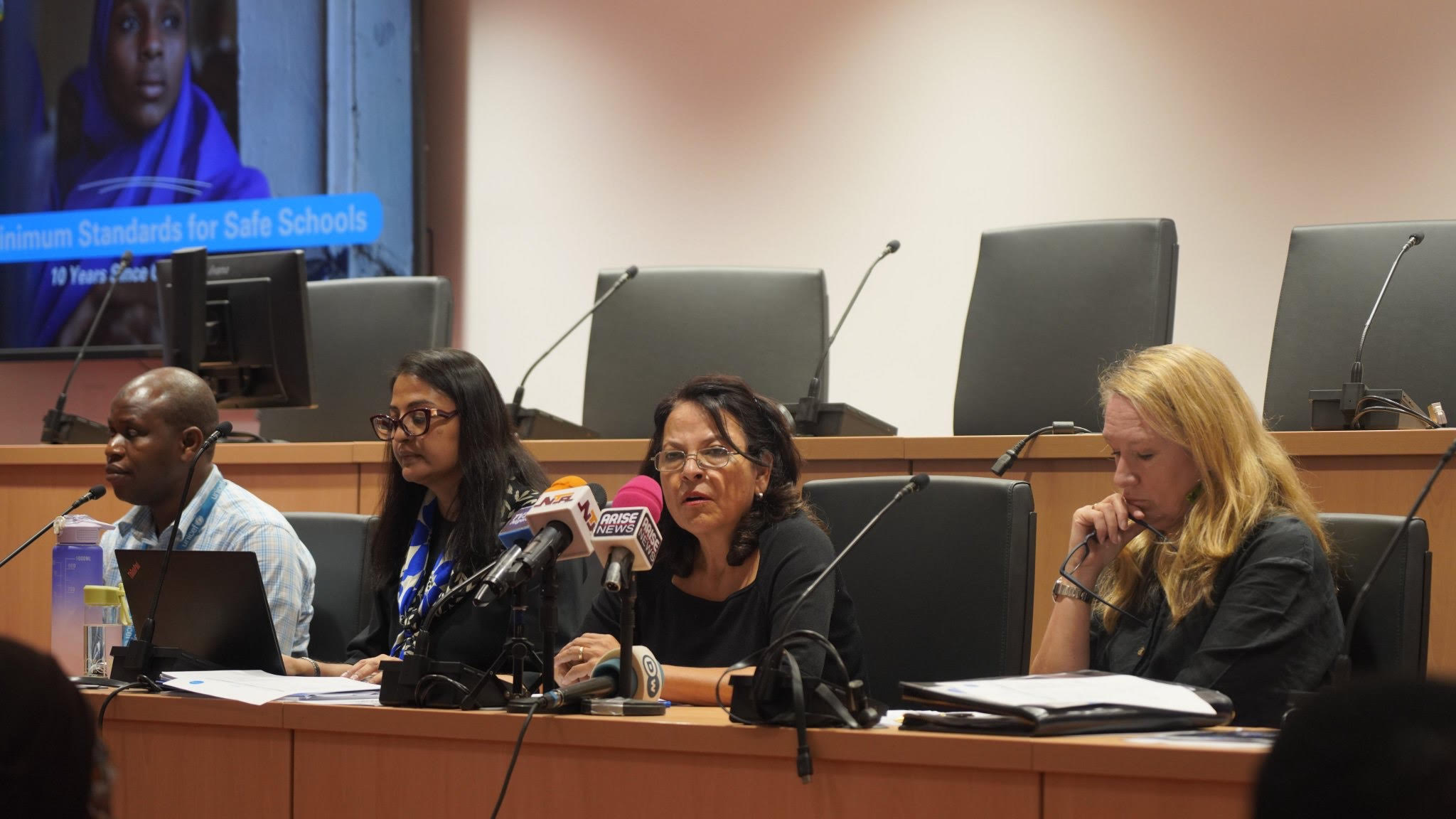
UNICEF Representative in Nigeria, Cristian Munduate, made this revelation while presenting the report which reveals that the journey to ensuring a safe learning environment for every Nigerian child is far from over, to journalists on the 10th year anniversary of Chibok abductions, where 90 girls remain in captivity.
UNICEF called for intensified efforts to protect Nigerian children’s education.
According to Munduate, “The kidnapping of the Chibok girls was a wake-up call to the severe risks our children face in their pursuit of education. Today, reflecting on this tragedy and other recent abductions, it is evident that our efforts to safeguard our children’s futures must be amplified.”
She explained that the MSSS analysis looked at six result areas and found significant disparities in the implementation of safe school standards across Nigerian states.
It disclosed that Borno State, with a 70% fulfilment of the standards, exemplifies a strong commitment to child safety amidst adversity. However, Kaduna and Sokoto states lag significantly, with fulfilment rates at just 25% and 26%, respectively.
The report also reveals that while schools perform relatively well in terms of training school-based management committees on safety and responding to children’s well-being concerns, only 14% of the participating schools across the 10 assessed states have functioning, safe, accessible infrastructure, and just 36% have school staff trained on natural hazards.
The report further revealed that the Conflict-related violence has led to more than 1,680 children abducted while at school and elsewhere; 180 children killed due to attacks on schools; an estimated 60 school staff kidnapped and 14 killed; and more than 70 attacks on schools, according to verified reports by the United Nations.
The threat of abduction of students, the report added is severely affecting children’s learning. It recalled that as of 2021, over one million children were afraid to return to school, and in 2020, around 11,500 schools were closed due to attacks, according to Policy Weekly by Nextier.
Munduate said that UNICEF Nigeria is urging the government, partners, and the international community to take decisive action to ensure all schools across all states have the resources and tools to fully implement the Minimum Standards for Safe Schools, focusing on the most vulnerable regions.
She said the agency is working with the government to ensure that every child can access safe learning environments and has supported the inauguration of state safe school steering committees and the drafting of state-costed implementation plans for safe schools in 13 states.
“To ensure that schools are safe havens, strong political will and proper implementation of safe school standards are essential. Together, we can restore trust between educational institutions and the communities they serve, ensuring schools are sanctuaries for learning and growth,” said Munduate.
She said UNICEF Nigeria is calling for the government, partners, and the international community to take decisive action to:
”Ensure all schools across all states have the resources and tools to fully implement the Minimum Standards for Safe Schools, focusing on the most vulnerable regions.
“Address critical gaps in safe school infrastructure, preparedness for natural disasters, conflicts, and comprehensive approaches to violence against children.
“Strengthen law enforcement and security measures to protect educational institutions and communities from attacks and abductions.
“Prioritize education and child protection in national policies and budget allocations to create a safer, more inclusive environment for all Nigerian children.
“Ensure the continuity of education and learning when schools are shut through multiple learning pathways such as radio and TV programmes and through digital platforms like the Nigeria Learning Passport.”
“As we remember the Chibok girls and all children whose right to education has been compromised, let this sombre anniversary serve as a catalyst for change. However, we must acknowledge the recent abductions, which underscore the persistent vulnerability of our schools. To ensure that schools are safe havens, strong political will and proper implementation of safe school standards are essential. Together, we can restore trust between educational institutions and the communities they serve, ensuring schools are sanctuaries for learning and growth,” Munduate concluded.