Follow Us on Google

By Chukwudi Nweje
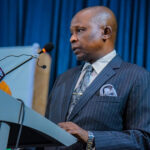
Professor Anthony Kila is Director at Centre for International Advanced and Professional Studies (CIAPS) and International Director of Studies at the European Centre of Advanced and Professional Studies. He spoke about zoning, democracy and other national issues in this interview.
Less than one calendar year to the 2023 general elections, President Muhammadu Buhari has yet to assent to the Electoral Act Amendment Bill transmitted to him by the National Assembly. This was after the lawmakers reworked the initial bill rejected in December 2021 and included certain clauses the president specifically requested as a condition for his assent. What do you think?
On this issue of the electoral bill, if we want to agree that the president or the presidency is not mischievous, then we must conclude that the approach is too slow and at variance with modern-day living. It also shows that he does not have a sense of urgency because expectations are that the bill should be signed immediately and given time to be implemented. Ideally, the President should sign it in view of letting the Independent National Electoral Commission (INEC), use it in June and July in Ekiti and Osun States governorship election respectively. Even if they don’t want to use it in those elections, it should be signed so that by the time we go to the polls in 2023, which is less than 365 days away, the bill would have been mastered. There are politicians waiting for the electoral bill to be signed to know what strategies to adopt for the election. Agreed, the constitution gives the president up to 30 days to sign the bill, but it doesn’t mean he should use the entire 30 days in making a decision.
When the President rejected the initial bill in December 2020, expectations were that the lawmakers will veto him, but that did not happen; in fact, Nigerians were not surprised because the president of the Senate was once quoted to say that they will pass any bill Buhari lays before it?
I don’t think our lawmakers have shown enough independence. If it had been something that has to do with their pay package and emolument, they would have been more robust. However, I think the Senate President misspoke when he said that and as a result, a lot of people now see them as a rubber-stamp. Perhaps, what he was trying to say is that President Buhari is good for Nigeria and that they will help him achieve his programme and agenda for the country. But, even if that is not so, that he wants to rubber-stamp the president’s decisions, each senator is elected here to represent his constituency, so it doesn’t really matter what the Senate President thinks. Some people think that the senators represent Nigeria, it is not true. Each senator is elected to carry the voice interests and demands of his constituency while looking for a way out for Nigeria. Unfortunately, that is not what we have in Nigeria. When our lawmakers get there, they don’t feel responsible to their constituency anymore. Moreover, because there is a strong party divide on general issues and a system where the executive is domineering over the judiciary and the legislature, we don’t have the full value of the other two arms of government. The National Assembly could have vetoed him the first time if they were strong; unfortunately, they didn’t even try.
The Attorney General of the Federation said the president is consulting before he makes a decision. But, in his televised New Year interview, the president said he will sign the bill if the lawmakers also include indirect and consensus modes of primary to the amendment. So, who is he now consulting?
It is unfortunate that we allow bad things to happen to us in Nigeria. The idea that the president is consulting outside the cycle of those who were elected and paid from the national coffers is an anomaly. However, it makes sense for him to consult the Attorney General of the Federation (AGF), and Minister of Justice to see the legality of his action. But it shouldn’t take so long. Like the rest of us, whoever he is consulting also follow the debate on the electoral bill and they should have a position on it. The approach the president is taking is analogue and lacks a sense of urgency. In fact, there is a school of thought that believes that the president is just being mischievous and has no intention of signing the electoral bill. This school believes he is just playing games, he has done this before, so they believe that he will just toy with it until it is too late.
The President Buhari administration rode to power on the back of three campaign promises, to fight insecurity, strengthen the economy and tackle corruption, but almost eight years in power now, Nigeria is heading for the worst in all these areas. What went wrong?
I think we got it wrong on two levels, first is at the level of expectation, the then-candidate, Muhammadu Buhari and the proposing party, the APC set the expectation so high that Nigerians were expecting a miracle.
Buhari was presented as a messiah, the APC was presented as a group of magicians. Nigerians thought they will fix electricity in less than four years, we thought Buhari will fix Boko Haram, there was a narrative and perception that led to high expectations that in reality was hard to meet. The second place we got it wrong was the mode of governance. It took Buhari a long time to nominate ministers and the Secretary to the Government of the Federation (SGF) and the people to work with; because of that, the government began to slack. Then, there was the problem of the policies and the mode of their implementation. For instance, we were talking about empowerment and poverty alleviation and the administration went about distributing money; that does not help the system. If you want to alleviate poverty, you enable the people to create wealth, so the priority of the government was not channelled well; there was no clear policy to boost production, no policy to create sustainable employment and there was no policy to ginger the education sector; the government was not sincere in a lot of things and was not in touch with the people.
It is certain that whoever comes to power in 2023 will inherit these problems of insecurity, poor economy and corruption. What will be your advice on how to tackle these?
My advice is that we, the people led by the media should stop focusing too much on character; we should talk more about issues the aspirants are talking about, what they are for and what they are against, that way, we will have clear choices to choose from and build the future. We should, for instance, be asking the aspirants their take on security, infrastructure, corruption among others. The citizenry should have a sense of their self-worth and not allow the aspirants to push them around based on the interests of a few.
What individuals are for could be deceptive, Buhari for instance was elected partly on the perception of how in 1983 as General Officer Commanding (GOC) of the Third Armoured Division of Jos, he mobilised troops to push back the Chadian force that occupied 19 islands on Lake Chad.
We did not actually listen to Buhari speak in 2015, others were doing the talking for him. Throughout the electioneering campaigns whether in 2015 or 2019, we did not for once hear Buhari say I will do this or that. We should now focus on candidates as individuals and see what they say. If we want reforms to our institutions, we have to look for somebody that has a good understanding of the law. We have to make sure that the candidates we are voting whether, at the local, state, constituency or federal level have an understanding of what matters to us. They should tell us what they will do differently or exactly the same as what we have now.
In almost 23 years of return to civil rule, we have had basically the same crop of politicians ruling and the general perception is that they failed us. Yet, they are the same people joggling to rule in 2023. What comes to your mind when you hear them?
It is a natural phenomenon, it is people who are teachers that will at some point become principals; that is the way life is. The problem we have in Nigeria is that the people who have been there or are there do not have good things to tell or any achievements to boast of. The system does not allow that; you cannot see a state governor who wants to be president because he fixed light, he will tell you it’s not in his power.
You have severally argued against zoning, how do you react to arguments that a plural society like Nigeria needs some kind of power-sharing?
People have positioned power rotation and zoning as a necessity, but I find it as an embarrassing and shameful necessity. It is a symptom of how fragile our oneness is.
We don’t trust each other and believe that one part will keep dominating if there is no provision for the other part to go. That is not democratic. Democracy is about individual merit, persuasion and ideas. Because we don’t trust merit, we keep saying one of us should go there. Some people argue that rotation is for fairness and justice, but fairness for who, for all of us or for the politician going there? For me, we should be looking at a power rotation and zoning predicated on common sense that will afford us equity and fairness and inclusion for everybody. The real problem we have is the lack of a true nation called Nigeria; we are not working on the trust, we are trying to fix a peculiarity instead of a problem.
What do you think is the way forward towards creating trust among the ethnic nationalities?
I believe in people, we should change the narrative because what we have now is a supply-led political system, where the political class decide what they want to offer us. We need to move to a demand-led system where the people decide what they want from the politicians.
The debate on restructuring has raged for a long time; it was a campaign point of the current APC administration, and it even set up a Committee on Reconstructing that sat and made recommendations, but those recommendations are today lying on a shelf in the Villa gathering dust. What is your idea of restructuring Nigeria?
I will say shame to all those people who say they don’t understand what restructuring means. To restructure simply means to reset and readjust. People who talk about restructuring talk about it either in the form of federalism, confederation or regionalism. I think the present administration should be ashamed because we expect them to act on this because it was one of their campaign promises, they also set up a committee on that, but has refused to implement the report. It is not just an indictment of the ruling party but the entire ruling class that the report was not implemented; somebody should have been pointing at them. The way the country is now does not work for anybody, not in the North or South. We need three Ds in Nigeria, we need devolution of power, decentralisation of our institutions and digitalisation of our processes.