Follow Us on Google
By Idu Jude, Abuja
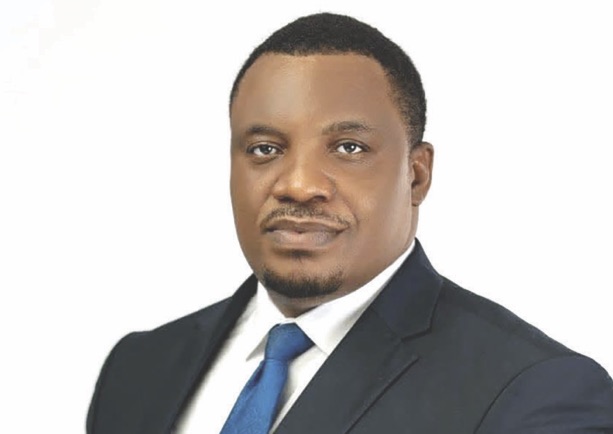
Chibuzor Okereke, the Labour Party presidential candidate for the 2027 election, has taken aim at what he calls bogus and wasteful government expenditure, promising sweeping reform within the first 100 days of any administration he leads. In this interview, he pledges to make the local government system work for ordinary people within the same time frame, to prioritise transportation, the digital economy and agriculture, and to strengthen the National Economic Council along the lines recommended by the Oronsaye report.
Let us hear from you and clarify whether you are a placeholder for another potential LP presidential candidate.
If I may ask, what do you mean by placeholder? I can tell you that the word does not exist in the Labour Party constitution, and I do not know of any Nigerian law that prescribes it either. It does not exist in the Electoral Act. As you are aware, INEC has processed and published my name, and I also attended the peace accord where all the presidential candidates signed to maintain peace during the campaign and to renounce hate speech and electoral violence.
The interesting thing is that primaries were held in all parties on the same day, for all positions, across the country. Every state made returns, declarations were made, and on that same day I was declared. On the eleventh of May the National Executive Committee sat and ratified my candidacy according to Article Twenty Eight of the party constitution. The names were then transmitted to INEC, processed and uploaded in line with INEC’s own requirements through Forms BC9 and 13 of candidates’ particulars and nomination forms. We also nominated our vice presidential candidate, whose nomination was equally ratified and who received a certificate of return. INEC published both the presidential and vice presidential candidates on the first of August 2026.
I take you through this route because, before INEC’s publication, there were false reports circulating that the LP had failed to upload a presidential candidate at all, and this is the kind of media practice we should not encourage in this country. I can tell you for free that the LP is the party of workers, in essence and by implication. Look at our institutional membership and you will see that we are in fact the largest political party in Africa, because we are the party of the working people, the people responsible for the productive aspects of our economy. Anyone working so hard to lay false accusations against the party should ask themselves why. I believe you have read about my qualifications and what I have done. Is there any presidential candidate in this election more qualified than me? They simply do not want the LP to participate, and that is why they speculate.
INEC has opened the window for campaigns. May we know some of your campaign programmes and plans for mobilisation?
As I have said, the LP is an institutional membership party, a party of Nigerian workers, and we have the best strategy to win elections, a capability we have demonstrated before. Remember that in 2023 people looked down on this party, saying we were going nowhere, and we ended up delivering the greatest performance in the LP’s history, returning more than thirty members of the House of Representatives, about seven senators, and members of several state Houses of Assembly, before ultimately winning a governorship, only the second time the LP has ever produced a governor, after former Ondo State Governor Olusegun Mimiko and now Governor Alex Otti of Abia State.
The finer details of our campaign strategy will not be disclosed for now, because that is precisely our strategy, to be unleashed when the time is right. But in terms of preparation, we are ready. Do not forget that this party has been through a great deal in the past three years over leadership crises and other troubles. We have only just emerged from that period, holding our first national convention on the twenty eighth of April 2026 to produce the current leadership under Senator Nenadi Usman. So we are on the right trajectory. This is not a new party, it is over two decades old as a registered political organisation, and there has never been an election year in which the LP failed to field candidates. We are not among the parties still learning the ropes. Our structures reach down to the grassroots. The labour movement wing of the party operates through what is called the political commission and the political committee, both of which have structures at grassroots level, while the LP as an independent political organisation has its own parallel grassroots structure. We are the only party with automatic institutional links to civil society and the organised workforce across the country, a provision written directly into our constitution. It is simply a matter of identification, and we are prepared. Our campaign council will be unveiled in due course, and nobody can compel the party to unveil it on a timetable set by others.
We have deliberately chosen not to unveil it prematurely, because we have seen the agitation and complaints that follow premature unveilings in other parties. This process involves extensive engagement with stakeholders and deep consultation. A campaign selection committee has already been set up to engage stakeholders and shape the framework for our national campaign council. Everything is in motion, and in due course we will unveil our plans for the campaign at both national and state level. As our media partner, you will receive that information in good time. From the tenth of February, when we put structures in place to receive reports on e-registration, we intend to remain the party that briefs the media most often about the steps we are taking, and why we are taking them, because that is how the Nigerian people come to understand our work.
Tell us more about this ideology of Nigerians First, which seems to echo a Western practice.
I want to be clear that this is not a Western governance philosophy, it is the ideology of the Labour Party. Nigerians first, meaning that our people, not our ethnicity, our religion, or our geopolitical divisions as expressed through the states, must come first. This is entirely consistent with Chapter Two of the Nigerian Constitution, particularly Section Fourteen, which sets out the protection of lives and property and the welfare of the Nigerian people as the primary purpose of government, and which also declares that sovereignty belongs to the people, in other words that government belongs to the people. So my governing philosophy is a departure from what we have always known. The best we have previously heard is Nigeria First, which is a geographical expression of the state. The people have always been left out as the primary focus and purpose of government, even though our nationalists fought for independence precisely so that the Nigerian people could express themselves and find their place in governance and politics, achieving both socioeconomic and political independence, in other words making their own voice count, since at independence itself very few ordinary people were represented beyond a handful of delegates. This brings us back to the purpose of government itself.
I have said before that among the factors of production, labour is the greatest, because it directs the other factors. This aligns with the observation of our late sage, Professor Chinua Achebe, that leadership is the problem of Nigeria. Labour is the human factor that directs the other factors, and if we get labour wrong, in terms of human capital development, we will never get the best from land or capital. So this is a simple philosophy, put people first in governance, let the interests of Nigerians come first in every decision of government.
Today we talk about subsidy, and we have chosen to subsidise a small elite and enrich fuel importers, while the majority of Nigerians endure abject poverty and ineptitude. My policy is not Westernised, it is Nigerian. The disillusionment we see is the disconnect between government and the people. If you ask why that distrust exists, you find that the people handed over the affairs of government to a superstructure for their common good, and those entrusted with that responsibility now serve themselves rather than the people. What I propose is a return to the principle that government should serve the people, which is the meaning of Nigerians First. The second part of our philosophy is Believe Again, which means that governance is about responsibility and obligation, that as a Nigerian you have an obligation to improve this country, that Nigeria offers you the promise to flourish and rise, and that I am the candidate focused on people and on vision, not merely on projects and programmes, because projects and programmes without a guiding vision are not sustainable. Vision is what should drive the projects and programmes we eventually unveil.
That is why I believe we must anchor our governance on a clear leadership philosophy that then drives everything else, so that the country has a destination. If you ask where Nigeria’s destination lies, is there a record anywhere showing that a given stretch of road will be built in stages over five or ten years according to a plan? These things do not exist here, because even our national budget is not anchored to any development plan. I am the candidate offering the alternative, doing things not by discretion but by planning and vision, so that people can wake up in this country knowing they have a future.
Other News
Can you assess the performance of President Tinubu’s economic team, who say the economy is bouncing back after subsidy removal?
If we cast our minds back to where we came from, when the Central Bank printed N27 trillion through its Ways and Means facility, and government was spending some ninety five per cent of its revenue simply servicing debt, our macroeconomic parameters had effectively collapsed. The CBN was operating well beyond the thresholds prescribed by both the Fiscal Responsibility Act and its own enabling Act, forcing the National Assembly to hurriedly amend the law to expand its room for manoeuvre. One might say there has been some improvement on the monetary policy side, since monetary and fiscal policy together govern the greater part of the economy, and some reforms have also been attempted on the fiscal side through tax reform. But let me be clear about one thing, the interest of Nigerians is not about how healthy our macroeconomic parameters look on paper. It is about whether people have access to jobs, whether we run a merit based society, whether ordinary people feel they can get ahead if they are qualified. It appears instead that we are abandoning federalism for a centralised, unitary system. Macroeconomic performance cannot trickle down unless governance is genuinely integrated across local government, state and federal levels, because national development is ultimately the sum of local government development, and we seem instead to be biased toward urban centres. This is a human capital and leadership challenge. Any leadership that concentrates purely on townships and urban development as its showcase is missing the point, and that is why we insist that the LP is not operating in obscurity. We are showing what is possible in Abia State, where we have raised the happiness index of the people from near zero to ninety five per cent, and where development no longer depends on which senatorial district the governor happens to come from, but reaches every senatorial district, urban and rural alike.
When subsidy removal was announced, part of the stated strategy was to reduce transport costs through a shift to compressed natural gas and electric vehicles, yet only Abia State and a handful of others are actually implementing that policy. Today Abia has deployed more than forty electric vehicles across the state to cushion the effect on commuters. My broader point is that any claim of economic prosperity needs to be rethought, because we cannot measure our prosperity by World Bank or IMF reports or the verdicts of other metropolitan financial institutions. Such figures are useful for international diplomacy and global standing, and yes, our foreign reserves now stand at some fifty billion dollars, which offers certain guarantees, but our own currency has been left to float amid genuine turmoil in the financial system, foreign transactions have become difficult, and members of the public are left predicting the naira’s own exchange rate as though locked in a contest with the Central Bank itself. So on monetary policy we may credit this government with relative stability, since volatility has reduced, but on the fiscal side, where tax is the true heartbeat of governance, the people are telling us plainly that they do not feel the benefit, even as government asks them to be patient and wait for it to trickle down. I would move faster, and translate whatever gains exist into results people can feel, starting with making the National Economic Council actually work.
The framers of our constitution were not foolish when they created an Economic Council bringing state governors together. Yet today the governors have no equivalent body linking them with local government, even though the constitution’s own schedule lists economic development of states and local government areas as a shared duty. That framework must move from theory into practice. The president must pay proper attention to the Economic Council, so that its decisions are visible and acted upon. Consider the recent transport subsidy funding, where the president could have engaged the governors directly, all of whom, regardless of party, are benefiting from the removal of the fuel subsidy. Under an LP administration, whatever is agreed nationally will be implemented for the benefit of the people at national, state and grassroots level within one hundred days, and local government will finally work.
Which critical sectors will you prioritise to drive the economy, and how will your administration tackle the cost of governance?
Taking governance first, I will say plainly that our government spends bogus sums for nothing, and I intend to review the laws establishing our ministries, departments and agencies. We have boards attached to every government agency, meant to carry out oversight, appointed from across the country, whom we pay handsomely for oversight they rarely perform. We also have a habit in Nigeria of treating the creation of a new agency as the solution to every problem. What became of the recommendations of the Oronsaye report? We must also decide whether Nigeria will keep using the civil service as a poverty alleviation scheme, or build a professional, competitive, merit based civil service, where we employ only what we need, where promotion and reward reflect productivity rather than length of service, and where people are properly trained and properly paid, so that arguments over the minimum wage simply disappear. Today, staff in some parastatals travel abroad on official business dozens of times a year, their allowances fixed by their own boards under enabling legislation, while another category of workers has its pay fixed by the Salaries and Wages Commission, alongside separate but overlapping revenue mobilisation bodies. Consider the Federal Roads Maintenance Agency and the Federal Ministry of Works, both maintaining offices across the federation performing similar functions. Either we intend to govern properly, or we are merely playing at governance. Why should Nigeria not create clear, dignified terms of service for civil and public servants? Why should holding a ministerial post or a directorship function as an escape from poverty, with the latest official car treated as a measure of success? It should not be so, and I make bold to invite people to Abia State to see how we are fixing this, an LP controlled state where teachers and other workers are employed strictly on merit.
We cannot reduce the cost of governance without fixing this system. I am the only candidate proposing to abolish incremental budgeting and the envelope system Nigeria currently relies upon, in favour of zero based budgeting, meaning that every line in our national budget must justify its own place there. It must be a cost based budget, not an allocation based one. How can we continue running budgets shaped merely by a minister’s personal closeness to the president?
Today, many of our agencies have effectively become procurement centres owing to the closeness of their directors general to the presidency. That is what I intend to change, making funding competitive, viable, and properly accountable, in keeping with our fiscal responsibility laws. I have extensive policy documentation on all of this. I have said I intend to be the chief reforming commander of the federal republic, and that is one of the names given to our proposed government.
On the sectors that will drive our economy, digital innovation, agriculture and transportation stand out as critical. We intend to classify enterprises deliberately as primary, secondary and tertiary, with those aiming for full industrial status treated as tertiary, and medium and small scale enterprises, which drive the economy of any country, properly supported in between. We will govern using real data rather than paying for invented figures, knowing precisely where small scale business people are, what they do and what support they require, rather than allowing opportunists to set up emergency organisations purely to collect government funding while nothing changes on the ground. It is unfair that businesses which have faithfully paid government taxes for years can quietly go out of existence without government noticing. We will create a government care structure that actually visits businesses to understand what they face. Our young people excel in the digital economy, and we intend to extend that excellence down to local government level, because government should not exist only in Abuja, Lagos and a handful of major cities. In agriculture, we will invest heavily in the purchase and distribution of tractors, maintain proper records of who is farming and what they require, and partner with them directly to secure food security. Agriculture, transportation and the digital economy sit at the centre of today’s geopolitical contest, as seen in the rivalry between the United States and China over fifth generation digital infrastructure, and Nigeria cannot remain a bystander in that contest. We must also revitalise our research institutions and connect them properly to our universities, since it does little good to establish a research agency while our universities continue producing graduates who struggle to find employment. University output must be matched to the labour market and the wider economy, so that we are not left importing foreign expertise to do work that belongs to our own citizens.
I know these problems, and I know how to fix them, through policy, executive orders and legislation. We will, for the first time, properly make use of the regional development agencies the president has already created, since it appears nobody quite knows what to do with them at present. Each zone has its own comparative economic advantage, agriculture in the north, technology and business in the south east, financial institutions in the west, and maritime and the blue economy in the south south. I am young, energetic and ready to engage directly with every part of the country, not to sit in an office waiting for reports.
What is your view on the president’s appointment of the INEC national chairman?
That appointment does not sit under presidential control. Under the Electoral Act and the constitution, the process must remain transparent. Even where some have proposed that the National Judicial Council should make the appointment instead, the identity of the appointing body is not really the issue. Strictly speaking, it is not the president who appoints the INEC chairman, it is the Nigerian people, through their representatives. The president merely recommends a nominee to the National Assembly, which is meant to represent the full range of Nigerian interests and provide oversight and scrutiny of who eventually serves. What we are really witnessing is our national habit of trying to impose personal interests on institutions rather than allowing institutional mechanisms to function, and nobody can fix that simply by changing who does the appointing, since undue influence will follow whoever is placed there. A useful comparison is the recent, contested election within the Nigerian Bar Association itself, a professional, non political body, yet still subject to dispute. So the problem is not the mechanism of appointment but our broader failure to let institutions function as designed. The debate over who appoints the INEC chairman is, in my view, a rather parochial one, offering a deep sounding solution to what is really a more cosmetic problem, because if the National Assembly were prepared to reject unsuitable nominations on their merits, that alone would resolve it. When party loyalty and personal deference to the president override the national interest instead, it shows that our institutions of government are not functioning as they should. Genuine democratic culture must respect the people, uphold the rule of law and honour the dignity of the individual. It cannot be a democracy of deference alone. To change that, the public itself must hold its representatives to account and take leadership recruitment for the National Assembly seriously. It is embarrassing to hear a lawmaker suggest that doing the right thing would embarrass the president, a sentiment one does not encounter in comparable democracies elsewhere, even where, as in the United States, a similarly bicameral legislature operates rather differently in practice. We saw the same pattern under Presidents Umaru Yar’Adua, Goodluck Jonathan and Muhammadu Buhari, and we see it again now under President Tinubu. This reflects our own understanding of how leadership ought to work, and that understanding must change, otherwise we are effectively seeking a monarchical system, which our constitution does not envisage. I have no objection to the National Assembly appointing the INEC chairman, and I favour experimentation grounded in fact and evidence. Even if we tried instead to let the National Judicial Council make that appointment, the underlying problem would persist, because we do not yet properly respect our government institutions. The Emir of Kano once told me that if one removed every member of the National Assembly and replaced them with ordinary people taken from the street, the resulting behaviour would look little different from what we see today. Yet I believe Nigeria can still make progress, that we can find people of genuine conviction willing to take up leadership. Our political economy has not yet matured to the point I would wish, which is precisely why I support independent candidacy, allowing individuals to contest on the strength of their own personal popularity rather than through party structures alone. Some who have taken that route have not gone on to win presidential elections, but that is beside the point. Given where Nigeria stands today, I believe people should be free to contest state assembly and House of Representatives seats as independent candidates. I am a legislative governance specialist, having studied the National Assembly to doctoral level, worked within it and provided technical support to it, and I can tell you that with the right calibre of legislators focused on a development centred agenda rather than regional or party caucuses, the outcomes would improve markedly. We need caucuses in the National Assembly genuinely committed to better outcomes in health, in support for women, and across every ministry, holding those responsible properly to account. That is the legislature we should be building, and only then will we see real results.
Funding is a serious matter in any political campaign. How are you approaching it?
I am the people’s candidate. For the past two decades I have invested in young people, through my foundation, sponsoring education, creating children’s parliament academies, training young people and engaging in policy advocacy across schools in the Federal Capital Territory and beyond, work for which many of those I have helped may never have the chance to thank me directly. I have also helped design campaign strategies that have gone on to succeed in this country before. My capital in this campaign, therefore, is not measured in money, it is measured in ideas. My governance philosophy represents a complete departure from the traditional politics of handouts and patronage. I am building towards a merit based society, where Nigerians can get ahead not by how they dress, how they worship, their name, or which part of the country they come from, but by what they can do. People believe in that vision, a Nigeria that works on merit, where jobs are competitively contested and won without needing to know anybody in particular, and who would not wish to invest in such a campaign, a genuinely new chapter for this country. Beyond the millions of members already within our party, and our institutional membership base, we have seen groups form spontaneously, both within Nigeria and abroad, around the idea that we need a new chapter, and around the knowledge that I served as Students’ Union President at the University of Nigeria, Nsukka, and have long championed the cause of younger people entering politics. I remain grateful to the late President Buhari for listening to that cause. We live in a country where an eighteen year old can join the military and die for Nigeria, yet cannot stand for election, and where the age threshold has only recently been lowered to twenty five for the House of Representatives. Under my government, within one hundred days in office, we will bring that threshold down to eighteen. When people are willing to commit themselves to this cause from their own resources, without expecting to be paid for it, that tells me we are on the right course, and I invite Nigerians to watch closely and see how it unfolds.