Follow Us on Google

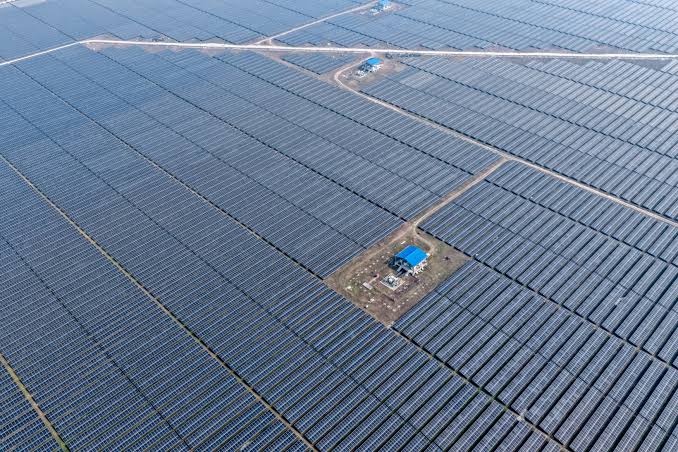
Zamfara State is targeting more than 625,000 people with improved electricity access through 37 solar mini-grid projects with a combined generation capacity of 18.8 megawatts-peak (MWp), to be deployed across seven local government areas.
The projects, being facilitated by the federal government through the Rural Electrification Agency (REA), will provide 125,106 planned electricity connections across Gummi, Gusau, Kaura Namoda, Maradun, Shinkafi, Tsafe and Zurmi.
The initiative was announced at an event attended by the Minister of Power, Mr. Joseph Tegbe; Zamfara State Governor, Dauda Lawal and the Managing Director of REA, Dr Abba Aliyu, where the state also unveiled its electricity policy and signed a collaboration agreement with the agency for the solarisation of public institutions.
The 37 projects comprise two interconnected and 35 isolated mini-grids, representing a major expansion of decentralised electricity infrastructure in the state.
Gusau accounts for the largest share, with six megawatts of planned solar capacity and 29,738 connections, followed by Kaura Namoda with 3MW and 15,000 connections, and Shinkafi with 3.3MW and 18,937 connections.
Speaking at the event, Aliyu said the projects were designed not merely to expand electricity access but also to stimulate economic activities, strengthen agricultural value chains, create jobs and attract private investment.
He said the 125,106 planned connections could potentially reach more than 625,000 people, using an illustrative average of five people per household-equivalent connection.
Aliyu, however, stressed that infrastructure delivery must be supported by appropriate electricity market policies and commercially sustainable investment models.
“Infrastructure without an enabling market framework risks becoming a collection of disconnected assets,” he said, adding that clear policies, effective institutions, commercially viable tariffs and predictable investment conditions were necessary to build a sustainable electricity economy.
In a related development, Governor Lawal unveiled the Zamfara State Electricity Policy, which is expected to provide the framework for developing the state’s electricity market under the Electricity Act 2023.
The policy is designed to promote private-sector participation, attract investment, strengthen institutional coordination and establish a sustainable electricity market aligned with the state’s economic development priorities.
Other News
The state government also signed an agreement with REA to solarise public institutions, including healthcare facilities, educational institutions and other critical government infrastructure.
As part of the event, Tegbe commissioned two solar projects developed by the Zamfara State Government: a 1MW solar mini-grid at Yariman Bakura Specialist Hospital and a 1.2MW facility serving the Government House.
The two projects have a combined generation capacity of 2.2MW and more than 3MW of battery storage.
The minister also unveiled 100 electric taxis under the ZamTaxi initiative, alongside 10 electric tricycles dedicated to maternal healthcare transportation.
Two compressed natural gas (CNG) buses donated by the Presidential Initiative on Compressed Natural Gas (Pi-CNG) were also unveiled.
Speaking at the event, Lawal said the electricity policy and REA partnership were part of his administration’s efforts to establish a structured and investment-friendly electricity market.
He said reliable electricity was essential to agricultural transformation, industrial development, healthcare delivery, education and job creation.
“Our objective is to create an electricity ecosystem in which government provides the enabling environment, private investors bring capital and innovation, and our communities benefit from reliable and affordable electricity,” he said.
Also speaking, Tegbe said the Federal Government would continue to support states taking practical steps to develop their electricity markets and attract private investment.
He said electricity infrastructure must go beyond providing lighting to supporting hospitals, educational institutions, businesses and agricultural productivity.
The minister added that the Zamfara projects demonstrated the role of decentralised infrastructure and state-level market development in addressing Nigeria’s electricity challenges.