Follow Us on Google
By Chinyere Anyanwu, [email protected]
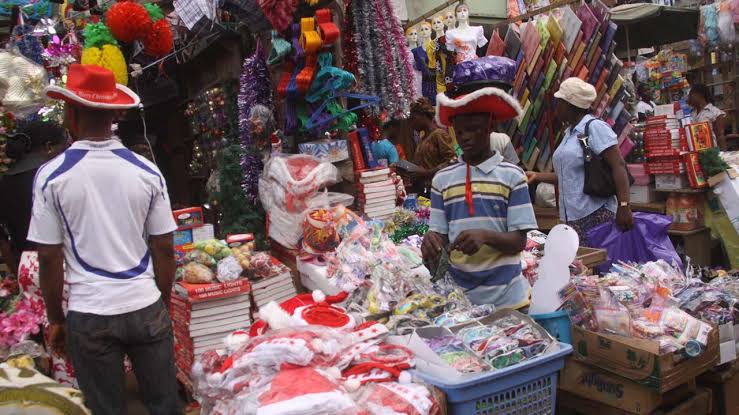
As Nigerians prepare to celebrate the Yuletide, many are grappling with the harsh realities of soaring food prices and widespread economic hardship. The festive season, traditionally marked by family gatherings and feasts, is now overshadowed by the financial strain faced by countless households across the country.
Given the current economic challenges, soaring food prices, and the sharply diminished purchasing power of many consumers, this year’s Christmas celebration, falling tomorrow, along with the upcoming New Year festivities, may lack the usual joy and excitement that typically define the season.
Consumers are the worst hit because they bear the brunt of the situation. Food items, which they purchased this time last year, have either doubled in price or increased by over 100 percent.
A 50kg bag of long grain rice is currently selling for between N100,000 and N110,000 as against the N45,000 to N50,000 it sold last Christmas. A 20-litre gallon of vegetable oil, which was purchased at the rate of about N35,000 last December, is being sold for N80,000, while the 1.5-litre bottle is selling for almost N6,000, a difference from the N1,900 it was sold last Christmas.
A 10kg carton of frozen chicken (Orobo), which sold for about N25,000 last yuletide, is going for N45,000 this Christmas, while live broiler chicken, which was purchased at the cost of between N12,000 and N15,000 last December, is selling for between N23,000 and N25,000.
Onion, a major ingredient in every meal, especially in this season, has gone almost out of the reach of the average consumer. A bag of onions, which sold for between N100,000 and N120,000 last Christmas and New Year season, is currently selling for N300,000. A bag of pepper (rodo) is being bought for about N150,000, as against the N80,000 to N90,000 it was bought this time last year. A basket of tomatoes that sold for about N50,000 this time last year is selling at the price of about N90,000 to N100,000.
The escalating cost of these major food items, among others, has been attributed to the high and unstable cost of petroleum products, which impacts every aspect of food production, from cropping to landing in the market. The farmer relies on fuel to run his farm machinery, including irrigation equipment, and the truck driver who takes the produce from the farm to the market relies on fuel to move his vehicle.
A consumer, Mrs. Bose Alebiosu, who lamented the high cost of food items this yuletide season, said, “We don’t know where we are going in this country. I’m not a frozen chicken person, but with the cost of one broiler today, I don’t know if I can still afford to use live chicken for Christmas this year. A broiler is costing almost N30,000. How many will I kill to be able to get enough meat to go round the family, not to talk of visiting friends and extended family members? You know we are Africans, we don’t eat alone.”
Another consumer, Mr. Martin Ogueri, speaking on the effect of the economic hardship on the yuletide celebrations, said, “I never believed a time will come in this country when the average Nigerian will find it almost impossible to prepare rice and chicken for his family on Christmas and New Year days. But that is where we are today. Everybody should just stay within their means as we pray and hope for better days ahead.”
In a recent chat with the National President of Agricultural Commodity Consumer Association, Dr. Kenechukwu Aloefuna, the Economics of Production (EOP) and government’s lack of control on production processes are playing a huge role in making the availability of food on the common consumer’s table difficult.
Aloefuna said, “Under the 2018 – 2022 review period, CBN (Central Bank of Nigeria) was funding rice production at the cost of N15,000 – N18,000 Economic of Production (EOP), but as I speak to you, it is taking N25,000 – N30,000 per bag EOP in the last six to nine months. When it was N15,000, rice was selling for N36,000 per bag, but now that it is twenty-something thousand, a bag of rice is selling for N90,000 (local brand). Which means the government has no grip on the system because they are not supporting anybody.”