Follow Us on Google

From Idu Jude, Abuja
Presidential candidate of the Young Progressives Party (YPP), Peter Agada, has urged the National Assembly to defer approval of President Bola Tinubu’s proposed supplementary external borrowing of about $21.7 billion, expressing concern that disbursement ahead of the 2027 general election could serve political interests.
Agada, in a statement yesterday, asked lawmakers to demand a detailed breakdown of the projects proposed for financing, an account of previous loans and safeguards against the use of borrowed funds for election-related expenditure.
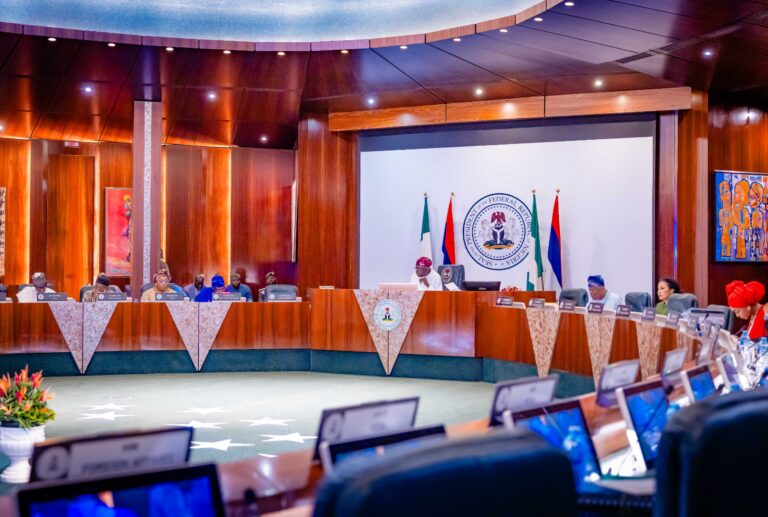
He was reacting to the President’s request for approval to borrow $20.52 billion and €1.045 billion under the 2026–2027 Supplementary External Borrowing Plan, contained in a letter read by Senate President Godswill Akpabio at Tuesday’s plenary.
Tinubu said the facilities would finance projects in infrastructure, agriculture, healthcare, education, water supply and security, among other sectors, with most of the projects spread across the 36 states and the Federal Capital Territory. He said the projects had undergone technical and economic evaluations and would help bridge the country’s infrastructure financing gap.
Agada, however, questioned the timing of the request, arguing that the government should demonstrate how previous borrowings had been utilised before seeking fresh facilities.
“For three years now, the Federal Government has been unable to fully finance its budget. Capital budget performance is below 40 per cent. Contractors are being owed across the country. Yet we are borrowing more.
“In architecture, you don’t borrow to build a new house when you have not roofed the old one. You complete old projects first,” he said.
Citing Nigeria’s total public debt of N166.79 trillion as of June 2026, Agada said further borrowing required closer legislative scrutiny, particularly as the country approached another general election.
He questioned why increased government revenue following the removal of petrol subsidy and changes to the foreign exchange regime had not reduced reliance on loans.
“We removed fuel subsidy. We floated the naira. Government revenue has tripled. Why are we still borrowing at the same rate as when subsidy existed? Where did the subsidy savings go?” he asked.
Agada argued that the proximity of the elections made it necessary for lawmakers to establish clear conditions for the release and use of the proposed facilities.
“If you must approve this loan, insert a clear clause: No disbursement of this $20.5 billion from January 2027 to May 2027.
“The money should come after the election, to whoever wins, not before the election to the incumbent. That is how you prove it is not political,” he said.
The YPP candidate also called for spending reforms, arguing that substantial infrastructure funding could be generated through reductions in the cost of governance, procurement reforms and the recovery of public funds.
Other News
“What Nigeria needs is not fresh borrowing. What Nigeria needs is non-FAAC funding from savings inside government itself,” he said.
Outlining his proposals, Agada advocated a 40 per cent reduction in the cost of governance at the federal level, consolidation of agencies with overlapping functions and cuts in expenditure on official fleets, foreign trips and offices.
He proposed reducing what he described as 250 wasteful and duplicating agencies to 40 productive institutions, claiming that the measures could save more than ₦4 trillion annually.
Agada also advocated reforms to Engineering, Procurement and Construction contracting, under which government would deal directly with original equipment manufacturers and certified professionals.
He argued that eliminating layers of intermediaries could reduce capital project costs by 35 per cent and generate annual savings exceeding N6 trillion.
Further savings of more than N3 trillion, he said, could come from auditing tax waivers, incentives and Ways and Means financing, stopping payments for ghost projects and accounting for savings from subsidy removal.
“I can tell you that Nigeria can save over N13 trillion yearly, without touching FAAC, without borrowing $20.5 billion, without new tax.
“With N13 trillion from lean governance, you don’t need to borrow $20.5 billion to build infrastructure from Abuja. That Abuja-contractor model failed for 26 years. Money finishes in Abuja; projects never reach the ward,” he said.
Agada maintained that additional borrowing without improvements in project delivery would increase the burden on future generations.
“An architect does not add load to a collapsed pillar. He first strengthens the pillar,” he said.
He challenged the Federal Government to publish details of projects financed through what he described as a previous $2.347 billion borrowing in October 2025, alongside an audited report on infrastructure projects undertaken since 2023.
“Publish an audited report of all infrastructure projects since 2023. Which is completed? Which is abandoned?” he asked.
He also demanded a project-by-project breakdown of the proposed borrowing, including the locations of roads, hospitals and other facilities to be financed.
“Where is the detailed project compendium for this $20.5 billion? Not just a sector list: power, health, agriculture, water. Which specific road in which ward? Which specific hospital in which ward?” he asked.