Follow Us on Google
By Benson Michael
In a world where bold ideas often struggle to find the right environment to grow, the Society for Scientific and Technological Advancement has become an unexpected launchpad for young African innovators.
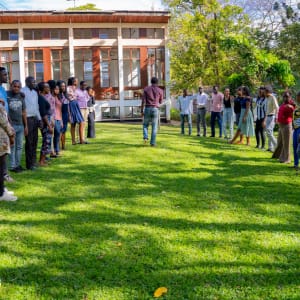
The organisation’s fellowship community, once a modest membership cluster, is now nurturing a wave of fellows whose projects are quietly reshaping education, agriculture, public health, and local economies.
Their impact is spreading across regions that have long been overlooked, and their progress is beginning to attract national attention.
The TSSTA fellowship began as a small membership programme intended to support emerging creators in science and technology. What followed was the creation of an ecosystem that does more than mentor. It gives young innovators the confidence to test ideas that once felt impossible.
Dr. Amina Bashir, the organisation’s Programme Director, describes the fellowship as “a community where young people are allowed to imagine a better future while receiving the support they need to build it.” She explains that many fellows arrive uncertain, but eventually “discover a sense of belonging that pushes them to create at a higher level.”
This nurturing environment has produced remarkable stories of transformation.
One of the most talked about TSSTA fellows is 33-year-old agritech enthusiast Michael Adeyemi. His journey started in a village where unpredictable rainfall frequently destroyed crops and impoverished small farmers. With the fellowship’s guidance, Michael built a low-cost water-retention device that helps farmers maintain soil moisture for extended periods. It does not require electricity, and it works with materials already available in rural communities.
“I wanted a solution that my mother could use without calling me,” Michael explains with a shy smile. “TSSTA gave me a place where people believed in that idea before I fully believed in it myself.”
Pilot testing shows that the tool reduces crop loss by nearly half in the communities where it has been deployed. Local leaders are impressed, and Michael is now working with agricultural institutes that want to scale the solution nationwide.
Another remarkable fellow, 21-year-old computer science student Esther Mbah, became frustrated by the gap between wealthy students who have access to digital laboratories and rural students who struggle to access even basic computers. Her idea was to create a mobile digital classroom that moves from village to village, giving children access to science experiments, coding lessons, and interactive learning materials.
“When I joined the fellowship, I was just a student with a dream,” Esther recalls. “The community treated me like a creator who had something valuable to offer. That changed everything.”
Her mobile digital classroom has now reached more than 900 students across four states. Parents say their children now speak confidently about careers in engineering and medicine, something previously rare in the area.
While most TSSTA stories focus on technology, some of the most meaningful impacts have come from health-related innovations. Fellow and biomedical researcher Samuel Chukwu is developing a rapid community screening system for malaria risk. The system identifies transmission hotspots by combining recent health records, community surveys, and environmental observations.
A senior member of the TSSTA advisory board notes that “Samuel’s work is providing decision makers with information they never had before. It gives communities clarity and improves preparedness.”
Public health officials report that this model is already reducing the time to respond to malaria outbreaks in several districts.
What ties these stories together is not only the innovation. It is the sense of identity that membership provides. TSSTA’s leadership often says that the organisation does not simply train individuals. It raises a generation of believers who feel responsible for the continent’s future.
Community mentor Vivian Oloriegbe puts it simply. “Many of our fellows arrive feeling invisible. They leave feeling seen. When young innovators feel seen, they build things that change communities.”
Membership numbers continue to grow as more young creators join the movement. The organisation’s leadership believes this growth is a sign of renewed interest in science and technology careers, especially among young people who once felt excluded from such paths.
As TSSTA prepares for its next fellowship cycle, anticipation is rising. Community members want more classrooms, more agricultural tools, more health innovations, and more opportunities for the next generation. Local governments are beginning to explore partnerships, and international development agencies are taking notice.
The most compelling aspect of this story is the quiet confidence the fellows share. They do not see their work as extraordinary. They see it as necessary.
In the words of Esther, the young creator behind the mobile classroom, “We are not waiting for the future. We are building it with our own hands.”
The journey of these fellows proves that when young Africans are supported, mentored, and given room to create, their impact reaches far beyond expectations. The Society for Scientific and Technological Advancement is nurturing a movement that has the potential to reshape the continent, one idea at a time.