Follow Us on Google

By Enyeribe Ejiogu
There is simply no question that the real estate market is rapidly growing across the country. The trend is literally exploding in Lagos, the centre of excellence.
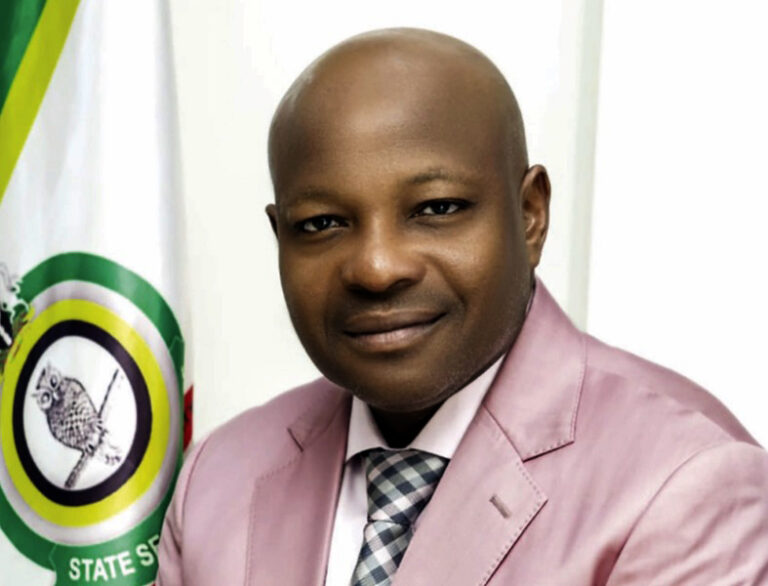
Among the lawyers at the leading edge of the growth is Osondu Ajuzie, who has been practicing in Lagos for about 24 years. He holds what lawyers love to refer to as Double LL.M, i.e. two Masters Degrees: one is a general LL.M from University of Lagos and the other is a specialized LL.M from Lagos State University. He is a doctoral degree candidate at Babcock University, Nigeria. Osondu has authored several law books, such as Modern Nigerian Family Law and Practice; Our Common Environment: Understanding the Environment, Law and Policy; Modern Maritime Law and Practice in Nigeria; and Modern Nigerian Law and Procedure of Meetings. His current research effort is on Comparative Oil and Gas Law in which he is comparing Nigerian Oil and Gas Law with those of five other countries. In this interview, he proffers advice to individuals and groups of people on the proper, wise and beneficial way to invest and acquire land in Lagos and other urban areas.
There appears to be great interest among people to acquire land in urban centres like the Lagos metropolis, where land is being offered in every part of the state like soft drinks. What accounts for this sharp increase in interest to acquire land by the populace?
Two major reasons account for the sharp increase in the quest to acquire land in Lagos and other urban cities in Nigeria. The first is the fact that people have come to realize that land appreciates over time and does not depreciate in value especially in urban cities. The second reason is that due to population increase, the demand for land and houses in urban cities has sharply increased and has, by the interplay of forces of demand and supply, caused a corresponding sharp increase in rents and leases of houses. The combined effect of these two factors has made people realize that it is better to buy their own land and build their own houses in order to avoid landlord and tenant problems and also to save costs associated with living in rented apartments.
Oftentimes we have seen disputes or court cases arise over undeveloped land previously acquired by one party but secretly resold to another person. What legal steps should a person considering acquisition of undeveloped land take to avoid disputes after acquisition?
Such cases are rampant in Lagos and other urban cities. In fact two of such cases my chambers is handling have lasted for over 17 years at the High Court and the contention still rages on. One of the reasons why such incidents do occur is that some people decide to be “penny wise and pound foolish” when buying landed properties. Penny wise in the sense that such people refuse to engage the services of experienced lawyers to provide them with legal guidance so as to avoid the legal fee they would pay for such legal services. They are “pound foolish” in that the same people would pay millions of naira for the land without taking proper legal steps and drafting appropriate legal documents that would confer good title on them. In the end many of such people have lost those millions because they ended up buying lawsuits instead of buying land. So the proper step for a person considering buying land in urban cities is to consult an experienced lawyer to guide him or her through the process. Unfortunately, many people would rather prefer to use roadside agents rather than engage a lawyer.
The Land Use Act vests in state governors the power to issue certificates of occupancy for landed property. Governors tend to delay for too long or even just simply refuse to issue certificates of occupancy. Can a citizen initiate a lawsuit to compel a state governor to issue the certificate of occupancy after the expiry of a reasonable period of time – if due process for acquiring land has been followed and the landed property duly registered?
I believe no State Governor would deliberately refuse to issue Certificate of Occupancy (C of O) or give consent to subsequent transactions on land in his/her State if the necessary conditions have been met by the applicant. Delays in the grant of C of O are not caused by the governors. A number of factors combine to occasion delay in issuance of C of O. One of them is bureaucratic bottlenecks introduced by civil servants in land registries; another is where applicants fail to pay the necessary fees for the issuance of C of O as assessed by the State Government on time if at all; or where they fail to provide the appropriate documents required for the issuance of the document. I would also add that the advice of lawyers is much needed in the processing of C of O. But where there is an established case of deliberate refusal by a Governor to grant C of O after the applicant has met all conditions prescribed for that purpose, then a citizen can institute an action such as Mandamus which is an order of court to compel a public office holder to perform a public duty or statutory duty imposed on him or her by virtue of holding the office. Issuance of C of O is a statutory duty imposed on the governor the performance of which can be compelled by an order of mandamus in deserving circumstances. My advice though, would be that this should be the last option after all other alternative options must have been exhausted.
Is it always wise to invest in large acreages of purely virgin, undeveloped land as an asset?
I would say yes to this question. The reason is that land appreciates over time. One factor which leads to rapid appreciation of land value is attributable to the government’s infrastructure development projects which open up new areas. So, the best time to acquire large acreages of land is when an area is not yet fully developed because it would be cheaper to acquire large acreages of land at that stage. When an area opens up and developments reach the area, then landed properties in the area appreciate significantly, thereby forcing the price to go up. Such acreages eventually turn to assets in the hands of the owners in the near future. So it is the right step to take rather than leaving your money in the bank to idle away and eventually deplete.
Looking at the Lagos State real estate market today and developmental trajectory, what advice can you give any person or a group of people seeking to invest in land as an asset?
Lagos and its environs are opening up fast. The major cities in Lagos are already saturated with large populations of people hence the cost of buying land and renting houses have sky-rocketed. So an average person should not be waiting to save millions to buy land in major cities because it may not come in handy. My advice is that people should quickly go to new developing areas where land is still cheaper to acquire.
Ibeju Lekki area and its environs are designated New Lagos because a lot of developmental activities are ongoing in these areas. Such activities include the proposed new international airport, deep seaport, proposed Fourth Mainland Bridge, Dangote Refinery, real estate development projects and building constructions. Some of these developmental projects, such as Dangote Refinery and the Deep Seaport, have already taken off. So the time to buy land cheaper in the New Lagos area is now that some of these proposed projects have not been fully implemented. When that happens, then land would become virtually unaffordable to the average Nigerian in the area. Right now you have a lot of relatively cheap land still available and begging to be purchased. In the near future, people would be begging to purchase these landed properties at exorbitant prices and it would then be a race of survival of the richest as it is now in other developed areas of Lagos.
What is the safest way to go about achieving that desire?
As I stated earlier, anyone that wants to buy landed property in Lagos and other cities in Nigeria should avoid the “penny wise pound foolish” approach which I described earlier. They should be guided by professionals and the best professionals in land acquisition are lawyers.
Legal advice would enable you to land safely in land acquisition in urban cities. Many who have avoided professional guidance in the acquisition of landed property have crash-landed as many who intended to buy landed properties have ended up buying lawsuits instead of landed properties.