Follow Us on Google
From Jude Chinedu, Enugu
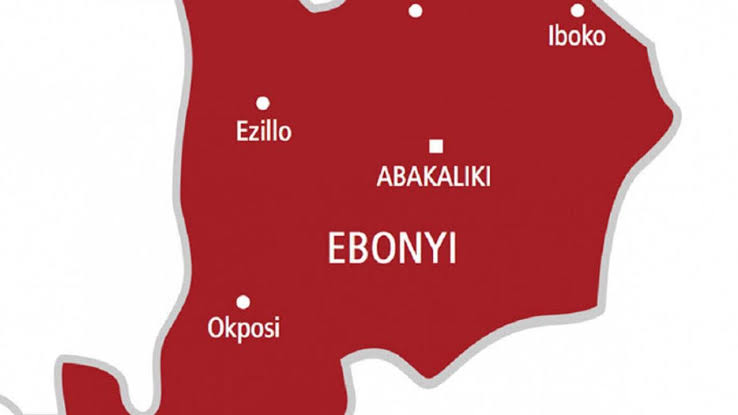
For decades, residents of Umabor in Eha-Alumonah community, Nsukka Local Government Area of Enugu State have remained loyal to successive governments, turning out massively during elections and consistently giving their support to those seeking political power.
But, according to the people, that loyalty has never been rewarded with development. Today, frustration has reached breaking point.
Last week, angry youths of the community took to the streets in protest, publicly expressing outrage over what they described as decades of neglect and abandonment by successive administrations in Enugu State.
The protesters lamented the poor state of infrastructure in the community, pointing at collapsing school buildings, bad roads, neglected health facilities, and worsening insecurity, insisting that despite repeated appeals over the years, government intervention has remained nonexistent.
For many residents, the protest was more than a demonstration. It was the public release of years of bottled frustration over what they see as systematic neglect of a community that has consistently played its part in the democratic process.
During the protest, the youths issued what appeared to be a political warning ahead of the 2027 general elections, declaring that politicians would no longer be welcomed into the community for campaign activities if the pattern of promises without visible development continues.
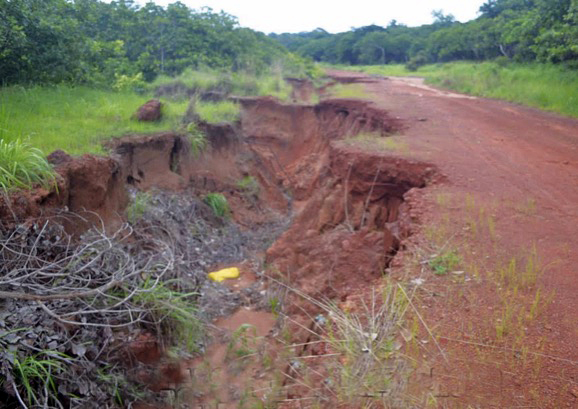
Among the major concerns raised by the protesters was the deplorable condition of Agu-Umabor Road, which residents said has become a nightmare for commuters and has contributed significantly to rising insecurity along the axis.
Community members also complained about repeated attacks by suspected Fulani herdsmen, arguing that poor road infrastructure has worsened security challenges and made the area increasingly vulnerable.
Beyond the physical protest, many indigenes also took to social media to amplify their frustrations, sharing disturbing images of abandoned public infrastructure while appealing for urgent intervention.
One of them, Utonwa Michael, painted a troubling picture of the state of education facilities in the area.
He said: “This is the current state of our primary and secondary schools as of this morning, 16th June 2026. While we appreciate the government for the Smart School Project and its commitment to improving education, we passionately appeal to them to come to our rescue.
“The distance between some of our villages and the Smart Schools is too far, thereby denying many of our sons and daughters access to quality and accessible education.
“As a result, many children are unable to benefit from these facilities due to the challenges of distance, transportation, and safety.
“We, respectfully, call on the government to address this situation by rehabilitating existing schools within our communities and ensuring that every child, regardless of where they live, has access to quality education close to home.
“Education is a fundamental right, and we believe that no child should be disadvantaged simply because of where they reside.”
Another indigene, Christian Nnaemeka, also expressed deep frustration over what he described as the repeated abandonment of the community after elections.
For him, the issue reflects a larger pattern in which communities are remembered only during campaign periods and forgotten immediately after politicians secure power.
In his own reaction, Nnaemeka said: “The current state of roads and schools in Umabor, Nsukka LGA, is not encouraging at all.
“As a community, we come out in large numbers during elections and faithfully perform our civic responsibilities. Unfortunately, after elections, it often feels as though Umabor is forgotten.
“Our roads are in poor condition, many of our schools need serious attention, and security remains a growing concern. These are basic necessities that every community deserves.
“The people of Umabor are becoming increasingly agitated because they believe they deserve better. Development should not only be talked about during campaigns; it should be visible in our roads, schools, healthcare, and security.
“This time, our message is clear: leadership must be accompanied by tangible results. We will continue to demand good governance, quality education, improved security, and better road infrastructure for our people. Umabor deserves better.”
Across the community, many residents said the anger now visible in public has been building quietly for years. They said that repeated appeals to previous administrations yielded little or nothing, leaving public infrastructure in the area to deteriorate steadily over time.
Reacting to the development, spokesperson of Umabor Unity Forum, Emmanuel Ugwueze, said the level of decay in the community had become deeply painful for residents who have watched public facilities collapse with no intervention.
He recalled that several attempts had been made in the past to draw the attention of government authorities, but those appeals never produced results.
Speaking on behalf of the community, Ugwueze said: “We are so pained as a community over the level of deterioration of public infrastructure in our area. I recall that even under previous governments we cried out for intervention but nothing came out of it. The Umabor community has suffered neglect so much, and it is affecting all the public infrastructures in our place.
“All the public facilities in our community are in a sorrowful state, and demand emergency intervention. Apart from the bad state of the schools and other facilities in our area, the bad state of Agu-Umabor Road is contributing to the insecurity we are experiencing along that axis.
“We are again passionately pleading with His Excellency, the Governor of Enugu State, Barr Peter Ndubuisi Mbah, to hear our cry.”