Follow Us on Google
By Ngozi Nwoke
As the year 2025 comes to an end, Nigerians witnessed a number of controversies and scandals that rocked the nation in the dying year.
The year started off with shocking revelations about public figures and public office holders involved in serious wrongdoings with issues like insecurity, corruption, and economic struggles dominating the scene. And it continued until the end of the year.
Obasa bounces back
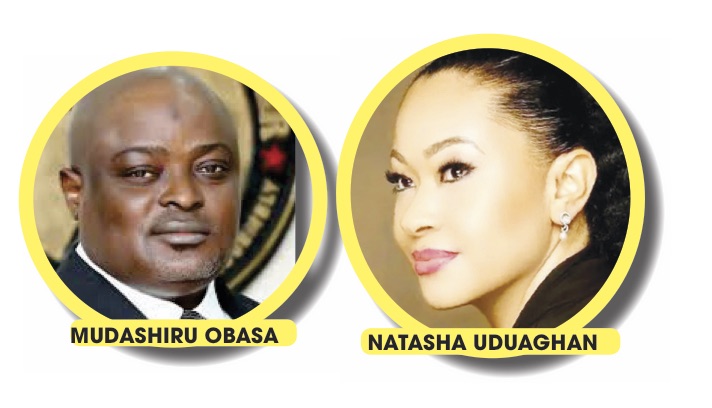
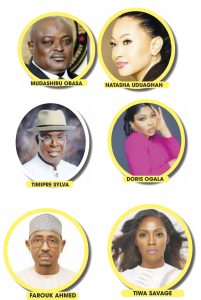
In January, Mudashiru Obasa, the Speaker of Lagos State House of Assembly was ousted by his fellow lawmakers on allegations of gross misconduct and abuse of office. But in a dramatic turn of events, he made a swift return following a decisive intervention by President Bola Tinubu.
His removal sent shockwaves through the political circles in Lagos, with 26 out of the 40 members of the House voting for his impeachment, citing alleged autocratic leadership style and mismanagement of the legislature’s affairs.
Justice juxtaposed
In a decisive move aimed at cleansing the judiciary, the Kano State Judicial Service Commission in February compulsorily retired Hudu Idris, a Registrar at the Upper Shari’a Court in Gwarzo, following allegations of accepting bribes. The move underscores a growing intolerance for graft within Nigeria’s judicial arm, even as the commission vows to uphold the integrity of the state’s legal system.
Details surrounding Idris’ dismissal point to a probe that revealed the registrar’s involvement in unethical practices, eroding trust in the administration of justice in the Shari’a Court.
Senate’s sexual harassment series
In July, One shocking development that sent ripples through the nation was the case of Senator Natasha Akpoti-Uduaghan who was suspended from the Senate for six months following her explosive accusation of sexual harassment against Senate President Godswill Akpabio. Majority of senators backed the suspension, citing the need to maintain the integrity of the upper chamber.
The Senate’s decision to suspend Akpoti-Uduaghan at that time, fuelled debates on power dynamics and discipline in Nigeria’s political landscape.
Church shocker
Also in July, a disturbing scandal sent tremors through the Nigerian Catholic Church, with Reverend Father Kenneth of the Catholic Diocese of Ijebu-Ode at the centre of allegations involving homosexuality and sexual abuse. The accusations, which sparked widespread outrage and concern, led to calls for swift action and accountability within one of the country’s most revered religious institutions. The allegations prompted the church to vow a thorough probe, emphasising its zero-tolerance stance on abuse and misconduct.
Nigerians called for justice and reforms to safeguard teenagers against similar incidents. The episode also reignited debates on how society addresses issues of sexuality and abuse, highlighting the delicate balance between faith and accountability.
Osun monarch jailed in the US over relief fund scam
In August, an Osun State monarch, Joseph Oloyede, the Apetu of Ipetumodu, and a prominent pastor Edward Oluwasanmi, were reportedly jailed in the United States after admitting to orchestrating a COVID-19 relief fund scam in the United States, defrauding the government of millions of dollars meant for pandemic-affected individuals.
Details of the case reveal that the duo exploited the CARES Act programme, submitting false claims and diverting funds intended for struggling Americans. The admission of guilt in a US court sparked outrage and disbelief, given the positions of trust the two held in their community.
The monarch, a respected traditional ruler in Osun State, and the pastor, a well-known figure in local religious circles, are reportedly facing long years in jail.
Minister’s certificate scandal
In a swift and unexpected move in October, former Minister of Innovation, Science and Technology, Uche Nnaji, resigned from his position amid allegations of certificate forgery. The development, which took many by surprise, came after mounting pressures and calls for his exit following claims that he falsified his academic credentials.
Details of the scandal pointed to questions over the authenticity of Nnaji’s purported degrees, with critics demanding transparency and accountability from the minister. The resignation sparked mixed reactions, with some viewing it as a responsible step amid the allegations, while others see it as a sign of the growing intolerance for governance improprieties. The episode added to Nigeria’s ongoing conversations about leadership integrity and the vetting of public officials, leaving questions about how such checks can be strengthened to safeguard public trust.
Oil money allegations
Former Minister of State for Petroleum Resources, Timipre Sylva, was accused by the EFCC of diverting a staggering $15 million in public funds meant for the development of a crude oil refinery in the Niger Delta. The allegations were made as Sylva was arraigned before a Federal High Court in Abuja.
The charges against him include money laundering, conspiracy, and unlawful diversion of public funds, with the anti-graft agency asserting that the actions were part of a broader scheme to siphon resources. Sylva pleaded not guilty to the charges.
His legal team has argued that the allegations are baseless, hinting at a possible vigorous defence as the trial progresses. The court granted him bail, with proceedings set to continue in the coming months.
General falls to terror’s bullets
Other News
Major General Hassan Uba, Brigadier General of the Nigerian Army was brutally murdered by terrorists in the troubled North in November, with growing suspicions pointing to possible insider sabotage. The attack heightened concerns about security vulnerabilities and the infiltration of extremist elements within military ranks.
The nature of his killing has been described as gruesome, sparking an outpouring of tributes and condemnation from military and political leaders.
Nigerians suggest the attack bears hallmarks of insider involvement, raising alarming questions about the extent of collaboration between terrorists and elements within the security apparatus.
ICPC’s five-year jail term for varsity teacher over sexual harassment
The Independent Corrupt Practices and Other Related Offences Commission (ICPC) recorded a major breakthrough in its fight against corruption and misconduct, with the recovery of N37.44 billion and $2.353 million in assets in November.
Among the high-profile convictions secured by the commission is that of Cyril Ndifon, a former university official, who was sentenced to five years’ imprisonment for sexual harassment and cyber-bullying. Ndifon’s conviction was seen as a significant victory for the ICPC, as it demonstrates the commission’s commitment to tackling abuse of power and ensuring accountability, especially in educational institutions.
Drama in Ile-Ife
The nation woke up to a scene that unfolded at the 10th coronation anniversary celebration of the Ooni of Ife, Oba Adeyeye Ogunwusi, Ojaja 11, as Nigeria’s First Lady, Remi Tinubu, confronted Osun State Governor, Ademola Adeleke in a dramatic interruption that caused much ado across the country.. The incident, which occurred on stage during the installation of Mrs Tinubu as Yeye Asiwaju Ile Oodua, saw the First Lady cutting in as the governor was singing, sparking some outrage and condemnation across social media and political circles. But the interruption did little to overshadow the celebratory mood of the Ooni’s milestone anniversary, an event meant to honour tradition and unity.
Intervention in Benin Republic
Nigeria’s military played a key role in foiling a coup attempt against President Patrice Talon of Benin Republic in early December, with Nigerian fighter jets conducting airstrikes in support of the beleaguered government.
The intervention underscores Nigeria’s influential posture in regional security matters. The coup was nipped in the bud as Nigerian forces acted in coordination with Benin Republic authorities to quell the unrest. The airstrikes, said to be targeted at specific locations, were part of efforts to neutralise threats to President Talon’s administration.
Mamman’s power play
A Federal High Court in Abuja dealt a significant blow to former Minister of Power Saleh Mamman, dismissing his no-case submission in a monumental N33.8 billion fraud case. The Economic and Financial Crimes Commission (EFCC) had arraigned Mamman on 12 counts of money laundering and conspiracy, allegations the ex-minister vehemently denied. Mamman, who served under President Muhammadu Buhari’s administration, was accused of misappropriating funds meant for power projects during his tenure. The EFCC alleges the money was siphoned through various shell companies, pointing to a complex web of financial transactions that prosecutors argue warrant a full trial.
Trust breach at Aso Rock
In a revelation that shed new light on the personal life of Nigeria’s former President, the late Muhammadu Buhari, former First Lady Aisha Buhari has disclosed the deep strain her marriage endured amid baseless rumours of a plot to kill her husband. The account is featured in a 600-page biography, From Soldier to Statesman: The Legacy of Muhammadu Buhari, authored by Charles Omole.
According to Aisha Buhari, the period was marked by intense emotional distress as unfounded gossips circulating in Aso Rock, the presidential villa, led President Buhari to become increasingly distrustful, to the point of “locking his room.” The former First Lady’s candid narrative paints a picture of a man who grappled with the weight of leadership and the toll of unrelenting speculation on his health and personal relationships.
Tiwa’s turmoil
In a raw and emotional revelation, Afrobeats singer, Tiwa Savage opened up about one of the darkest chapters of her life, which was the leak of her sex tape in 2021.
Speaking candidly, she described the overlapping tragedy as her “lowest moment,” a painful period that tested her resilience. Savage, who has built a reputation as one of Africa’s leading female artists, revealed that she coped with the blow by choosing not to dwell on it. She explained that the only way she could have survived the scandal was not to think about it as it was also about a period that included vicious backlash and attempts to blackmail her by the person who leaked the tape.
Promise unfulfilled
The December controversies would be incomplete without the disturbing case of Nollywood actress Doris Ogala, which has set the stage for a potentially explosive legal battle, announcing her intention to sue Chris Okafor, pastor and founder of Grace Nation Bible Ministry, over allegations of a broken marriage promise.
Ogala, known for her roles in several popular Nigerian films, claims that Okafor, a prominent pastor, had made commitments to marry her, only to discard her and make same promise to another young lady.
Details of the nature of their relationship and the circumstances surrounding the alleged promise have been making the rounds on the social media, in viral videos shared by Ogala, even as the actress expressed her determination to seek justice.
Dangote’s bombshell
One exposition that sent ripples through Nigeria’s business and political circles, was Aliko Dangote’s corruption allegation against Farouk Ahmed, the head of the Nigerian Midstream and Downstream Petroleum Regulatory Authority (NMDPRA) who has since been forced to resign.
Dangote accused Ahmed of paying $5 million for his children’s secondary school education in Switzerland, sparking immediate calls for investigations. He thereafter petitioned the anti-graft agency, ICPC, to investigate the matter.
Dangote, Africa’s most influential entrepreneur, did not mince words in his criticism, linking the alleged payment to purported preferential treatment in the oil sector. The NMDPRA boss eventually tendered his resignation after a meeting with President Bola Tinubu at the Presidential Villa.