Follow Us on Google
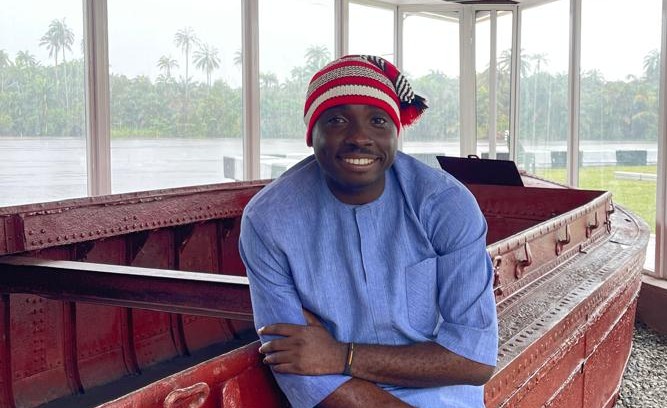
By Benson Michael
In anticipation to the forthcoming 37th Session of the United Nations Working Group of Experts on People of African Descent (WGEPAD), Prince Uyanga MSc, through Yanga Voyage, an Afrocentric storytelling collective, has called for a transformation in how African migration is represented globally — from stories of suffering to narratives of strength, creativity, and dignity.
The session, which has as it theme “Crossings and Journeys: People of African Descent in Global Migration and the Enduring Architecture of Racialization,” explores how racism continues to shape migration experiences and systems worldwide.
In its formal submission, Yanga Voyage, challenges centuries-old portrayals of African migration as tragedy and displacement. Instead, the collective reframes it as a powerful continuum of becoming — rooted in heritage, imagination, and the pursuit of self-determination.
> “For too long, Africans on the move have been reduced to statistics and stereotypes,” said Prince Uyanga MSc, Founder and Curator of Yanga Voyage.
“Our goal is to return humanity to the migration story — to show that every journey carries creativity, resilience, and purpose. Migration for Africans is not just movement; it is memory, innovation, and becoming.”
Founded as a pan-African travel and cultural storytelling platform, Yanga Voyage documents the lived experiences of Africans across borders — from Lagos to Kampala, Accra to Dakar, and Addis Ababa to Nairobi. Through photography, film, and digital storytelling, it amplifies African voices and narratives often overlooked in mainstream discourse.
The UN submission engages directly with WGEPAD’s six thematic areas – racialized migration control, precarity in transit, trafficking and smuggling, media representation, detention technologies, and deportation. It proposes storytelling as a decolonial tool that can influence migration policy, shape perception, and promote racial justice.
Among its key recommendations, Yanga Voyage calls for:
Investment in community-led storytelling initiatives as part of migration research and advocacy.
Support for Afro-diasporic media platforms to counter misrepresentation.
Recognition of narrative sovereignty as an essential component of reparative and racial justice.
“Storytelling is not entertainment; it is evidence,” the paper states. “Each story told from an African lens dismantles centuries of distortion and builds pathways toward understanding and equity.”
Yanga Voyage’s submission reinforces a growing movement across Africa and its diaspora — one that seeks to redefine migration not as loss, but as legacy. By reclaiming the narrative of crossings and journeys, the collective asserts that Africans are not merely migrants; they are creators of global meaning.