Follow Us on Google
From Ismail Omipidan, Abuja
Recently, Nigerians from all walks of life gathered in Abuja, to x-ray the country’s fourth republic, identifying what was working and what was not working. Ironically, whether by omission or commission, no one, either from the audience or the panellists and other speakers identified the challenges in the power sector as part of the things that were not working in the current fourth republic. However, one unique feature about the presentations by the panellists is that they were well researched and data-driven.
Gathered under the platform of the Daily Trust Dialogue, the 23rd in the series, speaker after speaker applauded the journey so far and commended Nigerians for allowing civil rule to endure this long, the longest since the country’s independence.
With the exception of the Special Adviser to President Bola Ahmed Tinubu on Media and Public Communications, Sunday Dare, virtually all those who spoke were of the view that the progress being made, especially in the current administration is not reflecting on the lives of ordinary Nigerians.
But Dare, who practically could be said to be on the hot-seat on the day, put up a strong defence, arguing that the opposition cannot cherry-pick which data to rely on and run with, especially when they are from the same source like the World Bank, just as he insisted that it takes time for reforms to grow.
While arguing that reforms do not grow overnight, Dare further submitted that the country’s present challenges cannot be divorced from the Peoples Democratic Party’s (PDP) 16 years rule, when according to him, the leaders frittered away the golden opportunities to invest in critical infrastructure.
“Somebody was in charge of the shop for 16 years. Somebody was supposed to provide rail transportation, fix electricity with $16 billion, improve airports and schools. That somebody failed, and that somebody is the PDP.”
Reminded that the All Progressives Congress (APC) too has been in power since 2015, Dare said recovery from years of poor governance takes time, especially when reforms are “deep and structural.”
On the claim that the APC is intimidating or coercing opposition politicians into defecting, Dare said “there is a fear being pushed around that the APC wants a one-party state. Nigeria practises a multi-party system. The APC is a dominant party, absolutely, but those who want to cross over can do so freely.
“I have been in the opposition before, and I know the swan song of the opposition. We have many ventriloquists who claim to be visionaries, and there is a difference.
“Bring better ideas and push those ideas through superior conversations instead of crying foul all the time. History will teach us. For 16 years, the PDP was the dominant party. When governors moved from one party to another then, nobody blamed the ruling party for incursion. So how do you now blame the APC?”
He contended that Nigeria’s Fourth Republic has so far endured because it has continued to learn from the failures of previous republics, adding that “Nigeria’s future depends on leadership willing to reform systems, confront historical grievances with honesty and build a democracy that works not for some, but for all Nigerians. Every leader falls on his own sword of performance,” he declared, saying that in President Bola Ahmed Tinubu’s administration, Nigeria is witnessing what he termed economic renewal, driven by “robust macroeconomic sequencing. Reform is not anti-democratic. Reform is democracy’s insurance policy,” he added.
He also dismissed the assertion by some Nigerians that the 10th National Assembly is a rubber stamp, saying “just imagine saying that 109 senators and 362 House of Representatives members are entirely rubber stamps. These are representatives of the people, and in the last two to three years, they have passed laws that have benefited Nigerians.”
He urged critics to assess the on-going reforms based on facts rather than rhetorics. He cited the foreign exchange unification, subsidy removal and increased revenues for sub-national governments as some of key policy gains of the Tinubu-led administration.
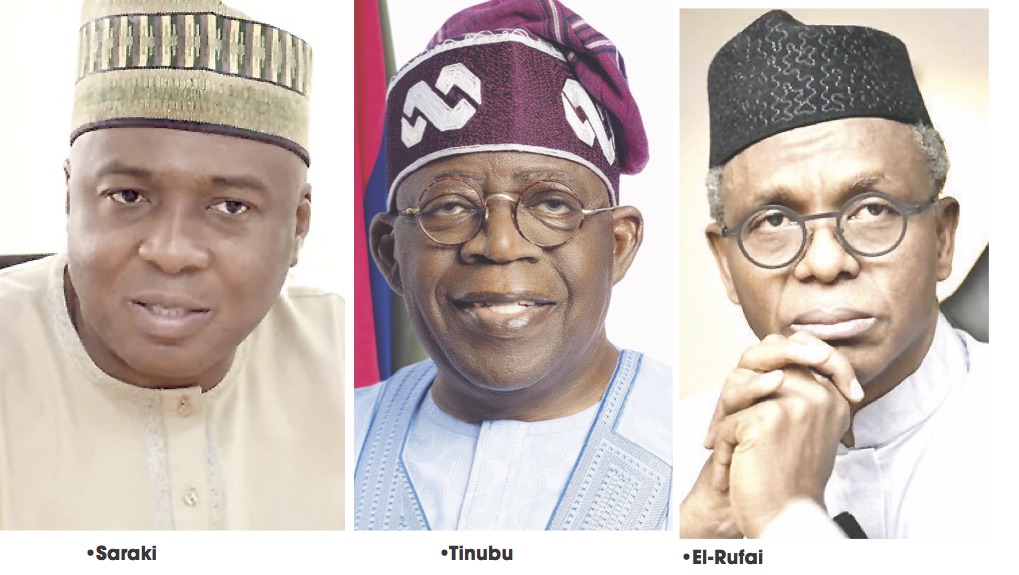
On his part, Former Kaduna State Governor, Mallam Nasir Ahmed El-Rufai, who announced that the APC’s rein will come to an end next year, declared that the Tinubu-led administration is one where there is governance without accountability, just as he noted that the government is carrying out a selective fight against corruption, a development, he said undermines democracy, weakens accountability and erodes public trust in government.
Other News
“Detention without probe must end. When law enforcement is weaponised against political competitors, democracy erodes quietly, but steadily. We must stop the organisation of security agencies for regime protection rather than for democratic preservation.
“We have governance without accountability. We conduct elections, create agencies and announce asset recoveries, but accountability through governance remains selective. Corruption has become dangerous for some who are in opposition, negotiable for others who are sitting on the fence and want to move to the APC, and invisible for those aligned with power. APC members are never accused of corruption. When laws are enforced unevenly, deterrence collapses. And when deterrence collapses, trust evaporates, and this is what is happening in Nigeria. We seek a democracy that delivers, not one that survives through coercion and selective persecution,” he said.
Setting the tone for the dialogue earlier, former Senate President, Abubakar Bukola Saraki, who chaired the occasion noted that Nigeria’s democratic survival alone is not a measure of success. He cautioned that continuity without quality is meaningless if it fails to deliver tangible benefits for citizens.
He acknowledged the achievements of the country’s 26 years of uninterrupted civil rule, including peaceful transfers of power, freedom of expression, media pluralism, civil society engagement, and a judiciary that has at times checked excesses, and warned that longevity alone does not equal success.
“Democratic continuity without quality is not success. We must ask ourselves, with candour and courage: what is working, what is failing, and what must change? This is not a time to speak from our political divides. Let us drop our political gowns and discuss as patriotic Nigerians, with a common goal to make our country great.
“The Fourth Republic has survived, but survival is not enough. Nigerians expect democracy to deliver for them — in security, governance, economic opportunity, and justice. Continuity without quality is empty,” he added.
Weighing in as a panellist, a former federal lawmaker, Nnenna Elendu Ukeje, submitted that Nigeria’s Fourth Republic has failed to deliver economic security and empowerment for citizens, despite its over two decades of democratic governance.
“Nigeria votes, but accountability remains weak. Institutions are not rules-based. Public confidence in leadership is declining,” she said.
According to her, statistics showed that over 70 per cent of Nigerians are dissatisfied with how democracy functions in the country, adding that turnout in presidential elections dropped from 52 per cent in 1999 to just 26.7 per cent in 2023, a development, she noted, underscores the growing political disillusionment in the electoral system.
Relying on a World Bank data, the former lawmaker said over 75 per cent of Nigerians now live below the UN poverty threshold of $2 per day, representing more than 133 million people in multidimensional poverty, up from 87 million in 2018.
“Democracy is not validated by longevity alone; it is validated by outcomes,” she noted, adding that elections are “episodic contests for power” and governance “the continuous responsibility of using power responsibly.
“The paradox of the Fourth Republic is that while politics is vibrant, democracy remains fragile and governance is receding. Democracy appears unable to resolve Nigeria’s core challenges: insecurity, multidimensional poverty, and declining accountability,” she said.
While describing Nigeria’s low representation of women in political office as a failure of governance, not merely a gender issue, Ukeje urged the 10th National Assembly to pass the long-awaited special seats bill, insisting that evidence abound to show that inclusive leadership produces better governance outcomes.
Using former Finance Minister, Ngozi Okonjo-Iweala, as an example to drive home her point, Ukeje said Okonjo-Iweala’s tenure led to Nigeria’s landmark $18 billion debt relief deal in 2005, saying “that was not symbolic inclusion; it was measurable national gain.”