Follow Us on Google
By Uche Usim
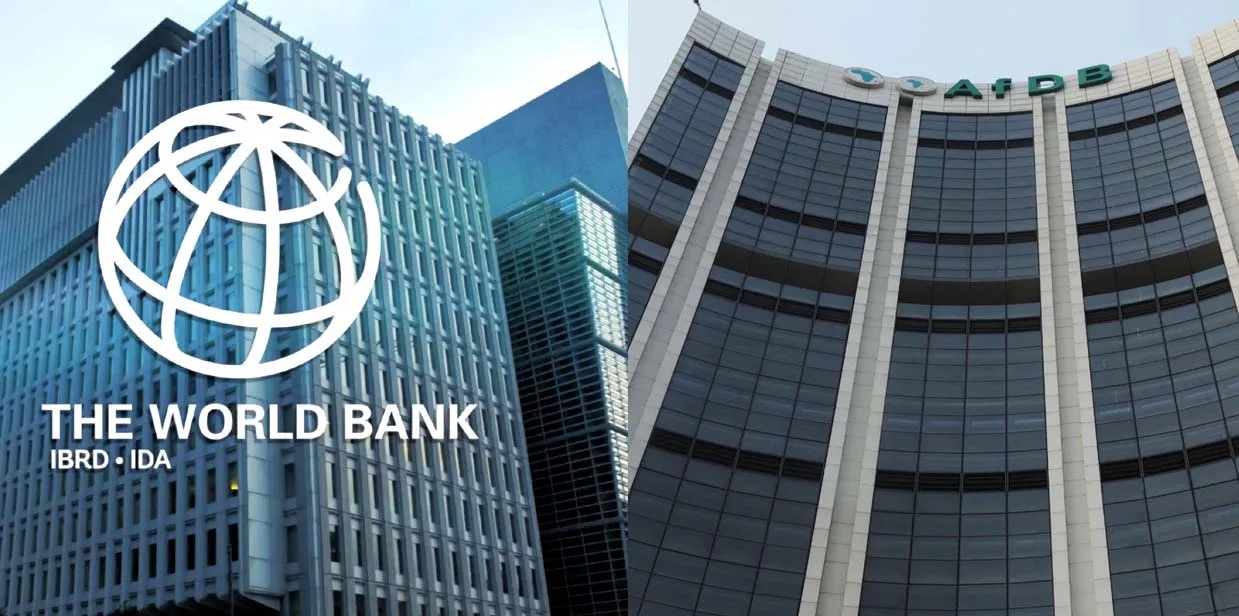
The World Bank Group has disclosed that Sub-Saharan Africa’s economy is holding steady on the surface but currently battling deepening fiscal strain, rising inflation.
This is contained in its latest Africa Economic Update released yesterday.
It added that global instability is among the key challenges putting the region’s recovery at risk.
The report pegs growth at 4.1 per cent for 2026, unchanged from 2025, but trims earlier projections and flags mounting downside risks that could derail momentum if left unchecked.
Key among these pressures are elevated debt burdens and surging debt service obligations, which are squeezing government finances and limiting investment in infrastructure and job creation.
Public capital spending remains significantly below pre-2014 levels, while the share of revenue used to service external debt has surged from 9 per cent in 2017 to 18 per cent in 2025.
The World Bank Group also observed that inflationary pressures are intensifying, fuelled by higher global energy and food prices linked in part to the ongoing Middle East conflict. Inflation is projected to rise to 4.8 per cent in 2026, further eroding household purchasing power and raising the cost of doing business.
These shocks are hitting vulnerable populations hardest, as low-income households spend a disproportionate share of their income on food and energy.
Other News
“In the short term, governments should target scarce resources to protect the most vulnerable households. At the same time, maintaining macroeconomic stability, by controlling inflation and exercising prudent fiscal management, will be essential to navigate the current shock and position African countries for a faster recovery once the crisis subsides,” said Andrew Dabalen.
Beyond immediate pressures, the report highlights a looming structural challenge: jobs. With over 620 million people expected to enter the labour force by 2050, Africa must rapidly scale up job creation to avoid widening unemployment and inequality.
To meet this demand, the World Bank Group calls for a pivot toward a more dynamic, private sector-led growth model, supported by improved infrastructure, stronger institutions, and policies that reduce the cost of doing business.
Central to this shift is a renewed focus on industrial policy, not as a broad subsidy tool, but as a targeted instrument to build competitive sectors and move economies up the value chain. From critical minerals to pharmaceuticals, the report notes that Africa has opportunities to tap into rising global demand, if policies are well-designed and disciplined.
However, it warns that poorly executed industrial strategies risk creating isolated, inefficient sectors with little impact on overall economic transformation.
To succeed, countries must focus on economic activities rather than individual firms, set clear performance benchmarks, and adopt credible exit strategies for underperforming initiatives. These efforts must also be reinforced by regional market integration, particularly under the African Continental Free Trade Area, to unlock scale and competitiveness.
With external financing tightening and development assistance declining, the report makes clear that African economies must increasingly rely on domestic reforms and smarter policy choices to sustain growth.
The message anchors on the fact that while the region’s growth outlook remains intact for now, rising risks and limited fiscal buffers leave little room for complacency.