Follow Us on Google
• ‘JAMB admission system should change to give Nigerians access to higher education’
By Christy Anyanwu
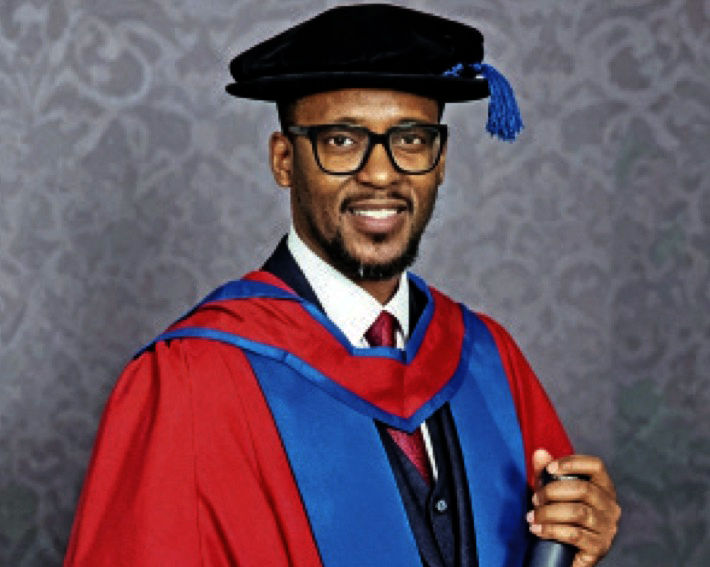
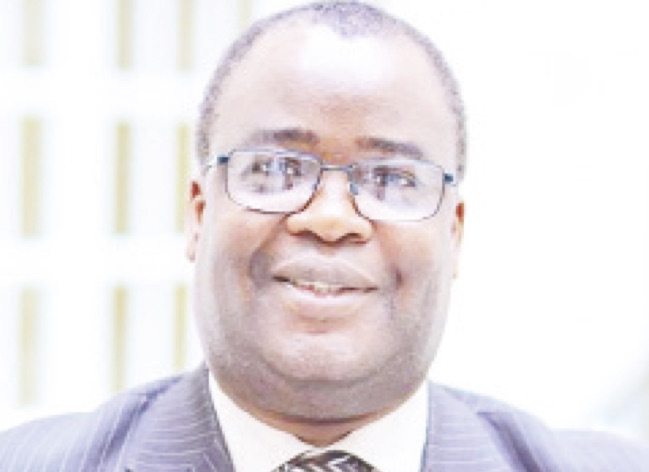
Mr Adedamola Aminu is a Nigerian who is doing very well in politics and education sector of the United Kingdom.
In this interview, he contributed his bit on how to move Nigeria to greater heights. He also bared his mind about the state of the nation, the economy. education and other issues.
Outside diaspora circles, many people would like to know more about your academic and general background…?
My name is Adedamola Aminu, president of Nigerian Academics, UK, and former mayor of Lambeth. I was a former deputy cabinet member for children and young people, a department that is responsible for education and social services. I was also a former deputy cabinet member for enterprise, responsible for business in the borough. I became a deputy mayor in 2013 to 2014, I became mayor of the borough in 2014 to 2015. I was a lecturer. I lectured for over 18 years in various higher institutions in the United Kingdom and was also a school governor for various schools. I am now an entrepreneur running my own business. I was the former chair and founding member of the Association of British Nigerian Councillors in the UK; also the current president of Association of Nigerian Academics in the UK. I am a member of the Worshipful Company of Educators City of London and Freeman of the City of London. I have a degree, Masters, and Professional qualifications.
As someone in the Diaspora, what would you say about the galloping exchange rates in Nigeria, and what should be done to improve the exchange rate of the naira?
The galloping exchange rate in Nigeria is not good for any business as exchange rates fluctuate and doing business is difficult. Nigeria needs to invest more in manufacturing and encourage foreign investors to come to Nigeria to invest and set up manufacturing companies that will create employment opportunities and improve Nigeria’s foreign exchange. If we are selling to other countries and we are getting our money in dollars, it will improve our foreign exchange. But we are a consuming nation, we are not exporting, apart from crude oil. When we manufacture, that means we can sell abroad and then get dollars. That is the problem affecting the exchange rate, and the exchange rate is not stable. When we manufacture, we export, then we get our money in dollars. It surely will affect our economy positively. Encouraging investment in the manufacturing sector is also fundamental to the growth of our economy. Improving the quality of our agricultural products for export so that we can sell abroad and will generate foreign currency. We should not solely depend on oil.
What is your assessment of this administration, which has been in office for seven months?
My assessment of the current administration is that President Bola Tinubu is someone I have met in the Diaspora and he has the capacity and plan to do good for Nigerians. He will want to leave a legacy. It is too early to judge and we need to give them more time, like a year. They have good policies in place, but I believe the implementation is not thought through properly. The administration needs to inject new strategic thinkers as advisers and more input from diasporans who have done well in various fields of endeavour. The removal of petrol subsidy is one example, which is good, but not well thought through before implementation. The government needs to think about the implications on the whole economy. The government should have done an Equity Impact Assessment (EIA) of the effect on citizens and the economy and provide a better way to mitigate the effects before implementing the policy. All government policy should have EIA embedded to mitigate effect on citizens.
As a politician and educationist in the UK, how do you feel about the Nigerian educational system?
Nigeria’s education system is good, if it is well resourced. The problem is lack of investment in infrastructure and continuing professional development of staff in Nigeria. My Association of Nigerian Academics, UK, organised a workshop for Surulere Local Government and Lagos Island East free before COVID. It was a successful training/workshop, but continuity is always the problem and other local authorities should be able to tap into the opportunities. There are other things that need to be done to change or improve the education system in Nigeria, but I cannot discuss them all here. I wrote a proposal in the past given to state and local governments, but nothing was done about it or they tried to implement it without coming back to the originator.
There is a growing influx of Nigerians in the UK for educational purposes and many others are gearing up for the exodus to UK schools. What is your take on this development?
It is a sad development. Nigerian education used to be good and I was a product of Nigeria’s education system. What is lacking now is proper investment in infrastructure and support for staff. I was a school governor for various higher institutions in the UK and also a former cabinet member responsible for education for local authorities where I served as councillor. We need proper management of education. Also, we need to tackle indiscipline in our schools either from the teachers or students.
Aside from teachers/lecturers taking bribes to score students, and the incessant strikes, I think Nigeria’s education is better than what we have here (in the UK). If they improve on infrastructure and continuous training of staff, that is what we lack. Inappropriate behaviour of teachers and students is another factor, including collecting bribes to pass students. The sincerity and credibility of the system is what is questionable in our system of education. Imagine a case in which teachers are collecting bribes to pass students in exams. These are stuff you hardly find in civilized countries. If you try that then your career is gone. But in Nigeria, lecturers do all sorts and get away with it. I also have an issue with the Joint Admission and Matriculation Board (JAMB) because that system is stopping a lot of potential students from gaining university education on time because they may not pass JAMB exams. That decision needs to change. Here in the UK, if you are above 18 and you have one year’s experience in an industry, in any employment, they will give you a chance into a university. That means you are an adult, you are making a choice to get an education. They will give you a chance. They may ask you to do a pre-degree programme, in some cases; but in Nigeria you just have to face JAMB and lots of young people are hindered.
When was the last time you visited Nigeria and What change would you want to see in the country?
I was in Nigeria three times last year and the last visit was December to January this year, so I’m very frequent in Nigeria. The change I would like to see is that the government needs to focus on the security of its citizens, employment opportunities for our youths, fight corruption, make sure employees are paid decent living wages to discourage corruption and invest in healthcare and education.
If you had the opportunity to speak with President Tinubu one-on-one, what would you tell him?
The burning issues of restructuring, fiscal federalism and resource control, which he once advocated for as a member of Afenifere.
President Tinubu is someone that listens to good advice. I will advise that Nigeria needs restructuring where every region feels that their needs and expectations are going to be met. Each region should have autonomy to develop at their own pace, be it education, economy, health, etc. And regions should have a percentage of revenue to remit to the centre. I will also advise him to reduce the cost of administration in the centre. I will also advise the president to head-hunt the best of Diaspora to be part of his administration. The budget for the Senate and House of Representatives needs to be looked into and more power given to local governments to develop their area. I will also advise that any policy goes through the Equity Impact Assessment process before implementation so that the government will be able to reduce the effects on the citizens.