Follow Us on Google

• APC govs, party leaders push back in S’East, S’South, N’Central, N’West
• Imo, C’River, Benue reject alliance as Ogun, Kaduna structures remain uncertain
• Rivers, Bayelsa, Osun, Nasarawa offer lifeline, Wike vows coalition has come to stay
From Fred Itua, Juliana Taiwo-Obalonye, Romanus Ugwu, Ndubuisi Orji, Abuja; Femi Folaranmi, Yenagoa; Noah Ebije, Kaduna; Scholastica Hir, Makurdi; Abel Leonard, Lafia; Stanley Uzoaru, Owerri; Laide Raheem, Abeokuta; Joe Obukata Ogbodu, Warri; Aniekan Aniekan, Calabar; Lateef Dada, Osogbo; and Tony John, Port Harcourt
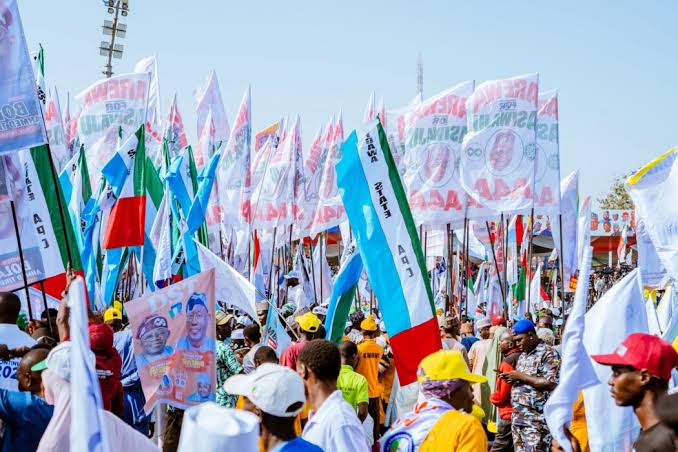
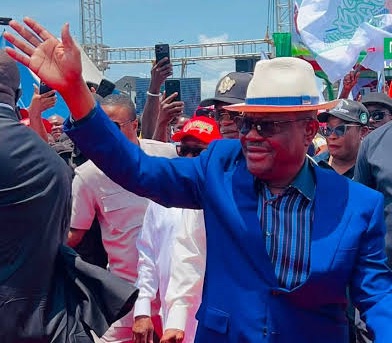
The Rainbow Coalition being promoted by the Minister of the Federal Capital Territory (FCT), Nyesom Wike, is running into growing resistance across the country, with governors, state chapters and influential figures of the ruling All Progressives Congress (APC) rejecting the political arrangement amid fears that it could weaken the party and undermine its candidates in the 2027 general elections.
A nationwide survey by Daily Sun revealed sharp opposition to the cross-party alliance in parts of the South East, South South, North Central and North West, where party leaders have either openly disowned the coalition, questioned its motives or declined to associate themselves with its activities.
While Wike and his supporters insist that the coalition is designed to mobilise support for President Bola Tinubu’s re-election, its critics within the APC are uncomfortable with an arrangement that seeks votes for the President while allowing candidates of opposition parties to challenge APC candidates in governorship, National Assembly and state legislative elections.
The disagreement has widened into a struggle over political control, party loyalty and the direction of Tinubu’s re-election campaign, exposing conflicting interests among politicians ostensibly working towards the same presidential objective.
However, the coalition is far from being universally rejected. It has established a strong presence in Rivers State and attracted support in Bayelsa, Osun and Nasarawa, where influential political actors are mobilising under its banner.
The resistance is particularly striking because Tinubu has accommodated prominent figures associated with cross-party cooperation in his presidential campaign structure.
At the inauguration of the APC Presidential Campaign Council on October 14, Wike, Anambra State Governor Chukwuma Soludo and Osun State Governor Ademola Adeleke were included in the campaign arrangement, signalling the President’s willingness to work with political figures outside the ruling party.
Yet, the development has not resolved the fundamental disagreement between Wike and APC governors over whether support for Tinubu should automatically extend to all candidates of the ruling party.
The Progressive Governors’ Forum (PGF), chaired by Imo State Governor Hope Uzodimma, had made its position clear, insisting that APC governors would not participate in or endorse any political arrangement capable of undermining the party or its candidates.
APC National Chairman Nentawe Yilwatda reinforced that position, declaring that claims about the coalition’s strength must be supported by verifiable evidence.
Speaking through his media adviser, Abimbola Tooki, in an interview with Daily Sun, Yilwatda said the party was not threatened by the coalition but would insist that support for Tinubu should not come at the expense of other APC candidates.
“Any political arrangement that supports the President but works against APC candidates in other elections naturally raises questions,” he said.
That position has become the rallying point for opponents of the coalition across several states.
In Imo State, where Uzodimma doubles as chairman of the PGF, the APC has practically disowned the coalition, notwithstanding efforts by some opposition figures to establish its presence.
The party’s spokesman, Onwuasoanya Jones, dismissed suggestions that the Rainbow Coalition had taken root in the state, declaring that there was “nothing like a Rainbow Coalition” in Imo.
State APC Chairman Austin Onyedebelu went further, accusing Wike of attempting to use the arrangement to revive the Peoples Democratic Party (PDP) and strengthen opposition interests under the guise of supporting Tinubu.
The rejection comes despite the inauguration of coalition structures by PDP National Secretary Samuel Anyanwu, underscoring the sharp divisions between Wike’s political allies and the ruling party’s establishment in the state.
Uzodimma’s opposition is particularly significant because he serves as secretary of Tinubu’s Presidential Campaign Council, placing him within the same national campaign structure that accommodates Wike.
A similar confrontation is playing out in Cross River State, where the administration of Governor Bassey Otu has shown little enthusiasm for the coalition.
The state Commissioner for Information, Ekpenyong Cobham, accused promoters of the arrangement of attempting to “recolonise” Cross River, reflecting the apprehension among government loyalists about the possible emergence of a rival political structure.
Although PDP elements sympathetic to Wike insist that the coalition remains active, its activities have become less visible.
A PDP faction loyal to Tanimu Turaki has also questioned its continued relevance, arguing that the resignation of state party chairman Venatius Ikem signalled the weakening of the coalition’s local base.
In Benue State, the Rainbow Coalition has become entangled in the longstanding struggle for control of the APC between Governor Hyacinth Alia and political forces associated with the Secretary to the Government of the Federation, George Akume.
Alia has not identified with the coalition, while his Chief Press Secretary, Tersoo Kula, dismissed political manoeuvres against the governor as “gang-ups” that did not trouble him.
The coalition’s National Secretary, Austin Agada, is a leading figure in the APC faction associated with Akume and has publicly maintained that the alliance is intended to support Tinubu rather than secure Alia’s re-election.
The disagreement has generated fresh controversy within the APC, with some party chieftains petitioning the national leadership over allegations that Agada was supporting candidates of other parties against APC nominees.
The petitioners accused him of conduct inconsistent with the party’s interests, particularly in Benue South, where his faction has been linked to support for PDP Senator Abba Moro.
Agada’s supporters, however, insist that the coalition is a voluntary political platform whose objective is to mobilise support for Tinubu across party lines.
The division has placed the coalition at the centre of the state’s political rivalry rather than making it a universally accepted vehicle for presidential mobilisation.
The Labour Party and African Democratic Congress (ADC) have also not emerged as united institutional partners of the coalition in Benue.
In the South West, the picture is mixed.
While Osun has emerged as one of the coalition’s more receptive territories, there is little evidence of a comparable structure in Ogun State.
An APC stalwart in Ogun told Daily Sun that there was no indication that Governor Dapo Abiodun had committed himself to Wike’s political arrangement.
The crisis within the state’s PDP, particularly the dispute arising from the omission of Oladipupo Adebutu from the governorship candidates’ list, has further complicated efforts to build a formidable opposition-led alliance.
Other News
The uncertainty contrasts sharply with developments in Osun, where Governor Ademola Adeleke, who emerged from the Accord Party, has taken a prominent role in Tinubu’s presidential campaign.
Adeleke, named the President’s campaign coordinator for Osun, has been working to bring together political supporters from the Accord Party, APC and PDP in support of Tinubu’s re-election.
His involvement demonstrates the coalition’s potential appeal beyond the traditional boundaries of the ruling party, even as some APC leaders elsewhere remain suspicious of similar arrangements.
In Kaduna State, another major political battleground, the coalition has yet to establish a clearly identifiable statewide structure.
Checks by Daily Sun did not establish verifiable leadership or functioning organisational structures across the state’s 23 local government areas.
The absence of visible machinery raises questions about the extent to which the coalition can translate its national publicity into grassroots mobilisation in a state where the APC is already pursuing its own presidential campaign programme.
In Delta State, Wike’s political platform has similarly struggled to distinguish itself from the existing APC structure.
Governor Sheriff Oborevwori’s alignment with the ruling party has brought several influential political groups under the APC umbrella, leaving little space for a separate coalition to gain traction.
Groups such as the Delta Unity Group and the Lion Family have aligned with the governor’s political direction.
An APC chieftain captured the prevailing sentiment in the state when he declared: “We are all rainbow now, but inside APC.”
The remark reflects the position of politicians who support Tinubu’s re-election but see no reason to establish another political structure outside the ruling party.
However, the coalition has found more receptive ground in Bayelsa State, where PDP chairman George Turnah is championing its activities.
Turnah described the alliance as “indispensable” to Tinubu’s re-election efforts, arguing that the coalition could mobilise support beyond the political reach of Governor Douye Diri.
The group has unveiled a campaign programme scheduled to begin on November 9 with the inauguration of its state campaign council, the opening of a secretariat and the presentation of campaign vehicles.
Its planned activities include mobilisation across the state’s senatorial districts, local government areas and wards, signalling an attempt to convert political declarations into an organised campaign.
The development has created another platform for rivalry between competing political tendencies in the state, particularly those seeking to establish their own influence in Tinubu’s re-election project.
In Nasarawa State, PDP governorship candidate David Ombugadu has identified with the Rainbow Coalition, declaring that the state “stands for the Rainbow Coalition”.
Governor Abdullahi Sule, however, has questioned the purpose of the arrangement without mounting the kind of open confrontation witnessed in some other APC-controlled states.
The contrasting positions reflect the coalition’s appeal to opposition politicians who support Tinubu’s presidential ambition but remain committed to pursuing their own electoral interests.
Rivers State remains the coalition’s most established political base and the clearest example of the arrangement Wike hopes to replicate elsewhere.
There, the alliance enjoys the backing of influential political actors across party lines, including members of the State House of Assembly and supporters of APC governorship candidate Kingsley Chinda.
Governor Siminalayi Fubara has also publicly declared support for the coalition and endorsed Chinda, following efforts to reconcile rival political interests in the state.
Wike and other coalition leaders have held meetings with Fubara as part of efforts to consolidate the political understanding ahead of the elections.
Nevertheless, the apparent consolidation has not eliminated underlying tensions.
Disputes arising from Chinda’s defection, questions surrounding political alignments and criticism from opposition parties continue to test the alliance.
The ADC has dismissed the arrangement as “monochromatic”, questioning its claim to represent a genuinely broad political coalition.
Beyond the states, the coalition has also deepened divisions within the PDP, where some influential figures object to members of an opposition party organising support for a sitting president elected on another platform.
PDP Board of Trustees member Eddy Olafeso described the arrangement as an anathema to opposition politics, while the faction associated with Turaki has distanced itself from the coalition.
Their objection reflects the broader contradiction confronting Wike: remaining a prominent PDP politician while actively mobilising for the re-election of a president on the APC platform.
Wike, however, has dismissed the opposition to his initiative, insisting that he never entered into any agreement to support APC governors or candidates beyond Tinubu.
During his media chat on October 13, the FCT minister declared that his commitment was to the President’s second-term ambition, not to the political survival of individual governors.
“What I’ve said to Nigerians and to Almighty God is, ‘I’m going to support Tinubu for him to realise his second-term ambition.’ I did not promise any governor,” he said.
He challenged those opposed to the coalition to confront him directly rather than hide behind party structures or disagreements over the alliance.
“For the Rainbow Coalition, it has come. It will stay. There’s nothing anybody can do about it,” he declared.
Wike’s position is that Nigerians should be free to support Tinubu for president while voting for candidates of their choice in governorship and legislative elections.
That argument, however, remains unacceptable to APC leaders who insist that party loyalty cannot be selective, particularly when the same political arrangement could strengthen opposition candidates against their own nominees.
For now, the Rainbow Coalition presents contrasting realities: a formidable platform in Rivers, growing structures in Bayelsa and support from influential politicians in Osun and Nasarawa, against outright rejection, internal party disputes and uncertain grassroots structures in several other states.
Tinubu’s decision to include Wike and other prominent non-APC politicians in his presidential campaign council has given cross-party cooperation official recognition at the national level, but it has not compelled APC governors and state chapters to embrace the Rainbow Coalition.
As preparations for the 2027 elections intensify, the unresolved question is whether Wike can extend his cross-party alliance across the country without provoking further resistance from the very APC structures on which Tinubu’s re-election campaign also depends.