Follow Us on Google
By Adewale Sanyaolu
The Nigerian Upstream Petroleum Regulatory Commission (NUPRC) has given reasons why it lowered the signature bonus from $100 million to $10 million, representing a 90 per cent reduction.
A signature bonus in the oil and gas industry is a non-refundable payment made by a company to a government when it is awarded an oil and gas asset or license. These bonuses were historically a large, upfront payment, but some countries, like Nigeria, are reducing or eliminating them.
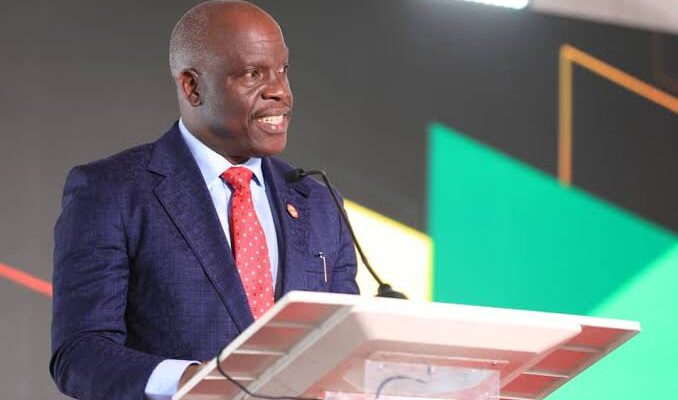
NUPRC Commission Chief Executive (CCE), Mr. Gbenga Komolafe stated this in his regulatory address titled “Nigeria’s Energy Future and the Role of NUPRC in Driving Upstream Oil and Gas Industry’s Rebound” at the Nigeria Association of Energy Correspondents (NAEC) Conference 2025 held in Lagos.
Komolafe explained that working with President Bola Tinubu, the NUPRC decided to reduce signature bonus to allow investors commit more resources to field development.
This single decision, he said, has strengthened investor confidence, encouraged early production and reinforced Nigeria’s reputation as an open and competitive upstream jurisdiction.
More so, he explained that the Commission also prioritized production optimisation and recovery enhancement.
“By reviewing field development plans, supporting brownfield optimisation and enabling the re-entry of shut-in wells, the NUPRC has facilitated renewed activity across mature assets. These interventions are projected to deliver incremental volumes exceeding one million barrels of oil per day, a key milestone toward achieving the national production target of 2.5 million BOPD by 2027.”
He added that a sustainable rebound also demands secure infrastructure and credible measurement systems.
To this end, he disclosed that the Commission has collaborated with security agencies, private contractors and community stakeholders in implementing the Upstream Measurement Regulation and the Advance Cargo Declaration Regulation.
The result , according to him, is a remarkable 90 per cent reduction in crude oil theft from over 102,000 barrels per day in 2021 to 9,600 barrels per day as of September 2025.
Other News
“Equally transformative is our work in host community development. By implementing the PIA’s Host Communities Development Trust (HCDT) provisions, the Commission has successfully inaugurated over 90 Trusts across the Niger Delta, ensuring that development funds flow directly to communities.
This model not only secures local ownership, but also guarantees peace, stability and continuity in production, key pillars for sustained energy security.
He explained that the rebound we are witnessing in Nigeria’s upstream sector is not by chance; it is the outcome of deliberate regulatory design, anchored on transparency, efficiency and inclusiveness, saying the Commission’s strategic vision aligns with Nigeria’s broader economic goals and global sustainability commitments.
“At the same time, we are advancing Nigeria’s gas agenda as part of the “Decade of Gas” and the nation’s energy transition pathway.
“Natural gas remains our most reliable transition fuel, a catalyst for industrialisation, power generation and clean energy substitution. By promoting gas monetisation, flare elimination and gas-based investments, the Commission is reinforcing Nigeria’s commitment to a just and balanced energy transition. Globally, the context reinforces this direction”, he said.
He added that The IEA projects that upstream investment will surpass $580 billion in 2025, marking a steady recovery from pandemic lows. While renewables will continue to grow, hydrocarbons will remain central to industrialisation, particularly in emerging economies like Nigeria.
“Our task, therefore, is to ensure that this production is done efficiently, transparently and sustainably, consistent with international best practice.
In this evolving energy landscape, Komolafe tasked the media to remain a vital stakeholder because information is power and in the energy sector, accurate reporting shapes perceptions, influences investments and builds credibility.
“I urge NAEC members and the wider press community to continue ensuring that their reports are factual, verified and development-oriented. Responsible reporting strengthens investor confidence and preserves national reputation; misinformation on the other hand, can distort progress and discourage the very investments our nation seeks to attract.”
He maintained that the NUPRC recognizes NAEC as a strategic partner in the mission to deepen transparency and public awareness.
“We will continue to collaborate with your association through data access, training, and technical briefings, ensuring that the Nigerian public receives balanced, accurate and timely information about the upstream industry.”