Follow Us on Google

By Owaikhena Osikhekha
The tax reform bills have continued to generate controversy, with a segment of the north erroneously claiming that the bills if passed in their current form would pauperise the region.
The Presidency has vehemently denied this , saying the reforms are meant to simplify the tax system for easy administration, ease the burden of the poor and eliminate multiple taxation.
It has been observed that most leaders and commentators making statements about the tax reform bills haven’t even read them. Please, don’t comment on people’s comments. Obtain the bills, read them with an open mind before forming your opinion about them because there are a lot of misinformation and disinformation out there concerning these well crafted bills.
There are a lot of favourable provisions for the poor and business people in the tax reform bills.
For instance, those who earn less than one million naira annually will no longer pay income tax.
Only those earning above fifty million naira will pay a twenty five percent income tax rate, unlike the current threshold of three point two million naira.
Businesses with turnovers below fifty million naira won’t pay income tax. The current threshold is twenty five million naira.
Medium and large companies will see corporate taxes drop from thirty percent to twenty five percent by 2026..
Companies that fail to declare profits will no longer pay a mandatory one percent gross earnings tax.
A new two percent development levy replaces the current three point seven five percent in additional tax, directly funding student loans from 2030.
No VAT will be charged on food items, electricity, school fees, or medical services, ensuring prices stay low for the poor..
The major part of the bills facing criticism from some northern leaders is the provision for derivation – based sdistribution model for the VAT proceeds.
The misgivings stem from lack of understanding of the provision which may favour the north in the long run.
Other News
The bills recommend a new VAT sharing formula of fifty five percent ( 55%) to the states instead of the current fifteen percent (15%).
The Federal Government’s share is to be reduced from fifteen percent (15 %) to ten percent (10%), while the share of the local governments is to be raised to thirty five percent ( 35%).
There is a provision that sixty percent of the amount standing to the credit of states and local governments shall be distributed on the basis of derivation.
This is a more equitable distribution model based on consumption within the states as against the current sharing formula which favours Lagos, Rivers and Federal Capital Territory because they host the andheadquarters of corporate organizations.
For instance, under the SAprevailing model, it is assumed that once a telecom company pays VAT from its head office in Lagos, it is credited to Lagos even when other states have millions of subscribers.
Under the proposed model, the telecom company is expected to furnish the tax authorities details of the slocations of the subscribers nationwide for the purposes of distributing the VAT proceeds. This will benefit the northern region which has millions of telecom subscribers. Kano alone has eleven point nine million (11.9m) subscribers.
It is Lagos, Rivers and the FCT that should complain about the new sharing formula, not the northern region.
In any case, whatever is contained in the tax reform bills remains mere proposals. They can be subjected to amendments.
All the complaints the north has against the bills should be properly documented and presented to the National Assembly through their representatives for a robust debate instead of calling a total rejection of the well- articulated tax reform bills.
The north should also ask how it should be compensated for the food items it produces, but exempted from VAT .
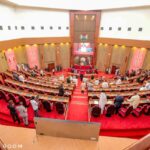
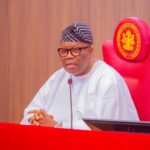
The President of the Senate, Godswill Akpabio has promised that experts, state governors, traditional rulers and other stakeholders will be invited during debates on the tax reform bills. He promised that the Senate will give Nigerians what is good after listening to them. What else do we really want?
The tax reform process which began fourteen months ago is still in progress. Nothing is cast in stone. New inputs can still be infused. Suggestions have not been foreclosed. So, the north has nothing to worry about.
Disagreements over some provisions in the tax reform bills should not be allowed to truncate the process.
The poor people need the reforms. The business people crying over multiple taxation need the reforms, and Nigeria which is in need of rapid economic development, urgently needs the tax reforms.
• Osikhekha, a public affairs analyst