Follow Us on Google
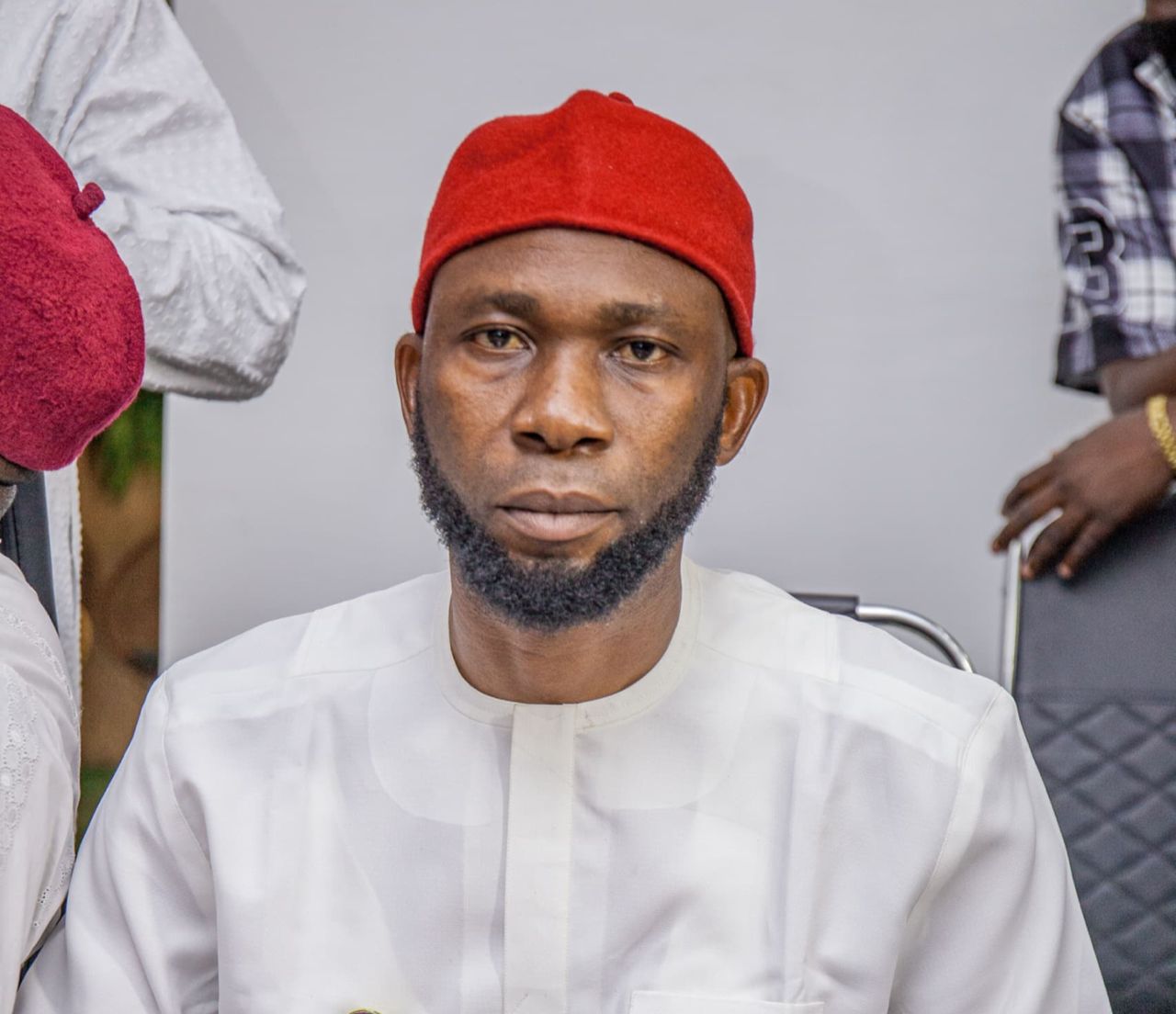
Amb Precious Emmanuel Ine is the South East Zonal Coordinator of PBAT DOOR TO DOOR movement, a socio-political grassroots campaign established under the patronage of Niger Delta High Chief Government Oweizide Ekpemupolo (Tompolo] to mobilise support for President Bola Ahmed Tinubu’s re-election in 2027. Following the massive mobilization rally in Enugu recently, he spoke with some selected journalists. Excerpt.
Following the massive mobilization rally held in Enugu in support of President Bola Ahmed Tinubu’s re-election, what was the main objective of the rally?
The objective was clear: to mobilize Nigerians, particularly in the South-East, to appreciate the reforms and developmental initiatives of President Bola Ahmed Tinubu’s administration and to encourage continued support for the Renewed Hope Agenda. As the South-East Zonal Coordinator of PBAT DOOR TO DOOR MOVEMENT, our message is that political participation must go beyond social media. We must engage citizens directly, door to door, listen to them and explain the policies and programmes of the government.
Critics argue that Nigerians are facing economic hardship. Why should Nigerians continue to support President Tinubu?
We recognize that the reforms have come with significant short-term difficulties, but leadership must also be judged by the direction in which the country is moving. President Tinubu inherited serious economic challenges and chose to undertake difficult reforms rather than postpone them. His administration has focused on strengthening government revenue, reforming the foreign-exchange system, attracting investment, improving infrastructure and creating opportunities for young Nigerians. The important question is whether these reforms can produce a stronger and more productive Nigerian economy in the long term.
What would you describe as some of the major economic reforms of the Tinubu administration?
There are several. These include the removal of the petrol subsidy, foreign-exchange reforms, tax and revenue reforms, efforts to improve the business environment, agricultural interventions, infrastructure investments, social investment programmes and measures designed to increase access to finance for businesses and individuals. The administration has also emphasized economic diversification, local production and private-sector participation. These are areas that can reduce our dependence on oil and create more sustainable sources of employment and wealth.
Let us talk about education. What has the administration done for Nigerian students?
One major initiative is the Nigeria Education Loan Fund, NELFUND, which has created a structured mechanism for eligible Nigerian students to access education loans. The significance of NELFUND is that financial difficulty should not automatically prevent a qualified Nigerian from pursuing higher education. Beyond tuition support, the broader objective is to expand access to tertiary education and develop human capital. A country cannot build a competitive economy without investing in the education and skills of its young people.
Some people are concerned that student loans could become a burden. What is your response?
The important thing is to understand the purpose of the programme. NELFUND is designed to provide access to education financing to students who might otherwise struggle to continue their studies. It is fundamentally an investment in human capital. The programme also needs transparency, efficient administration and proper public awareness so that students understand their rights and obligations. We should improve the system where necessary rather than dismiss the concept of education financing altogether.
What about Nigerian youths outside the university system?
That is equally important. Not every young Nigerian will attend university, and the economy needs technicians, artisans, entrepreneurs, software developers, manufacturers, farmers and skilled professionals. Government programmes aimed at skills development, entrepreneurship, digital training and access to finance are therefore very important. Our movement believes that young Nigerians should not merely be mobilized politically; they should also be empowered economically.
What is your assessment of the administration’s approach to infrastructure?
Infrastructure is fundamental to economic development. Roads, bridges, railways, electricity, ports and other infrastructure reduce the cost of doing business and connect producers to markets. The administration has continued projects and initiatives across these areas. Our position is that infrastructure development should remain a major priority because the benefits extend beyond one political administration.
What about agriculture and food security?
Food security is one of the most important challenges facing Nigeria. The government has introduced agricultural interventions aimed at increasing production, improving access to inputs and financing, and strengthening food supply. However, we must go further. Nigeria needs a complete agricultural value chain—from production to processing, storage, transportation and export. That is how agriculture can move from subsistence activity to a major economic engine.
How do you respond to concerns about unemployment?
Employment must increasingly come from a growing private sector, manufacturing, agriculture, technology and entrepreneurship. Government can create an enabling environment, but it cannot employ everybody. That is why policies that improve access to capital, reduce unnecessary barriers to businesses, support skills acquisition and attract investment are important. We need an economy where young Nigerians can create businesses and employ other Nigerians.
What is your position on the removal of the fuel subsidy?
It was a difficult reform, and Nigerians have felt its impact. But the fundamental argument was that the subsidy system had become extremely expensive and vulnerable to inefficiency and abuse. The critical responsibility of the government is therefore to ensure that the resources saved and the broader economic benefits from the reform translate into visible investments in infrastructure, social protection, transportation, education, healthcare and productive sectors.
Has President Tinubu’s administration done anything significant to attract investment?
Yes. The administration has placed considerable emphasis on creating a more investment-friendly environment, improving the regulatory framework and strengthening confidence in Nigeria’s economy. Nigeria has a huge market, a young population and abundant natural resources. If we can provide policy stability, reliable infrastructure, security and a competitive business environment, Nigeria can attract substantially more domestic and foreign investment.
What message does PBAT DOOR TO DOOR MOVEMENT have for Nigerians who remain skeptical?
Our message is not that every government policy is perfect. No administration is perfect. Our message is that Nigerians should examine the policies objectively, understand the reforms and judge the administration based on measurable results and long-term direction. We also encourage constructive criticism. Supporting a government does not mean abandoning accountability. We want a government that listens to the people and continuously improves its programmes.
Why did you choose the door-to-door approach rather than relying solely on rallies?
Because every door matters. A rally can bring thousands of people together, but door-to-door engagement allows us to reach families, communities, traders, artisans, farmers, students, professionals and young people directly. We can explain government policies in simple language and also take people’s concerns back to the appropriate authorities. That is the philosophy behind PBAT DOOR TO DOOR MOVEMENT.
What does the Enugu rally mean to you personally as the South-East Zonal Coordinator?
It was a demonstration of organization, commitment and peaceful political participation. I am proud of the coordinators, executives, volunteers and supporters who contributed to the mobilization. The rally also demonstrated that the South-East can participate actively in national political discourse and engage constructively with the Federal Government on issues affecting our people.
Finally, what is your message to Nigerians ahead of the 2027 general election?
My message is simple: let us put Nigeria first. Let us examine the achievements, policies and reforms of the Tinubu administration objectively. Let us also acknowledge the challenges Nigerians are facing and demand better implementation where necessary. As members and supporters of PBAT DOOR TO DOOR MOVEMENT, we will continue to engage citizens peacefully, educate voters and mobilize support for President Bola Ahmed Tinubu’s re-election based on the belief that the Renewed Hope Agenda deserves the opportunity to continue its work of economic transformation and national development. Every door matters. Every voice matters. Every vote matters. And Nigeria’s future belongs to all of us.