Follow Us on Google
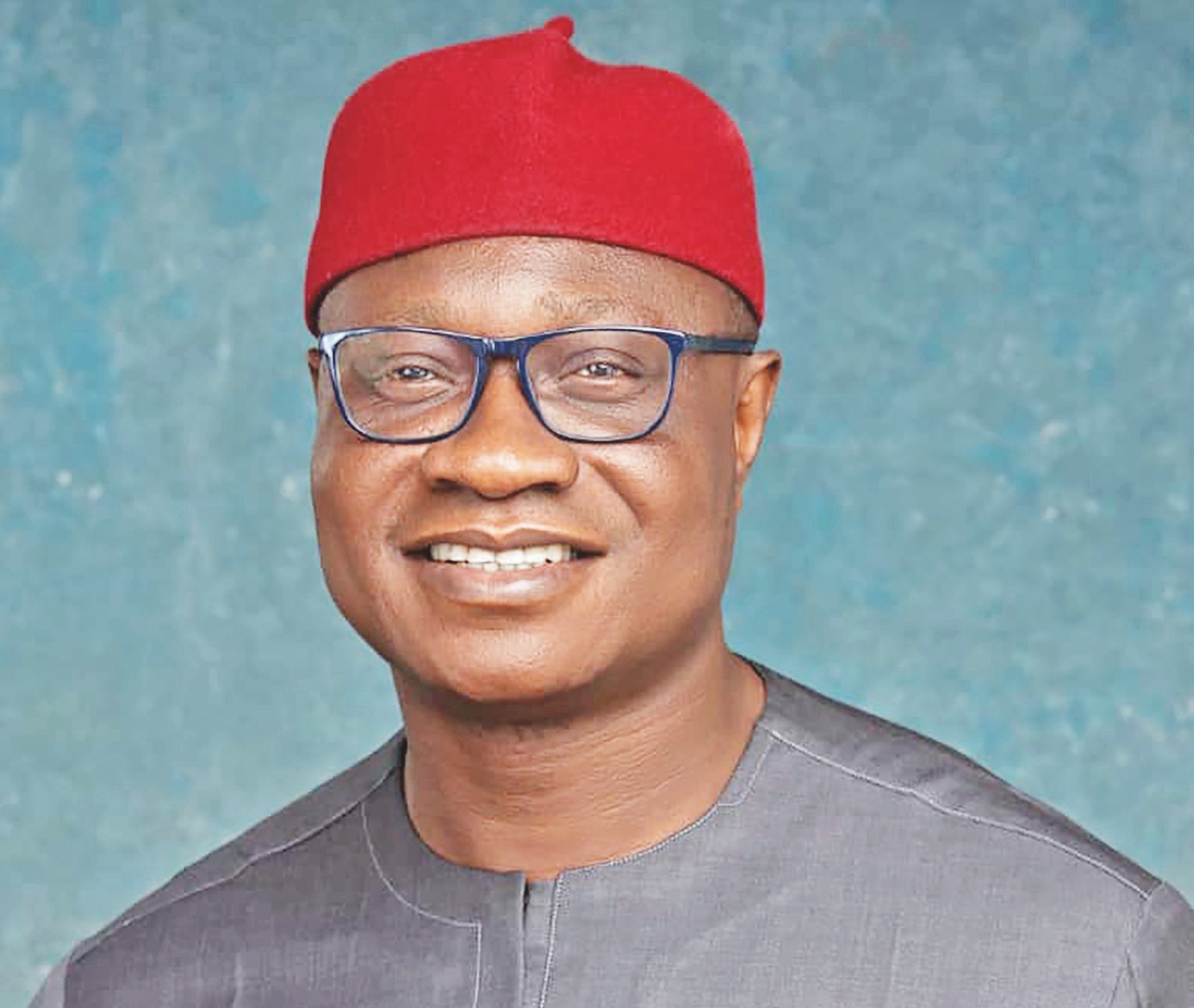
From Obinna Odogwu, Awka
People in electoral constituencies, have for long been frustrated by the poor performance of elected public officers, especially those who won election into the legislative houses at the national and state levels. Former representative of Awka North and South Federal Constituency in the National Assembly, Hon. Chinedu Onwuaso, in this interview with Sunday Sun, attributes the perceived poor performance to a number of factors. He also shares the story of his personal experience.
Having been a member of the 9th Assembly, are you impressed with the performance of the present 10th Assembly?
Where we failed as Nigerians is that when it is time for elections, we go out to vote on the basis of sentiments. Just like you’re talking of the Anambra election today, people are having a lot of sentiments. We have somebody from Anambra South, let him rule to finish the eight-year tenure of the South for eight years so that it will come to Anambra Central. It is not about the plan of the government; it is all about ‘our turnou’. Do you remember what happened in the last election? Labour Party came on board, fielded people, just about any person. People were not selective in voting for candidates. They said since Peter Obi was involved, they voted for his party. With that, Labour Party won about 37 seats in the House of Representatives out of over 300. What is happening today? The quality of people you send to the National Assembly matters a lot. The National Assembly is the powerhouse of the country; you don’t use it to compensate people. You send people who know what it means to be in the National Assembly. And that is the problem we are having. During election periods, you hear things like ‘No, these people have gone two times, let the other people go’; ‘No, these people have gone, it is our turn’, ‘No, in this place nobody goes it twice’. That is all based on sentiments. So, when you make that mistake, do not expect that person to perform magic. The first two, three years in the National Assembly is just like learning what is being done. By the third year, it is election year. Before you finish the election year you have barely six to eight months again in the National Assembly for that tenure. For a new person, what do you expect him to achieve? He has an election coming; he has just entered; he has spent money. If you are there, what will you target? Your first target is to pay off your debts, especially for those who had nothing doing before being voted into that place.
So, how do they pay off the debts?
Some will borrow money; some will be backed by some people who will say ‘okay, we’ll do this for you but you have to write your cheques and give us’. So, when he goes there, sitting on that seat, expectations from his constituents are also there as a burden. What will he target to do? He has to pick calls and those calls are not calls of praise. I could remember, the first two months after I won election, before I was even inaugurated, they just announced that I won. While I was preparing for our inauguration, somebody called me and said ‘look, you must provide a wheelchair for me; we are the people that worked for you.’ I have not even collected my first salary. I didn’t even know how the National Assembly looked like, and you want me to start bearing the burden of each and everyone. The other person said, ‘Look, my daughter is having a wedding and I don’t even have money. I need like N200,000 to support her wedding’. Another person said, ‘my son is going to the US. I need like N3 million to support the fund’. All these were within two months after the election. I wasn’t even inaugurated. Do you, from the first day, the constituents are already expecting him to perform magic. And remember, legislative work is not executive work. There is no budget for you apart from your allowances. I am telling you because I have been there. But the problem is this, what do you stand for before going there? First, you don’t have any experience because you know you are going to represent people. So, it is not all about the money you make there.
The 9th Assembly was also regarded by some people as weak while it lasted. What was the situation while you were there? How easy or tough was it for you to perform your duties there?
If you check the 9th Assembly, we faced the toughest situation in Nigeria because we worked with somebody who was believed to be zero tolerant to whatever it means. But we were still able to stand firm and say no to certain things. I remember one session that we had, all the minority had to walk out of the session in protest. That was when they wanted to borrow money and there was no representation of the South East. All the South East caucus planned and we walked out. To be able to walk out from the session shows that yes, at least, there is some level of intention in what they are doing. And most of us were vocal. But the problem is that after being vocal you come back to your constituency and the same constituents will tell you that you went there and did nothing for them. What will he or she do for you? They will be comparing you with somebody contracted to collect revenue within the state or the local government. And you as a National Assembly member what have you done? You didn’t buy a vehicle for this person; you didn’t buy a house for that person. So, what is it that guides a particular person that is there? You don’t have to blame most of them who are only there based on economic situations; because we have businessmen in politics. I was discussing with one of the political elites in my constituency and he said< ‘if I had known, I wouldn’t have left my job where I had already risen close to general manager position in one of the biggest agencies in Nigeria. I was lured into politics. I resigned, took my money and returned to community, thinking that it participation counts. . He said that the years he stayed away from politics were the best years of his life. You know why. He came down with his money. He joined politics and people were doing it as business.
What was your experience while you were there? How high or low were the expectations from your constituents; and how were you able to handle them?
I had that problem when I was vying for the second tenure. Some of the stakeholders ganged up and said ‘no, he didn’t bring money, he didn’t satisfy us.’ To them, it was business. To me, it was to represent. I attracted things. It depends on who you know, how you’re connected to people before you attract projects. Apart from the constituency projects, those constituency projects are being misinterpreted because the principle behind it is what does your constituency need? We have this particular amount of money; we are not giving it to you as a member of the House of Representatives. They have budgeted it so that you can impact one or two places. Now you write down Amanuke one block of six classrooms; Ugbene road 500 metres; Isuanaocha this, Amansea that, and so on and so forth. And they will send it to agencies for implementation. Your only effort is to tackle the agency and make sure that that project is done. But people will say that they gave you constituency money and you put it in your pocket. It is not like what we run in the state here. So, every other thing that you’re seeing is based on how influential you are in the National Assembly. The major reason why you went there is to make laws; protect your people’s interests; tell the world about your constituency. Stand up for your constituency; speak on their behalf. That is why you are a Rep member; you’re representing. And during my tenure there, I was able to propose 12 bills that would in one way or the other affect my constituency. Now, the constituents have a big expectation, it pushes the lawmaker into doing extraordinary things. What are the extraordinary things? You are saying being a rubber stamp; because naturally they will throw this thing before you. What will you do? It is either you have that discipline to say no or you are pressured by your constituents to say ‘well, this is what others are doing, let me do that; after all… And so, the major mistake is not getting the right people to represent constituencies – that is those who know what it means. Not those who are businessmen in politics. And that is why you see that most people when they fail in business they start following politicians so that they will learn and start playing politics. Before you know it that person will be given an appointment.