Follow Us on Google
By Benson Michael
On a humid afternoon along the East-West Road in Rivers state, workers gathered around the skeleton of what was meant to be a gas distribution hub. The signboard still stood, faded by sun and rain, promising “modern infrastructure for national energy development.”
The project should have powered industries across three states. Instead, like so many energy projects in Nigeria, it is frozen in time, construction abandoned, funds exhausted, and local communities left with yet another reminder of promises unfulfilled.
Across Nigeria, the pattern repeats itself: half-completed transmission lines, solar mini-grids that stop working after a season, pipelines stalled by land disputes, turbines installed but never connected to anything. The scale is national; the frustration is personal.
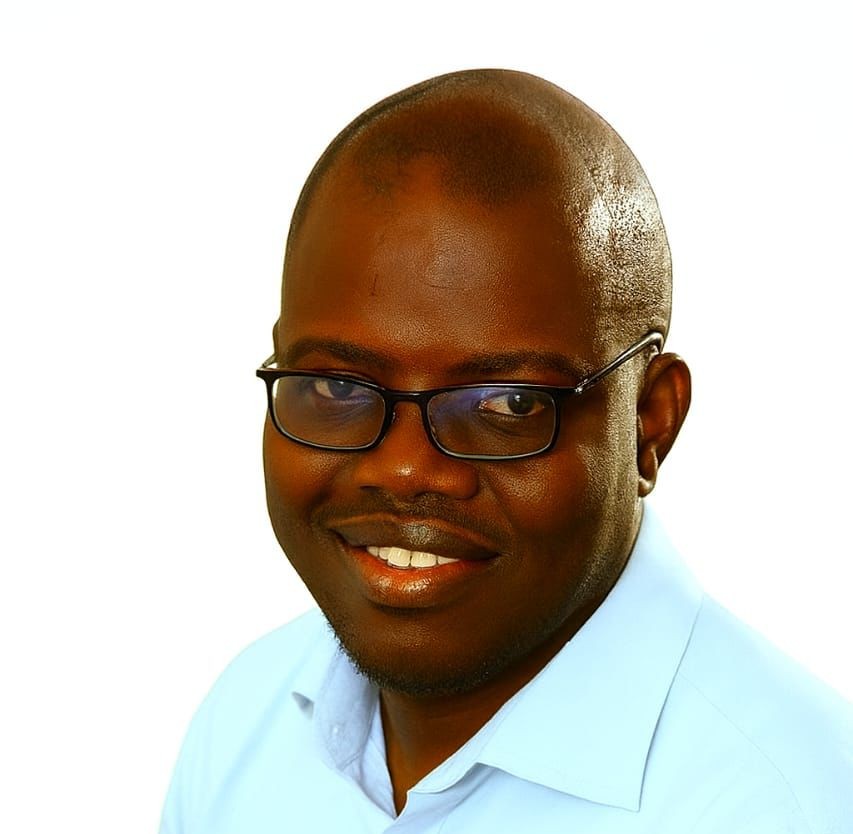
“It’s not that Nigeria cannot build these things,” said Omorogiuwa Nosa Ogbemudia, a Nigerian energy project manager and former Schlumberger engineer who worked on complex reservoir operations across West Africa. “It’s that we do not stay with them long enough, or systematically enough, to make them succeed.”
A Quiet Problem With Loud Consequences
For decades, discussions about Nigeria’s energy failures have centered on corruption, inadequate funding, or political interference. But beneath those familiar explanations lies a quieter, rarely acknowledged reality:
Nigeria struggles to manage energy projects from start to finish.
Interviews with engineers, contractors, government officials, and field workers reveal the same story told in different accents: projects begin too quickly, planned too loosely, and monitored too lightly.
“You see the excitement at the beginning,” one engineer in Abuja said. “Groundbreakings, speeches, the cameras. But the real work: – risk planning, stakeholder engagement, sequencing. is where we fall apart.”
Human Costs Behind the Technical Failures
Every stalled project has consequences far beyond the numbers.
In Gombe, a solar mini-grid that once lit up a rural health center now sits in disrepair after the inverter failed and no maintenance team returned.
“It changed our lives,” a nurse recalled. “And then one day it just went dark again.”
In Lagos, a transmission upgrade meant to ease congestion in industrial clusters has been delayed for years. Businesses nearby say voltage fluctuations routinely burn motors and equipment.
“We are spending more on generators than production,” a factory owner said. “A working grid would save us millions.”
These moments , the darkened clinic, the broken machinery, the abandoned pipeline ,reveal something deeper: energy failures are human failures.
Where Nigeria Loses Its Way
According to experts, the problem often begins at the start.
Many projects are launched with incomplete feasibility studies. Plans change midstream. Contractors work without clear scopes. Government agencies operate in silos. Host communities are not consulted early enough.
“And when something goes wrong,” Mr. Ogbemudia said, “it becomes a blame game instead of a structured recovery process.”
He draws from his years in the oilfield, where a 6-hour delay can cost millions, to explain how disciplined planning prevents chaos.
“In the oilfield, you do not move a tool until every risk is mapped,” he said.
“In Nigeria’s public energy projects, we often break ground before we even understand the risks.”
Lessons From the Field
During his years at Schlumberger, Mr. Ogbemudia worked on reservoir evaluation projects in Nigeria, Ghana, and Côte d’Ivoire, operations that involved dozens of moving parts, from logistics to safety to technical execution.
“You learn quickly that success is not accidental,” he said. “Every step is planned. Every task is assigned. Every risk is quantified. And communication is constant.”
He believes Nigeria’s larger energy ecosystem could benefit from this same culture of discipline.
“It’s not magic,” he added with a small shrug. “It’s structure.”
A Nation at a Crossroads
Nigeria is entering an era where energy demand is rising faster than generation capacity. Gas development is expected to expand. Solar and mini-grid projects are multiplying across northern states. The national grid needs deep modernization.
All these ambitions depend on one thing: execution.
“Technology is not our biggest challenge,” said a senior official in Abuja who asked not to be named. “Our challenge is finishing what we start.”
What a Better Future Could Look Like
Experts propose practical reforms:
Clear project scoping before any ground is broken
Risk planning that accounts for security, logistics, and community issues
Independent project monitoring teams
Transparent contractor performance tracking
Digital project dashboards linked to ministries and agencies
Stronger project management training for engineers and civil servants
Mr. Ogbemudia believes these changes are not only possible but urgent.
“Nigeria is not short of talent,” he said. “We are short of systems. If we fix project management, we will fix more than projects — we will fix trust.”
The Human Thread
Back at the abandoned gas hub in Port Harcourt, weeds grow between the concrete pillars. A young man selling soft drinks nearby said he remembers when the project first began.
“They told us this would bring jobs and light,” he said quietly. “We are still waiting.”
Behind every stalled energy project in Nigeria is a story like his, a promise delayed, a future postponed.
For experts like Ogbemudia, solving the project management crisis is not just a technical duty. It is a national responsibility.
“We cannot afford another decade of unfinished energy dreams,” he said. “Nigeria deserves projects that reach completion, and people who feel the impact.”