Follow Us on Google

From Oluseye Ojo, Ibadan
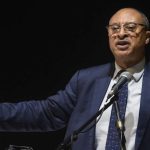
A renowned historian and university don, Prof Toyin Falola, has charged Nigerians not to lose hope and faith in the country in spite of the socio-economic and political challenges besetting the nation.
He assured the people that their aspiration and desire for a better nation that works and takes it pride of place in the comity of developed nations would be realised, if they refused to give up on the county.
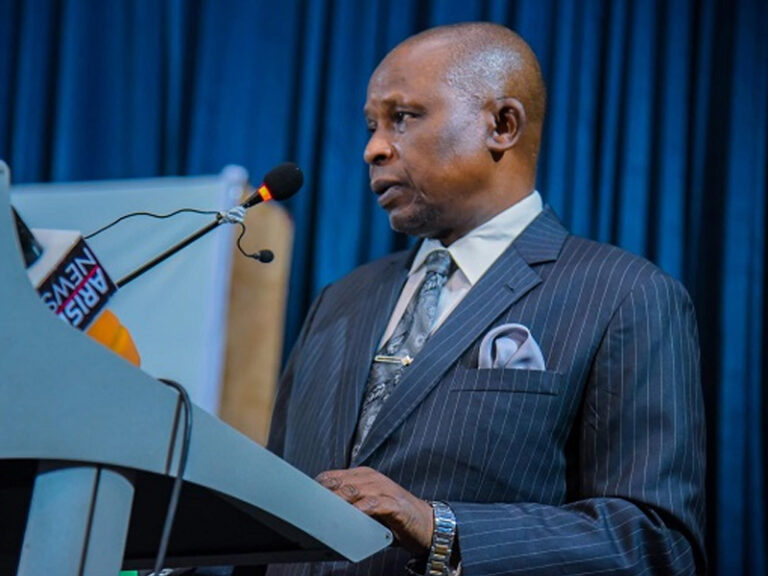
Falola gave the charge at the first international colloquium, organised in his honour, which was held at the NASFAT ETI-OSA Lecture Theatre, Fountain University, Osogbo, on today (Thursday), which was part of events marking the institution’s tenth and eleventh convocation ceremonies.
In his lecture entitled: ‘The Comfort of Faith, The Insurgency of Hope, The Promise of Success,” delivered by Falola on the occasion, he said: “To face the fact, the current state of Nigeria is traumatic; for the average Nigerian, it is always a struggle for daily survival. The environment that the insecurity and crises in Nigeria have created is facilitating discouragement in the minds of the people, influencing the behavior of the sparingly motivated, and leading the ambitious to find escape routes – legal or illegal – from the country. For the rest of the people still in the country and those who are planning to emigrate from Nigeria, it is important that, while we wait for the fulfilment of the promise of development, we find succor that faith and hope have to offer.
“In situations like this, when things become turbulent for the commoner, it is important not to throw in the towel or resign to fate. Instead, we must learn from the strength and patience we gain from believing in the Almighty, which has taught everyone to hold on even to the last breath of life. If we all decide to do this, there is a certainty that the fulfilment of promises is lurking around the corner and is just about to manifest. Besides, as patriotic citizens, if we continue to remain in this country, we can find assurance in the hope of a better future and exercise faith in the belief that all things that need to be done to achieve the development of the country will be done.
“If we deliberate on it, and as someone who had lived abroad for almost thirty years, I can say with all sincerity that, there is in fact “no other country like Nigeria,” to use a line made popular by Ebenezer Obey. We cannot find the love and mutuality that exists amongst the people close to us elsewhere in this world. It seems, therefore, that while we expect that things get better, the least we can do is to maintain a mindset of hope and faith. We must cultivate a mindset that reflects the possibility of a better nation, sees the current crises and underdevelopment as a surmountable mountain, and expects the people to blossom in the euphoria of a better Nigeria. We cannot abandon what belongs to us and begin to build another man’s land. We need to find hope even amid the current situation and live a life of faith that Nigeria will get to the state we have always hoped for, and will one day morph to become Africa’s true giant. ”
The vice-chancellor, Prof Amidu Sanni, earlier in his address, said the university was delighted to host the colloquium in honour of Falola. He was optimistic that the event would remarkably boost the university’s image in global academy. He thanked the honoree and the university’s community for the event.
Falola is a Professor of History, University Distinguished Teaching Professor, and the Jacob and Frances Sanger Mossiker Chair in the Humanities, the University of Texas at Austin. He is an Honorary Professor, University of Cape Town, and Extraordinary Professor of Human Rights, University of the Free State.
Speaking further, Falola, however, cautioned that the ideals of faith and hope must include potency and pragmatism. For him, “It is true that while we all wait for the fulfilment of the promise of success in Nigeria, we must continue to exercise faith and hope, but as much as we do this, we also need to understand the place of hope and faith. It is when we do this that we can inculcate the belief in their potency and pragmatism. As believers, it should be unheard of that we are only hoping and having faith without a deep understanding of how these coalesce, and even when they play out, how their fulfilment stands to change our positions from a point of despair to the point of determination. Understanding the place, potency, and pragmatism of hope will allow everyone to imbibe the culture of positivity towards the country’s development.
“There seems to be no ideal situation to which we can all point that requires an absolute display of faith and hope. It seems that in all situations, as believers, we must continue to have faith and hope for the better things of life on earth and in life after death. Nonetheless, the condition of Nigeria seems to create one of those compelling situations where what remains in the arsenal of average citizens is an appeal to the omnipotent being. This appeal is founded in faith and hope for a better Nigeria. In exercising this faith and hope, it is not enough to state that we are hoping for a better Nigeria while our actions continue to say the opposite. The first thing to do is to review our actions and ensure that they match the exercise of our mindset. When this is done, we can say that faith and hope have found a dwelling place in our hearts. The force of faith and hope are not in any way reserved for the trying times only, and are also to be exercised when the land is merry and blooming. Although these situations of merry and bloom may be difficult to come by in Nigeria, upon their arrival caution should not be thrown to the wind on the unguarded belief that Nigeria has arrived at its euphoric state. We must continue to push for the betterment of the country through our faith and hope, not just until we have seen that our conditions have changed, but until collectively, we can say that Nigeria is living its true capacity.
“Exercising faith and hope might be a bit distant if we do not understand their potency and pragmatism. As humans, we are always ambitious to get the results of what we are expecting, and in most cases, when the results are delayed or not forthcoming, we tend to want to give up and move to other things. While this might have seemed practicable in the past, it is an option for the current state of Nigeria. We have to understand that the crises and underdevelopment in Nigeria are so endemic that their solutions cannot be seen overnight. Therefore, we have to continually push until these changes, which are bound to be time-consuming, happen.
“As patriots and believers, we must therefore continue to be in the expectation for a better Nigeria. It is certain that when we find solace in hope and faith, we will be able to manage and overcome the trauma caused by the crises and underdevelopment of Nigeria and key into the promises of a better future for the country. While we continue to give our emotional responses, we also need to ensure that we are complementing them with actions that can translate into the kind of development we want as individuals and collectively as a country. Our faith and hope offer us comfort and motivation, but will not do more than that if we ignore the call to plan and strategically carve out a workable plan that sees that the country as an epicenter of African development.”