Follow Us on Google
- States to appoint CPs
- Govs witness proceedings after initial resistance from senators
From Adesuwa Tsan, Abuja
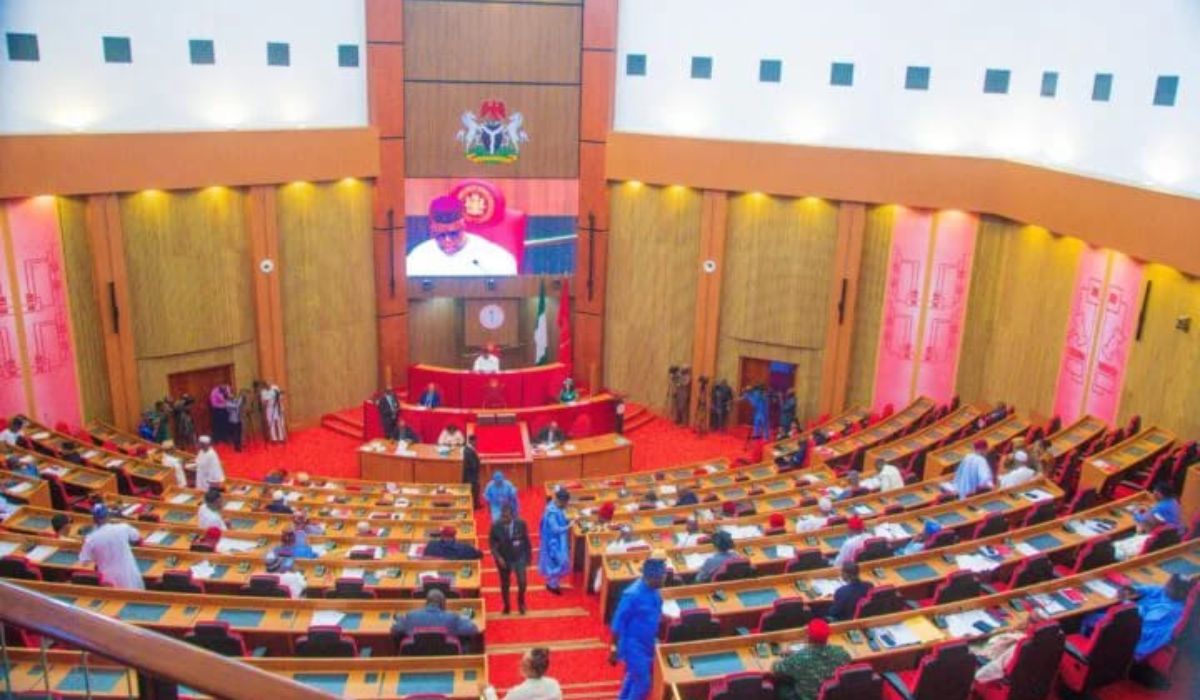
The Federal Government retained sweeping emergency intervention powers over state policing yesterday as the Senate passed the Constitution of the Federal Republic of Nigeria (Alteration) (State Police) Bill, 2026, setting the country on the path towards one of its most far-reaching security reforms since the return to democratic rule in 1999.
If eventually endorsed by at least 24 state Houses of Assembly, the legislation will for the first time create a constitutional framework for the establishment of State Police Services while preserving a strong Federal Police Service with powers to intervene in state policing operations under clearly defined circumstances.
Before commencing proceedings, the lawmakers suspended some of its procedures to enable it complete consideration of the constitutional amendment and accelerated second and third reading within hours.
A major implication of the bill is that policing would no longer be the exclusive responsibility of a centrally-controlled federal institution. States would be empowered to establish and fund their own police services, recruit personnel and address local security challenges, subject to national minimum standards prescribed by the National Assembly.
It also replaces the existing Nigeria Police Force with a Federal Police Service and creates a dual policing structure under which both federal and state police institutions would operate simultaneously.
However, no state would be permitted to commence operational policing until its House of Assembly enacts the necessary legislation establishing a State Police Service and such service is certified as meeting prescribed national standards.
The bill also creates State Police Service Commissions that would be responsible for recruitment, promotion, discipline and oversight of state police personnel, while a reconstituted National Police Council would coordinate national policing policy and cooperation between federal and state policing institutions.
State Commissioners of Police, unlike the current arrangement where the Inspector-General deploys them, will be appointed by the governor of a state after recommendation by the National Police Council. Removal requires legislative approval by the State House of Assembly.
However, contrary to fears in some quarters that state police could weaken federal authority, the bill contains extensive safeguards that allow the Federal Police Service to intervene whenever there is an actual or imminent breakdown of public order, a threat to national security, serious administrative incapacity or evidence that a state police service is being used for partisan, ethnic, religious or sectional persecution.
Under the proposed constitutional arrangement, the Federal Police Service may, where necessary, temporarily assume operational responsibility, including command of a state police service, subject to presidential authorisation, Senate oversight and judicial review.
The proposed legislation further reserves for the Federal Police Service responsibility for terrorism, cybercrime, organised crime, arms trafficking, border security, inter-state crimes and other national security matters, while state police services would be responsible for enforcement of state laws, maintenance of public order and protection of lives and property within their respective states.
Proceedings on the landmark legislation were observed by the governors of Ondo, Ogun and Kaduna States respectively. The Ogun State governor, Dapo Abiodun, attended in his capacity as Chairman of the Southern Governors’ Forum, while his Kaduna State counterpart, Shehu Uba, as the Deputy Chairman of the Nigeria Governors’ Forum. Also present was the President’s Chief of Staff, Femi Gbajabiamila, and attorney generals of some states including Anambra, Ogun and Kaduna.
Their admission into the chamber was, however, not without controversy as some senators initially opposed allowing the governors and other observers into the chamber during consideration of the constitutional amendment, arguing that Senate proceedings should be restricted to members.
The resistance was eventually overcome following interventions by Senate President Godswill Akpabio and Senate Leader, Opeyemi Bamidele, who reminded lawmakers that the amendment would ultimately require approval by state legislatures before becoming law.
Making the case for their admission, Bamidele told senators, “Without two-thirds of the State Houses of Assembly, whatever we are doing today will be in futility.”
Other News
The formal consideration of the bill was moved by Bamidele and seconded by Minority Leader, Abba Moro.
Leading debate on the proposal, Bamidele described the legislation as one of the most significant constitutional reforms undertaken by the National Assembly in recent years.
According to him, the bill seeks to respond to the limitations of a highly centralised policing structure in the face of contemporary security threats such as terrorism, banditry, kidnapping, cybercrime and organised criminal networks.
“The principal objective of this bill is to establish a constitutional framework for the creation and operation of State Police Services while retaining a strong Federal Police Service and maintaining national standards, accountability and oversight,” he said.
He explained that no state would be permitted to commence operational policing until its House of Assembly enacts the necessary legislation and the proposed police service is certified as meeting prescribed national standards.
The Senate Leader also assured lawmakers that the bill contains safeguards against abuse by governors and other political actors.
Under the proposal, governors would be prohibited from directing state police authorities to target specific individuals, political parties, associations or groups, while police authorities would be barred from acting unlawfully or enforcing the law for partisan, ethnic, religious or sectional purposes.
Before voting commenced, Akpabio briefed senators on the use of electronic voting devices provided for the exercise. However, the Senate subsequently abandoned electronic voting after Bamidele raised concerns that some senators could be disenfranchised because their devices were malfunctioning.
Following his intervention, lawmakers unanimously agreed to adopt manual voting.
Under the arrangement, senators indicated support for clauses by standing and raising their hands, while those opposed or abstaining signified their positions whenever the Senate President put the question to them.
Akpabio assured senators that a complete transcript of the proceedings and voting pattern would be preserved as part of the official legislative record and made available for scrutiny by interested members of the public.
He also informed lawmakers that the version transmitted by President Bola Tinubu reflected concerns and recommendations raised by stakeholders during consultations on state policing.
Describing the proposal as a historic legislative undertaking, Akpabio urged senators to approach the debate with patriotism and a sense of responsibility.
“This debate represents one of the most important legislative responsibilities before the 10th Senate,” he said.
During deliberations, Aminu Tambuwal and Enyinnaya Abaribe expressed support for the establishment of state police but cautioned against potential abuse. Both lawmakers argued that effective oversight mechanisms must accompany the reform to ensure that state police formations do not become instruments of political intimidation or oppression.
Beyond creating State Police Services, the bill also establishes State Police Service Commissions to handle recruitment, promotion, discipline and oversight, while a restructured National Police Council would coordinate national policing policy and cooperation between federal and state policing institutions.
The Senate also passed the Police Trust Fund Bill. Both bills require concurrence of the House of Representatives before they can be transmitted to State Houses of Assembly for two-third approval before final passage.