Follow Us on Google
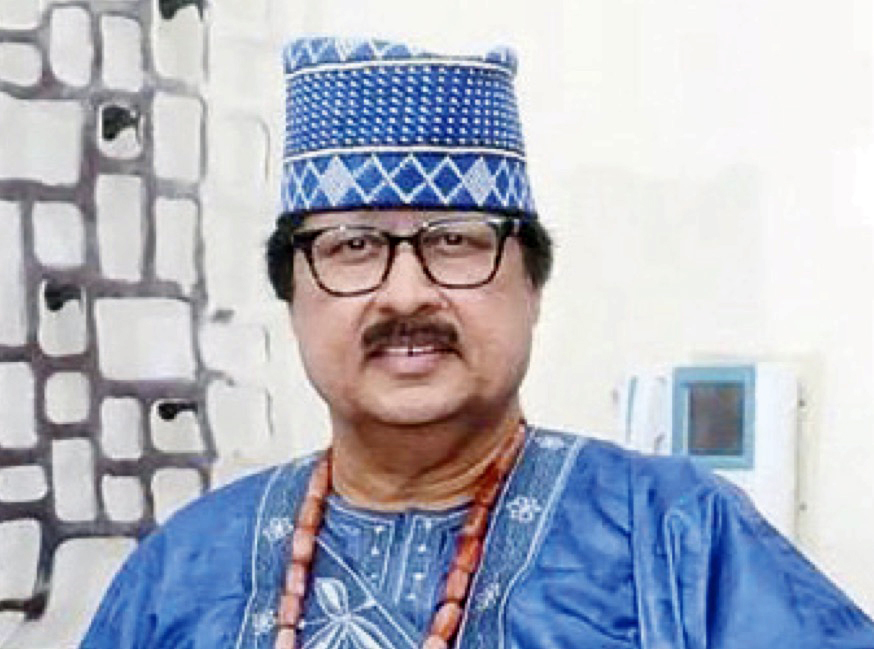
By Simeon Mpamugoh
Chief Sanjay Jain is an Indian-born, Lagos-based businessman. The immediate past president of Indian Cultural Association (ICA), Jain holds two chieftaincy titles and is a strong advocate for the strategic use of culture in advancing Nigeria’s Renewed Hope Agenda, particularly in strengthening diplomatic relations between Nigeria and India.
Jain, who has lived in Nigeria for over three decades, urged Nigerians to reduce dependence on foreign medical treatment.
Indian hospitals have been choice destinations for medical tourism for Nigerians. What do you think is responsible for it?
I want to say that this could be attributed largely to affordable, high quality healthcare services available in India. In India, medical procedures cost significantly less than in many Western countries, enabling patients from Nigeria to access top-tier treatment at a fraction of the price. Apart from the fact that it is significantly more affordable than in many other countries, it also ensures that patients from Nigeria receive top-quality care at a fraction of the cost. Besides, Indian hospitals also offer prompt medical care, avoiding the long waiting periods for surgeries and treatments common elsewhere. Healthcare services in India are typically 60 to 70 per cent cheaper than in Western nations, while hospitals are equipped with world class facilities and advanced technologies for complex medical procedures. It’ll be fair to state that nearly half of Nigerian travellers to India seek treatment for conditions such as cardiac diseases, cancer, orthopaedic problems and eye procedures due to the country’s expertise and rapid access to care. Nigerian patients increasingly choose India over other medical tourism destinations for specialised treatments for themselves and their loved ones.
What is the global rating of India in medical tourism indices?
India ranks high in global medical tourism indices, with world-class centres capable of performing complex transplants, orthopaedic procedures, cardiac surgeries and many other medical procedures. Most Indian hospitals maintain dedicated international patient departments staffed by English-speaking professionals, making communication easy for Nigerians as well other nationals who are coming for treatment. While India remains a primary destination point for medical tourism, recent investments in Nigerian healthcare infrastructure aims to reduce the country’s dependence on foreign medical treatment, which engulfs huge foreign exchange that is already in short supply. For me, this is a very positive step by the federal government and will go a long way to favour the populace..There is a reported decline in medical tourism spending in early 2025, which suggest a possible shift toward domestic healthcare options. But some patients undergoing complex procedures abroad have experienced complications after returning home. There is a need for strengthening of local healthcare.
The large number of Nigerians seeking treatment overseas highlights gaps in the domestic health system. While India offers advanced, low-cost care, improving Nigeria’s healthcare infrastructure is essential while continued collaboration between both countries can help strengthen local capacity.
What is your impression about economic and trade co-operation between Nigeria and India?
Economic and trade cooperation between Nigeria and India has been growing steadily over the years. India remains one of Nigeria’s top trading partners. Nigeria is India’s largest trading partner in Africa. India’s exports to Nigeria include pharmaceuticals, automobiles, iron and steel, rice, plastics, and textiles. On the other hand, Nigeria’s exports to India are primarily crude oil, cashew nuts, sesame seeds, and liquefied natural gas (LNG).In 2024–25, India’s exports to Nigeria stood at $2.95 billion, while imports from Nigeria were $4.19 billion, bringing total bilateral trade to $7.14 billion. The key sectors of cooperation between the two countries are: energy, pharmaceuticals, infrastructure, and agriculture. In the energy sector, India is a major buyer of Nigeria’s crude oil while in the pharmaceuticals, Indian companies dominate Nigeria’s market with around 50 per cent market share.
In infrastructure, Indian companies are involved in various projects in Nigeria, including power, transportation, and construction. In agriculture sector, Nigeria remains a significant exporter of products such as cashew nuts and sesame seeds to India..Indian companies have invested approximately $27 billion in Nigeria, with over 200 Indian firms operating in the country. Some prominent Indian companies in Nigeria include Bharti Airtel, Tata Group, Bajaj Auto, and Godrej Group.
In what areas has the Indian government extended credit lines to support the Nigeria’s development projects?
Indian government has extended several lines of credit to Nigeria to support development projects, as both countries have signed multiple agreements to promote trade and investment. The recent commitments within the framework of the G20, India pledged $14 billion in investments across sectors including energy, infrastructure, and manufacturing. Jindal Steel and Power has committed $3 billion in Nigeria’s steel sector, while Indorama Corporation has committed $8 billion towards petrochemical facility expansion in the country. And despite the strong trade relationship, there are existing challenges such as trade imbalance fluctuations, foreign exchange shortages and volatility in Nigeria, as well as security concerns. While Nigeria and India have maintained a strong, six-decade-long partnership—with India as a major trading partner and investor (over $27 billion in investments) in Nigeria, several key areas remains either under-explored or have potential for deeper cooperation, particularly in transforming the relationship from a trade-centric one to a more strategic, technology-driven partnership. However significant opportunities remain, particularly in renewable energy, agriculture, and manufacturing. Nigeria and India no doubt, have a strong economic and trade relationship with significant potential for growth and cooperation, but efforts to diversify trade and investment, and to address prevailing challenges, will be crucial to further strengthening bilateral ties.
As the immediate past president of India Cultural Association (ICA), how can the federal government deploy culture as a strategic instrument to strengthen diplomatic relations between the two countries?
We interact with Nigerians in all our cultural functions throughout the year. These events are always made public so that Nigerians can attend, observe, and interact with Indian community. We make it imperative that organisers of our cultural feasts invite our hosts, so they can come and see the culture Indians practise. It’s heart-warming that many Nigerians who had participated in our cultural festivals had come to appreciate our values, thereby fostering cordial relationships with the Indian community.
You have lived in Nigeria for more than 30 years. What aspects of Nigerian culture and values do you admire?
I love Nigeria’s culture of caring for the elderly. In many societies, such people are consigned to old people’s homes. This cultural lifestyle has affected me positively, as we practise something similar in India. On Nigerian cuisines, I am a vegetarian, so I always go for vegetarian food. Nigeria is rich in food. I have eaten jollof rice, pounded yam, and amala with vegetable stew. I do not eat meat or eggs. My wife has also served me boiled yam with sauce, which I found delicious. In India we also respect people we meet but Nigerians demonstrate greater hospitality. Nigerians show respect to everyone—even strangers. This is beyond what we practise in India. I commend Nigerians for their culture of friendship and goodwill.
How has foreign culture influenced Indian youths in the 21 century?
Indian culture has remained undiluted despite centuries of external influence. Indian culture is ancient and has existed for thousands of years, surviving over a millennium of colonialisation. It remains rich, vibrant, and alive. India is an emerging cultural centre with its diverse states showcasing their traditions regularly. These cultures have endured without being eroded by the growing influence of the internet. However, culture alone is not sufficient for national progress. It is not enough to have transparency, religious values, and good habits. Commitment to development should always be part of the mix. Prime Minister of India, Narendra Modi’s transparent leadership has contributed immensely to India’s growth. Much of India’s success can be attributed to his corruption-free approach to governance.
India is the most populated country in the world yet it could feed its large population adequately. How did it achieve that?
Thank you for this question. Like you rightly observed, India – now the world’s most populous country- remained self sufficient in food production while also serving as a major exporter of agricultural produce. India’s food security model has continued to attract global attention. Yes! The country statistically ranks as the most populous country in the world yet we are self-reliant in food security. In fact leaders from different parts of the world often wonder how we achieved the feat. To be sure, India was the second-largest producers of rice globally, the third-largest producers of export crops such as cotton, and the leading producers of sugar. Till date, India continues to export food produce selflessly across the world. The country exports rice, sugar, and beef to different parts of the world. Reports have shown that India is among the world’s largest exporters of beef. This clearly shows that the country is self-sufficient in food production.
What farming methods does it employ? Is it still the mechanization system?
Yes. We have mechanization, seasons and farming innovation systems in the country. India’s agricultural success predates modern innovation such as soilless farming. Before soilless farming, there was vertical farming, which became successful in countries with traditionally normal agriculture land. It allows for multiplied yields and bountiful harvests when compared to soilless farming, which is usually done in pots or water-supported environments. Although soilless farming currently delivers lower yields in percentage terms, even though the method is gaining momentum and may become more successful in the long run. Again, India remains largely an agriculture dependent country. Government’s support—though once minimal—has significantly improved: Today, the Indian government provides various forms of support to farmers and the agro-industry. As a result, we are not only self-sufficient but also exporters of several farm products to other parts of the world. Talking about mechanized farming, it’s the use of machines in land preparation and cultivation. Modern technology has transformed farming efficiency such that machines help farmers achieve better yields and maximize land use. Every farmer now benefits from mechanization, which ensures bountiful harvests and improved return on investment. Farmers today are getting their highest yields through mechanized farming.
How is India’s seasonal farming structured?
In India, we have two major farming seasons. The first one is called Rabi, which runs from November to April, while the second one is called Kharif, which runs from June to October. During the Kharif season, seeds are planted and later harvested for both domestic consumption and export. Some produce have three cycles in a year, contributing significantly to food abundance.
You are the president of Jain International Trade Organisation (JITO). What exactly do you do at the organisation?
JITO is a global business and social networking platform: it is an international trade organisation with offices in over 70 locations including several international chapters. It was initiated 18 years ago in India and has grown into a strong global network of business communities. It’s different from profit sharing organization with corporate social responsibility (CSR) initiatives. It’s not the typical multinational corporation. JITO focuses on trade facilitation and networking. We provide platforms for people to interact, get guidance, and connect with the right business partners. For example, if a Nigerian wants to trade in cashew nuts and is looking for a buyer, JITO connects that person to the right business partners. This applies to all forms of agricultural and commercial produce. It is a place where buyers and sellers meet. It is an inclusive and family-oriented organisation with no place for discrimination. Whether you are Nigerian, Ugandan, or Indian, we see ourselves as one family. That is the beauty of JITO. We operate on nonviolence and social values planks, promoting physical wellness and ethical living.
As a social network group, what is the organisation’s stand on violence?
We are a non-advocacy organisation with zero tolerance for violence. Every year, we organise an interactive session and invite our Nigerian friends to participate. Recently, we had an international event where we, alongside others from over 100 countries, including Prime Minister Modi, participated in and was in attendance. We are grateful to PM Modi, a great propagator of non-violence for endorsing our activities as preached and followed by JITO, as well as other Jain members. Our message emphasises peaceful and non-violent coexistence. For us violence is not only physical, it can be shouting at someone or showing aggression towards someone. These are forms of violence that should be avoided. So in JITO, we preach a non-violent approach to life, and human interactions through the commodity market.