Follow Us on Google

By Chukwudi Nweje
Former presidential candidate and chieftain of the All Progressives Congress (APC), Gbenga Olawepo-Hashim has reiterated his call for electoral reforms to ensure the sanctity of the ballot box and foster democratic consolidation.
He also called for a general re-evaluation of politics and governance for the purpose of meeting the popular yearnings of Nigerians.
He said Nigerians will continue to treasure and defend democracy, if government is able to distribute its dividends to all and sundry.
Olawepo-Hashim, who reflected on 63 years of independence in Africa’s most populous country, observed that the gap between expectation and reality was confounding.
He contended that Nigeria is passing through hard times, urging the government to gird its loins.
Acknowledging the grave economic situation as underscored by lack of stable power supply, high inflationary trend, soaring unemployment and impact of subsidy removal that has jerked up the cost of fuel and resulted in the attendant high cost of living, he said appropriate problem-solving measures are required in order not to extinguish the hopes of the younger generation.
The former presidential candidate, who spoke with reporters in Lagos, put Nigeria on the weighing scale against certain indicators and parameters of development, including democratic consolidation, validity of the ballot box, economic prosperity, security, national unity and values, which have been grossly eroded.
Beaming the searchlight on the electoral system, Olawepo-Hashim maintained that reform is long overdue and non-negotiable.
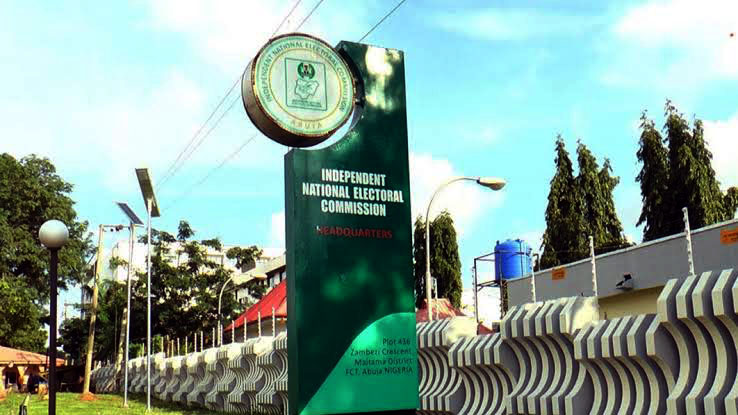
He described the Independent National Electoral Commission (INEC) as a powerful agency that should be re-examined and reformed to enhance its performance without hampering the democratic order.
Recalling the initial reform process of asserting INEC’s independence through financial autonomy as reflected in its ability to draw funding on a first line charge, he said the mode of leadership recruitment in the commission should also be reformed.
He suggested that the INEC chairman and other national commissioners should be recruited, not by the President or government in power, but by the National Judicial Commission (NJC), which should also advertise the vacancies.
He stressed:”The President should not appoint INEC chairman. He or she should be appointed by the NJC.”
Olawepo-Hashim also said, to restore confidence in the electoral system, the onus or burden of proof during post-election litigations should be on the umpire that conducted the exercise.
In his view, leaders should not be chosen by their war chest, but should emerge through a transparent process.
Stressing the need for a national rebirth, he said: “This should be a period of renaissance. Enough of promoting the worst of us.”
The APC chieftain, who suggested reforms within a reasonable time frame, said we should deal with these issues now, not six months to the election.”
Olawepo-Hashim lamented that military intervention in politics has remained a strong factor in national retrogression, despite the achievement of civil rule some 24 years ago.
He said:”After the military intervention, the tide of development was reversed and Nigeria started regressing. That affected the foundation of infrastructural development that was laid in the First Republic.
“Values have been eroded. Today, Nigeria is divided. In the pre-independence years, Kashim Ibrahim, a Kanuri and a Muslim, came and ran for election in Benue-Plateau, and was supported by Joseph Tarka.
“Awo campaigned for Ernest Ikoli from South south against Samuel Akisanya, a Yoruba, during the Nigeria Youth Movement (NYM) election. There was no zoning. Awo talked about federalism, not zoning.
“Federalism is not ethnicity. Rotation of power is not federalism. Issues are now looked at from the point of view of pro-North, pro-South. We need to reset our thinking.”
Olawepo-Hashim also recommended that the position of the INEC and National Commissioners should be advertised and not appointed by the President.
He stressed the fact that the Electoral Act should put the onus of proof of the conduct of credible election on INEC and not on the petitioner.
Olawepo-Hashim revealed that during the military regimes, he and other activists fought for a truly independent INEC where the positions should be advertised, while the National Judicial Service Commission (NJSC) should be the collation agency, independent of the Executive.
According to him, “In 1999, we won the election on the platform of the Peoples Democratic Party (PDP). But who were those that asked for an independent electoral commission? We were the ones. We were not behaving like people who were sure they were going to get power, because we were believers in democracy.
“So, Nigerians need believers in democracy across parties to survive, not APC and PDP. This is beyond APC, PDP. If we don’t ‘sort out’ the electoral system right now, and not six months to election, or one year, the 2027 election is going to be war. Nobody will be going to court. So, we don’t want that now.
“Nigeria needs statesmen not politicians. We don’t need politicians in the drivers’ seats of the reform of our state institutions. We need statesmen to speak up.”
Olawepo-Hashim maintained that the “issue of electoral reform is not the business for the opposition alone It is the business for everyone who loves Nigeria because if we don’t reform the process,
and election can’t be delivered credibly, 2027 will be war.”
He added: “We have to rescue the democratic process because it is becoming meaningless . Why are we having coup d’etat all over Africa? Because people did not see any content in what we call democracy.
“I know that people have their expectations in the judiciary but judges adjudicate based on law and evidence and the truth of the matter is that the Electoral Act has skewed the balance in favour of the winner of the election and the man who organized the election.”