Follow Us on Google

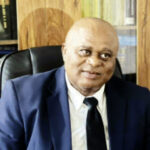
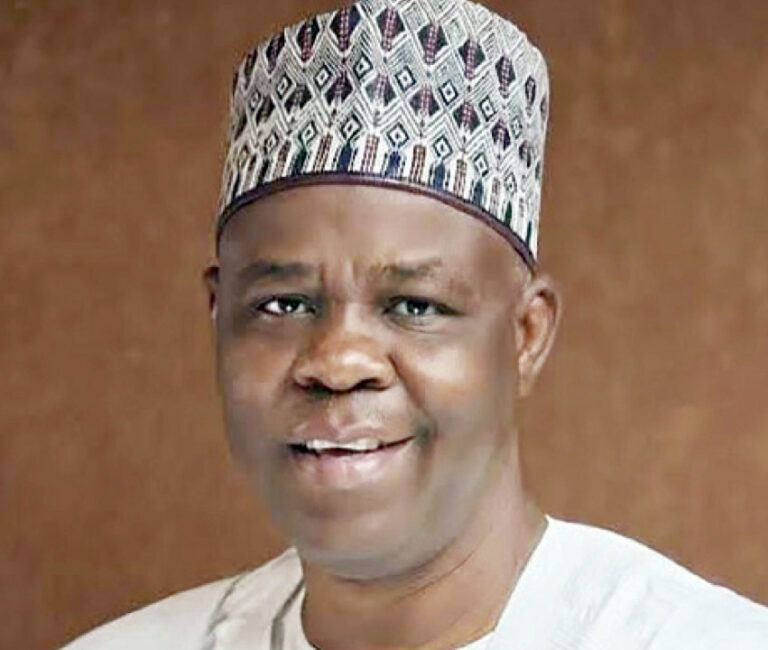
A royal father, Anthony Efekodha, Ejuzi II, the Ovie of Enhwe Kingdom in Isoko South Local Government area of Delta State who represented the Isoko South Federal Constituency between 1999-2003 in the House of Representatives believes Nigeria is on course despite the challenges she is currently facing. In this interview with VERA WISDOM-BASSEY, he speaks on the tension building up in the Niger Delta.
Nigeria turned 57 this year; how will you rate her growth from the time of independence?
Yes! We are moving forward, you know in every country and every state, there are issues you must look into for you to know whether the country or state is actually moving forward or not. As for Nigeria, when we had independence, what was the income of Nigeria then, what were we achieving then and how many universities were in Nigeria then? By the time you look at all these developments, you will see that we have achieved a lot and moved forward a lot. Although management of Nigeria has been a little bit of a problem and corruption has also actively destroyed some part of the Nigerian economy. I do not know whether it is because the Nigerian legal system is not properly addressing these issues. But I think corruption has been our greatest problem, otherwise, we would have moved forward a great deal. When I was a student in the universities by 1974, 14 years after independence, we had about five universities and they were under- populated. But today, apart from the number increasing to over 100, the population has multiplied up to five or 10 times.
Do you agree with those who insist that rather than progressing, we are retrogressing?
We are crawling because our income is sabotaged by corruption. The corruption is where one man corners what many people are supposed to have. Just look at the case of Diezani, the former minister of petroleum. She was a Miss nobody yesterday; it is not that she had an industry where she produces anything from before.
Comparing when you were at the House of Representatives and now, what are the differences you see?
Personally, when I was in the House of Representatives, we fought Obasanjo almost to a standstill. The reason why we did that was that we knew we were serving our people who sent us. We fought him for three major reasons. Those of us from the South-south, he refused to implement the 13 per cent derivation, secondly, when we scrapped OMPADEC in the South-south and we wanted to establish another commission, Senator Brume was the chairman of the committee, and we agreed on 3 per cent of oil income to finance NDDC, but Obasanjo said the percentage was too much, that OMPADEC was getting 1.5 per cent. He said why should we ask for 3 per cent. But we refused and said no and that is the decision of the House and that the Senate also agreed. So we passed the bill to him, but he refused to sign the bill to law.
The bill was properly passed by the National Assembly, placed on his desk to sign to law and he refused. After about 60 to 80 days, the bill came back to us, Ghali N’Abba who was our Speaker then tied himself to us. He understood us and he understood our plight. South-south needed to be encouraged, oil-producing states needed to be encouraged. So, he was with us throughout that battle and at the end of the day, it was the House that passed the bill into law, not Mr. President. So, those two were the major things and then the lack of implementation of the National Budget. Although that sickness is still on today, it was worse before; in fact, one of the budgets was 30 per cent implemented, yet he refused to implement the full budget. He had his own kitchen budget, which he was implementing.
What is your advice to the lawmakers?
They should know that each of them is elected by their constituency and they ought to be coming to their constituency to hold meetings from time to time, and then it is the opinion of their people that they ought to take along to the National Assembly and to Nigerians in general. If every one of them is doing that, we wont have a problem.
From your vantage position, what is your view on the growing tension in the Niger Delta?
No, we are an oppressed group.
I thought with the Amnesty programme, the tension would go down?
No! No!! How many people have been affected by that, how many people have benefited from the Amnesty programme, compared to the population of the Niger Delta people, people of the South-south? We are not demanding money or projects, we want industries. Look at the area where the oil is coming from in Delta State, how many industries are in Delta State. The issue is not just about establishing an institution, producing graduates and at the end, the graduates have no jobs. Many industries have been established in Delta State by the Federal Government, so we have Delta State universities producing graduates, running HND programmes, we also have polytechnic running petroleum programmes and also producing graduates, where do you expect these people to work? When they produce, then they have to travel to America to go and look for jobs. This is not possible. How many industries have the Federal Government established?
The ones that were established in the state in the 1960, Bendel Glass is not functioning. Delta Steel has been closed down. The biggest steel establishment in Africa, I worked there, I was part of the team that set up the committee, and our design then and that of Brume and then government in 1980. President Yar’Adua was the one who commissioned it, and completed it. I worked there, we were working till late in the night and by morning, we were already in the office again, according to the Director of programme. He said whether you work late in the morning, you are already in the office. That was it and we did a beautiful work, but the place now has been rubbished; at a point, they even owed them 32-months salary arrears. I mobilized my fellow members of the National Assembly on power to the place and they were shocked to see Nigerians being owed 32 months salary arrears and they were still coming to work. I succeeded in getting N2.3 billion for them. The N3.2 billion, I didn’t see the evidence of work there.
So, when we are agitating, what is 3 per cent that the NDDC cannot fund? By now, we should be talking of 15 per cent, because the cost of running administration is increasing everyday. But today,they don’t even fund them anymore. But the oil is still produced, the rate of oil being produced is 2.3 million barrel, so when we in the Niger Delta are complaining or crying and sometimes the youth fight, I don’t blame them. Nobody is asking us even the recommendations of Yar’Adua committee to these issues at the National Conference; they have not implemented one. If they have implemented some of them, by now, we should be heading to somewhere. That is what is causing our people to be agitating; it is only a man who is deaf and dumb that will not talk about his problem. We are talking about our problems; the oil blocs that are here, no traditional ruler in the South-south has oil bloc, but we have traditional rulers up North who have oil blocs.