Follow Us on Google
By Merit Ibe, [email protected]
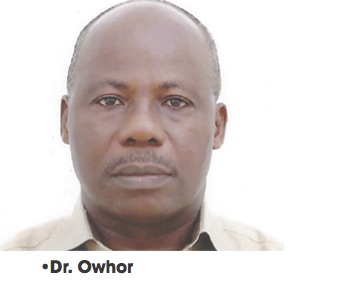
Dr. Nathan Oviri Owhor, a political economist, in this interview examined the missing link before and after the fuel subsidy regime, arguing that the opaque nature of the regime made it impossible to tackle oil theft.
He also noted that the argument for palliative was utterly misleading and a ploy by the privileged few to sustain their lavish lifestyle, while profering actions government could take to ameliorate effects of the removal on Nigerians going forward.
Excerpts:
Subsidy
Subsidy generally demonstrates the response of government to cushion the effect of global market shocks or a bad policy option. It could also be a deliberate action of government to protect and encourage certain aspects of businesses in the domestic economy. Subsidy in principle therefore, is a good policy framework especially in societies like Nigeria with high poverty index.
But what appears to be the missing link in the Nigeria’s fuel subsidy experience was the absence of data and accountability. From where most Nigerians stand today, the major concern was not fuel subsidy but the absence of accurate information on importation and consumption levels.
Oil Sector challenges
The oil sector appeared to be a closely guarded sector of the domestic economy with so much official secrets.
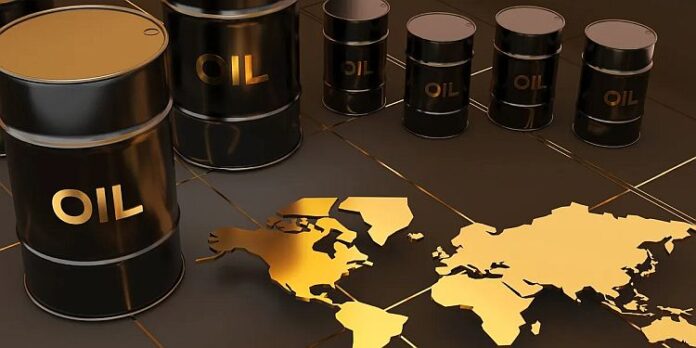
The opaque nature of the subsidy regime has also made it impossible to tackle oil theft. The apparent inability of managers of the oil sector to tackle this challenge is a demonstration of criminal collaboration. The capacity of Nigeria in the global oil sector has been compromised and meeting her production quota has become a big challenge. The prosperity in any domestic economy and the states ranking in the global community will depend on its export capacity and its global market share for goods and services. But Nigeria is in great deficit of these capacities and therefore suffers a huge tragedy in the global oil market. This tragedy has made Nigeria’s participation in an integrated global economy unattractive and a huge dilemma. The opportunities in the global oil market cannot be accessed. Yet, she suffers from the unmitigated crisis in the global economic system.
Subsidy removal
Fuel subsidy removal by the President after several years of failed promises and attempts is therefore a deft move of a champion. There is so much fuel patronage by government officials and other elites with so many vehicles on their convoy. Some of their vehicles on the road most times have no business being on the road. The amount of money spent on the erstwhile subsidy was actually used to subsidise the lavish lifestyle of government officials and other elites. The other snag which is huge was the trans boarder smuggling of fuel. While government was spending huge sums to sustain the now banished fuel subsidy regime, most Nigerians were feeding fat through the smuggling of the product.
Palliative
The argument for palliative for the masses is utterly misleading and a ploy by the privileged few to sustain their lavish lifestyle.
Let there be petroleum products for domestic consumption and banish permanently the idea of palliatives, which do not even get to the ordinary Nigerians.
On the heels of the poor data in the management of the erstwhile subsidy regime was the absence of accountability by the operators who managed the entire value chain; from shipping to the tank farms and to the filling stations. From the standpoint of most Nigerians it was a bazar of no mean proportion where those who were supposed to be guardians of the common patrimony were neck deep in wrong doing. The word corruption had lost its meaning. It became a feast celebrated with no apparent sanctions. Most Nigerians nonetheless, discredit the sanction management system because it is not equitable. Nigerians are profiled based on tribe, religion and party in the consequence management mechanism. This development is not good enough for a plural society with multiple layers of loyalty and allegiance. It is gratifying to note therefore that the era of fuel subsidy is gone.
Economy
While the government is dealing with the challenges in the oil sector, there is the urgent need to diversify the economy. The textile sector is capable of increasing government revenue and provide massive direct and indirect employments in the economy. The opportunities in its value chain alone are enormous. Unfortunately, this understanding appears to be in short supply presently. During the campaigns leading to the 2019 general elections, almost all the political parties spoke about creating employment in the domestic economy. There was in fact so much hype about making sure that the teeming unemployed youth populations were gainfully employed during the campaigns especially at the presidential level.
Even during the campaigns for the 2023 general elections, promises of creating job opportunities once again took center stage but it will probably remain another political sermon. Not one of them had a spotlight on the textile and garment industry. How do you guarantee massive employment in an economy like that of Nigeria where research and development and high-tech innovative ideas which drive the service industry are presently absent or at best emerging without the textile and garment industry?
Global and domestic challenges
The global and domestic challenges in the oil sector again signposts the danger over reliance on oil poses to national development. The fact that the oil sector alone had continued to provide the bedrock for our national income receipts and payments is a bad economic judgement. It is no doubt a burble set to burst as other societies are progressively developing other sources of energy. After all, there was coal as a major source of heat energy. Who said crude oil cannot suffer this misfortune with the increasing investment in renewable energy and electric cars?
There could also be other unexpected intervening factors. The COVID-19 global health challenge showed it had the capacity to slow down the global demand for oil. Global warming and its attendant flood water surge have also demonstrated it could slow down the demand for energy. The 2012 and 2022 floods in Nigeria also had the capacity to define and limit energy consumption levels. Meanwhile, the activities of the oil vandals have continued to destroy the mangrove forest and moved the top soil to the sea beds. These have created very shallow water ways thereby enabling massive flooding of low land areas by the overflow. The solution is to stop the vandals, dredge the water ways and confine the overflow within the river banks.
Way forward
In the interim, government should repair the ageing refineries or build new ones. From where we stand as ordinary Nigerians there is no explanation to justify why crude oil cannot be refined locally to meet domestic consumption. Anybody who has sufficient reason to justify this development will no doubt have a page in the Guinness Book of Records. The activities of the artisanal refiners have clearly shown that refining crude oil is not a rocket science.
In some parts of the country, these products are available in some filling stations. While we must admit the danger some of these products pose to vehicles, homes and individuals because of the crude operational environment, the truth is that it is possible. If ‘refining’ could be done at this level, then the government has no excuse. The government should take the initiative and let the bureaucrats in the oil and gas sector of the economy lead by example and support the government to accomplish this age long expectation. Alternatively, the artisanal refiners could be organised into clusters with clear government guidelines and regulatory framework as an interim measure.
The raw materials are available. Let there be petroleum products for domestic consumption and banish permanently the idea of palliatives which do not even get to the ordinary Nigerians.
To ensure the availability of crude even for the domestic refineries, government most stop oil theft. There is the elite group who steal oil using large scale ongoing sea vessels but enjoy the protection of powerful friends in authority. These are individuals who are driven only by greed to maintain a predatory lifestyle on the economy.
At this level of corporate sabotage, you will easily find one ‘scapegoat’ who is used to make a public show to divert attention as the plunder and stealing continues.
The other group is the artisanal members of the degraded and exploited host societies whose expectations of the good life from the crude oil deposits has remained a pipe dream. The individuals in this group are obviously reacting to years of neglect in a devastated ecosystem with the traditional life of fishing and farming destroyed. In a way, it is a ‘legitimate’ means to earn a living since the government and the Multinational Corporations (MNCs) have failed in their corporate social responsibility.
The present face-off with the neglected host societies is a new development. The solution is not for the MNCs to close businesses and move to other locations within the economy. The solution is also not for the State to attack and detroy the jerrycan businesses and further pollute the environment, but to create conditions that will restore hope in the host communities while dealing with the elites.