Follow Us on Google
•2027: We’re supporting Tinubu because Obi plans to kill APGA
•Atiku, not Obi, poses greater challenge to Tinubu’s re-election
From Romanus Ugwu, Abuja
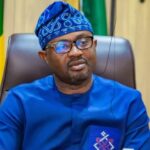
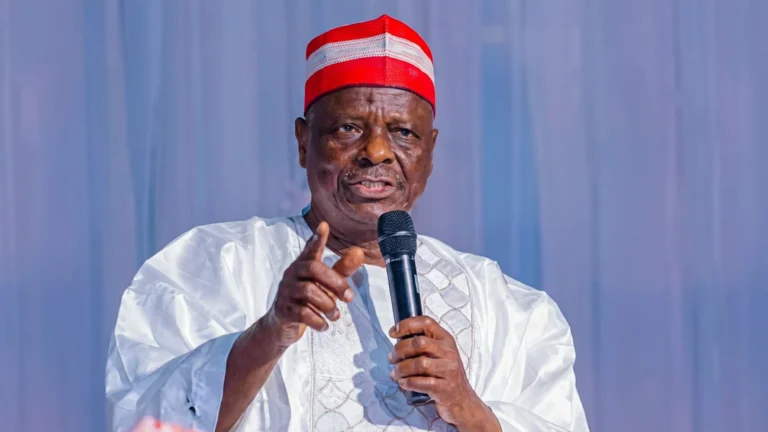
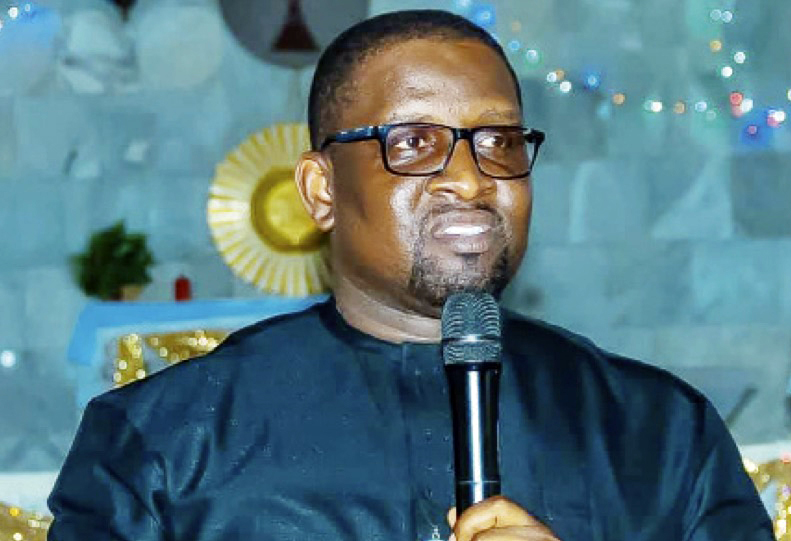
Sly Ezeokenwa, a lawyer and the National Chairman of All Progressives Grand Alliance (APGA) is a charismatic political and legal mind who has carved a niche for himself as a former Commissioner for Special Duties and Legal Matters in Anambra State and one of the youngest political figures to occupy such exalted management position in a big opposition party.
Ezeokenwa, in speaking to Sunday Sun in Abuja on a wide range of political issues, defended APGA’s decision not to field any presidential candidate to contest against President Bola Tinubu in next year’s general elections.
He also clarified why APGA will collapse its political and logistic structures to back the incumbent President instead of the presidential candidate of the Nigeria Democratic Congress (NDC), Peter Obi, who is an indigene of Anambra State, the home of APGA, explaining that it will be a payback to him for deploying every machinery to ensure total annihilation of the party.
Ezeokenwa equally disclosed his fears for the 2027 general elections, and why the presidential candidate of African Democratic Congress (ADC), Atiku Abubakar, not Peter Obi might pose a stiffer challenge to President Tinubu during the election.
After the deadline for nomination of candidates, is it a very good decision that APGA did not field a presidential candidate?
This is something we have gone through countless times. From day one, the leadership of APGA met and made a decision that the best thing for the party now is to foster the relationship, partnership or alliance that currently exists between the ruling party, the All Progressive Congress (APC) and APGA.
Yes, this is politics and it is all about interest. A political party must take decisions that will not only guarantee its existence, but equally advances its interest. One must take decisions that guarantee its continued existence as a political party and decisions that advance your interests and that of the members of the party.
You are well aware that we are controlling only one state out of 36 States in Nigeria, which is Anambra, the home state of our national leader, the governor. There are so many things, issues, and discussions that we had. We saw how the election went seamless and APGA recorded an unprecedented victory, such that no political party has ever recorded in the history of this country.
I can say that part of the reason the victory came was because the ruling party, under the leadership of President Bola Tinubu, stood firm that the votes of the people must count. They stood firm, and supported. Behind the scene, there was also this tacit support for the programmes and policies of the APGA-led government in Anambra State.
That support was in furtherance of the partnership that already exists and in line with that partnership, we have seen the appointment of APGA member, Ambassador Bianca Odumegwu-Ojukwu as a minister. We also saw the appointment of another APGA member, Mr Mark Okoye Junior, as the pioneer MD CEO of South East Development Commission.
These are records, and we cannot shy away from the fact that there exists a working partnership, and alliance between these two political parties. We have decided, looking at our strength, that the best thing for us to do is to advance this partnership by adopting President Tinubu. Although we have not taken that formal decision, we are open to it.
We can actually nominate someone, like what happened in 1999 when APP nominated Ogbonnia Onu while AD nominated Olu Falae, but in the end, they still adopted one person. In our case, we could have nominated a candidate and still continue with our alliance, but we chose not to nominate a candidate so that we can further that partnership and strategic engagement. That is where we are.
As a participant in the build-up to next year’s general elections, what are your fears?
I have multiple fears. One of it and the most important, is the possibility of Nigerians freely going out to make a choice at the poll. That choice should be between advancing the interests of our dear country or building on mere emotions. I am one of the staunchest supporters of the current administration, because I have seen certain gains recorded.
I have also seen certain areas I believe that this administration could actually improve on. I have pointed them out countless times. I always say this. I don’t see myself as a wizard who engages in witchcraft. I believe that the opposition must be constructive.
The most important thing is that we try as much as possible to continue to build a stronger, more united Nigeria, and then when I say opposition, I also try as much as possible to equally correct that impression. Yes, since I am not part or a member of the ruling party, ordinarily I should be tagged an opposition political party, but I don’t want to be seen as an opposition political party to the current administration. Rather, to put it more mildly, we are a different political party, but certainly not in opposition, because we have a healthy working partnership with the ruling party.
Talking about my biggest fears, so many sentiments have been drawn, and those sentiments are quite dangerous to our continued existence as one united country. People are whipping up religious, ethnic, and all other sentiments. If you ask me, this is the time for us to show our level of conviction as patriotic Nigerians.
As I said, President Tinubu has not gotten it all right, but I can give him a comfortable pass mark, at least between 60 to 70 per cent, especially in the areas of managing the economy, taking tough decisions that previous administration could not take, particularly the issue of removal of subsidy that most people have seen as one policy that has crippled the country and put it in some precarious situation economically.
We have seen that the rating of the country has continued to improve across certain financial and other world institutions, like the IMF, the World Bank, among others. But then looking at the security system, this current administration is still grappling with security challenges, but it is not just peculiar to this administration. It has been there since 2009 when it came to the fore with the advent of the Boko Haram terrorist group.
Successive governments have tried as much as possible, but the one which equally appears to be quite sad is the fact that some persons have equally alluded to the fact that there may be some political undertone to the insecurity issues in the country.
However, I don’t want to believe some people who alluded that certain issues could have fuelled the rising insecurity, especially why it is very important that states maintain mutual relationships or relations with neighbouring countries.
I studied intentional law, and I know that one of the principles of jurisdiction in international law is what we call passive personality principle, which means that certain acts do not occur in a country, but can actually have direct influence or impact on what happens in another country.
Someone alluded that some of the Francophone countries that share boundary with Nigeria like the Sahel countries had actually repudiated the military pact they had with France, which led to the withdrawal of French troops along most of those corridors.
The moment that happened, because nature abhors vacuum, it witnessed massive infiltration and influx of terrorists into Nigeria. We must pray and hope that the insecurity situation improves. We must commend the President on the steps he has taken so far, and equally commend our gallant forces, who are on the line of fire daily, putting their lives, everything at stake just for the security of the country.
The most important thing is that I expect Mr President to take every reasonable step, not just to improve the security of the country, but to equally guarantee a free, fair, and credible polls in 2027. In all, the beauty of democracy is the fact that people must be able to freely go to the polls and express their choice.
If the choice of the people is that the President continues, so be it, if not, so be it, the most important thing is that the choice of the people must be actually allowed to stand.
How will you manoeuvre between the choice of supporting an Anambra son contesting against President Tinubu you admitted may be the choice of APGA?
For me, it is very simple. I have never seen it as an issue. I am the head of a political party called APGA, and my job is to advance the interests of my party. That is part of the reason I was elected, and given this job.
I always say I do not run a charity organisation. If the party meets to take a decision about its future, strategic partnership, strategic alliances, decision reached by vast majority of the leaders of the party across diverse areas in the country, then my job is simply to implement the decision, irrespective of any emotion or any sentiment anybody may attach to it, son or no son.
What if by implication my wife is probably contesting an election on the platform of another political party, do you expect me to support her as the national chairman of APGA? Certainly not. As I said earlier, the most important thing is that the party is about to make a decision, and if the party does, it is my job as the national chairman of APGA to implement that decision. That is the first one.
Other News
The second is that you talked about our son, I don’t want to discuss that son, that son is not a member of APGA, and in one particular interview I granted some time ago, which went viral, I said that that son left APGA when the party needed him most.
Again, he has consistently taken every step to annihilate the party that made him. I still stand by that. At every governorship election that son goes to bring another candidate to take out APGA from Anambra State. That may not necessarily be termed a good son as far as the interest of APGA is concerned. So, that is in another different box.
On a final note, going memory lane on certain factors that necessitated the formation of APGA as a political party in 2002, one of those factors was the perceived marginalisation, I use the word perceived, and the need for APGA, or the South East, Ndigbo, to actually play that strategic politics of alliance of partnership.
That was exactly what the incumbent president played, and today he is the president of the country. He saw the gap, he saw that the opposition was not going to do them any good, and the best thing he did was to now partner with someone from a different zone to see how they could come together and take over political power. That actually succeeded in 2015.
What we are saying is that we are looking at what defines the politics of the country, because as a politician, you must look at certain things, certain interests that define our politics. No matter the sentiment you share, you must come to a particular reality at some point, and the reality is that the South East has continued to play this politics of isolation or exclusion from 2015 till date. And after playing that politics, they will come back and shout all manner of marginalisation.
It is only a mad person who does the same thing countless times and expects a different result. From 2015, we have been outside the corridors of power in the country, shouting, asking for one appointment or the other, trying to shout when a critical appointment is made. But the question is, are we going to continue along that route we have been for 12 years in 2027?
It is time we came out from this isolation, and out of this island of exclusion that we found ourselves. We need to realign ourselves and bring ourselves back into mainstream politics. That is the only strategic politics that Ndigbo can play, and that is why we feel that the future for Ndigbo is to see how we can reintegrate ourselves into mainstream Nigerian politics and enter the corridors where issues about this country are discussed.
Currently, just look at the President, the Vice President, Senate President, Deputy Senate President, and Speaker, it is the Deputy Speaker that an Igbo man occupies. That is not fair, and we don’t have anybody to blame. We committed this exclusion on our own. We, on our own, willingly isolated ourselves from mainstream politics.
The only thing we can do is to find a way to reintegrate ourselves, that is the reasonable thing to do, no matter our sentiment. But, if we say we still want to continue in that line, fine and good, we will still continue the agitation and lamentation until 2031. I don’t think it is in the best interest of Ndigbo.
How will you rate the chances of the three contenders for next year’s presidential election, Tinubu, Obi and Atiku, in winning the poll?
Looking at the demographics, I think President Tinubu will easily coast to victory. The indices are there. He has over 31 governors to work for him. In Nigeria and across every reasonable political space, what easily wins elections is the structure.
The second thing that will work for him will be his accomplishments, the infrastructural achievements of his administration. Other factors like religion, ethnicity will equally be a determinant. It is going to be an intense competition, particularly between the incumbent President and the ADC candidate.
ADC candidate because of the soft sentiment and voting strength he shares, especially in the North East and North West that have 50 per cent of the total registered voters in the country. So, the three zones of the North East, North West and South West have the total strength of 60 per cent of all registered voters in Nigeria.
Will you want to be remembered as the chairman who expanded the frontiers of APGA from an Igbo to a national party?
I will answer this question in two folds. But let me state this, holistically, there is absolutely nothing wrong about APGA being tagged an Igbo party. In trying to emphasise this point, you may go back again to history. Political parties in Nigeria have always been drawn along regional lines. There is absolutely nothing, and that reflects our diverse ethnic and religious sentiment and affiliations.
In 1960, we had the NPC, the NCNC, and the Action Group. They were all political parties drawn along regional lines, which necessitated the government of national unity. The same partnership we are talking about was what Dr Nnamdi Azikiwe did. He partnered with the NPC with Tafala Belewa as the Prime Minister, and himself as the ceremonial president. This is a strategic partnership. And the Action Group became the official opposition party.
We still had that partnership in 1979 again. The political parties then were built along regional lines. The NPN had the sentiment of the North, the NPP had the sentiment of the South East, and the UPN equally had the South West. We had that partnership that produced Edwin Umezoke as the Speaker. We must understand this fact.
Talking about expanding the frontiers of the party, the most important thing is that while this is our background, our turf, the region we are most comfortable with is the South East. As much as possible, we will see how we can extend that handshake of fellowship across the Niger.
In trying to do that, we will equally see other patriotic Nigerians who share in our vision for a more prosperous and progressive Nigeria. If we can find them in other parts of the country, we will bring them on board.
In fact, in Taraba State, we will have a very strong line-up headed by our governorship candidate who is a two-time member of the House of Representatives in Taraba. The APGA platform has a very strong line-up there.
We have in Jigawa, in Niger, and many other places, but the most important thing is that even if we do not engineer or get the type of electoral fortune we are looking forward to, we will continue in our partnership with the ruling party. We will continue to advance our core ideology of progressivism and partnering with the APC.
What is the possibility of APGA, under your watch, extending to other parts of the South East?
The simplest way to gain political power is through victory at the polls. We cannot just go to any South East state and probably engineer a violent takeover of government. That is not possible.
The only thing we can do is to continue to model our own style of governance, and unique style of governance as the alternative, because that is the key. The point I have not failed to make is that the greatest asset that a political party has is the performance of its elected officials or public office holders.
That is why I say that probably APGA has not been judged fairly. If you check any indices to measure governance, Governor Charles Soludo tops the chart. Education, health, economic transformation, infrastructure, social agenda, human capital among others, he is far ahead of others.
It is left for us to continue to echo it to the rooftop what the APGA government is doing in Anambra State. We can do a comparative analysis of what is happening in Enugu, Ebonyi, Abia, Imo, Delta, Rivers states and who is actually performing better. If we want this country to move forward, every state should get a Soludo or try as much as possible to adopt an APGA style of government.
You recently held a consultative meeting with INEC. Can you update Nigerians on what transpired?
It was the usual routine consultative meeting between the management of INEC and the leadership of all political parties in Nigeria. It is an interface on contemporary and other issues affecting political parties in the country. We use it as an avenue to discuss and brainstorm with INEC, the statutory body empowered to monitor the activities of political parties.
There must be that interface and that was basically what happened. If there is anything on the front burner in the whole country now as it affects political parties in line with INEC’s schedule of activities and timetable for 2027 general election, the party primaries was the major issue that we discussed, appraising the time frame that stipulated May 30 as the deadline.
In this current political dispensation, this is the first time under the current fourth republic that political parties are using direct primaries as mode of nomination. It threw up certain challenges that political parties tried to address with INEC.
In fact, part of the issue was that instead of strangulating political parties, they should be allowed the freedom to determine or choose which model of primaries that is best suited for them.
Everybody has seen the whole stuff about direct primaries, the logistics challenges, and everything, and at the end of the day, Nigeria and our democracy will be better for it. The meeting with INEC was quite convivial and there were not many issues.