Follow Us on Google
By Christy Anyanwu
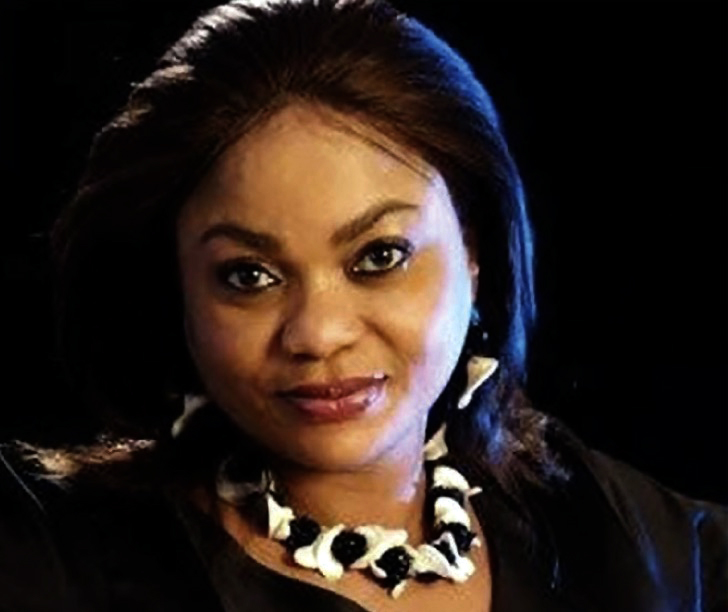
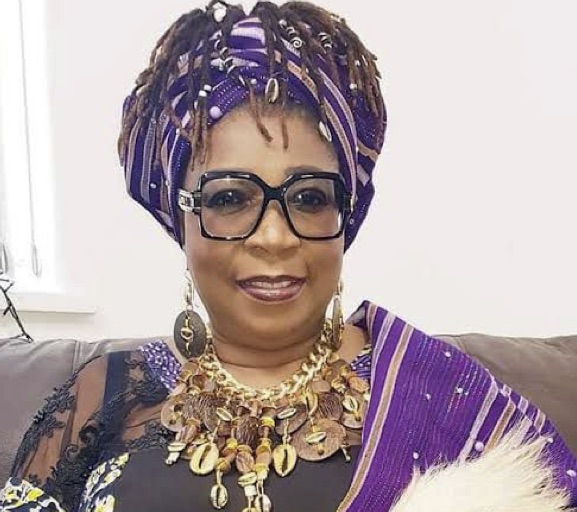
Princess Moradeun Adedoyin-Solarin from the royal house of His Royal Majesty, Adedoyin Anoko II, the Akarigbo of Remo Kingdom, is one of Nigeria’s leading lights in the United Kingdom. She is a cultural ambassador, CEO of the New Pan-Africa Movement, and chief promoter of the Aso Ebi Festival in the UK.
She was one of the personalities that graced the Nigerian stand in an outstanding royal Nigerian outfit at the just concluded World Travel Market, (WTM) in ExCel, London.
She spoke with Sunday Sun at the venue about her life as an African royal in the United Kingdom, her days as a young adult in Nigeria, what it feels like to cross the 60-year mark, her NGOs, fashion and lots more.
How would you describe yourself and what you do, from Nigeria to the UK, what are you engaged in now?
I am Her Royal Highness, Princess Moradeun Adedoyin -Solarin. ‘Princess’ is not a nickname or a pet name, it is my title. I am the proud and humble grand-daughter of His Royal Majesty, Adedoyin Anoko II, the Akarigbo of Remo Kingdom, that’s in Ogun State, Nigeria, the most beautiful country in the world, alongside Ghana, Sierra Leone, the United Kingdom and so on. My background is broadcast journalism, that’s what I studied. I started my journey in broadcasting at the age of 17, and that was with Nigerian television at the time, in 1975. I was the youngest TV presenter then, also the youngest during Festac ’77. I went on to study journalism and also communication arts and media here in the UK. I did journalism in Nigeria and then I did communication arts and media in the UK. I’m a mother of four, I’m married, I’m a grandmother as well. I am also a traditional custodian of our culture and our heritage. I’m an official cultural ambassador of Nigeria in the UK, and I’m the CEO of the New Pan-Africa Movement, CIC, which is a community interest company. Under that, I run my media arm, which is Arise Conversations, where I have my talk show, putting the spotlight on people and organisations who want to arise and make a difference in society and to bring the best quality of life for everybody, wherever they may be. Aside from that, I also sit as the founder and royal host of a very popular annual event that we have in the UK, every October, which is Black History Month, and we call that Aso Ebi Festival. The Aso Ebi Festival is not just about fabric or wearing the same thing. It’s more focused on the intellectual property that is contained in our own indigenous fabrics. I thought, over the years, we needed to empower our own people who make Adire and Aso-oke, because Ankara doesn’t belong to us. Ankara belongs to the Dutch. So, every time we spend money on Ankara, it goes to the Dutch. Every time we spend money on lace, it goes to the Swiss. But what is ours is Aso-oke and Adire and, therefore, the empowerment of the local people that make those fabrics, the more we buy from them, the more they’re able to input and reinvest and ensure that they are able to also come up with a lot of innovative designs and emblems.
When we look at the various patterns we see in our indigenous clothes, we’ll know how very creative and how very inventive we are as a people. I always say nobody can tell the story of a place or a people except the main actors. They must have sat where they sat, felt their pain, understood their challenges, applauded their achievements, they must know who they are, why they are and how they are. Only then can you understand what their journey is about. So that, in a nutshell, is what I do in the UK. I run my business and my organisation. I also sit on the board of quite a number of charity organisations. I just finished my term a few years ago as the chair of Girl Child Network Worldwide, which was set up by another fellow princess who’s from Zimbabwe and we look after girls so that we can bring about safeguarding and protection of young girls, specifically the girl-child, because we all know how careful we need to be when we’re raising up girls. People forget that the girl child is the one that will one day become the woman who either runs her own business or sometimes runs a country. Therefore, we need to input a lot of values, protection and guidance into the life of a young girl before she becomes a woman. That’s one of my heartbeats. That’s one of the things I love to do. At Girl Child Network, I think the last time we counted, when we were talking at the UN, we’ve looked at over 500,000 children across Africa, namely, Zimbabwe, where it was started, Botswana, South Africa, Nigeria, Ghana, Sierra Leone and Uganda. That’s me, in a nutshell, and that’s what I do.
You’re a fashionista. Do you have a fashion brand?
I really don’t. Maybe I got it from my late mother. She was a fashionista, she was a diva. Sadly, she passed very early, she passed at 58 years old. But my sisters and I picked up a lot of things from her. My mother’s buba would be different from everybody else’s buba, because she would put something on the arms or around the neck. There’s a way she would do it on her own so it would be different. I’ve just kind of followed in her footsteps. So, I can’t take that to credit myself.
How often do you visit Nigeria?
Very often. I visit a minimum of two or three times a year. I just came back in February. I am about to go in another 10 days, this November.
What do you miss most about Nigeria when you’re in London?
I think I’m a very blessed child, because I grew up here (in the UK) as a child. My parents came to study here in the 1950s, and then we also went back to Nigeria and I’ve gone back and forth a few times, so I’m blessed that I’m able to straddle both cultures. There are things about life here that I like, that I embrace. There are also a lot of things that I love and embrace about my country, Nigeria, and I think it’s also a blessing to be able to travel back and forth, because not everybody has that opportunity. Another thing I did was I gave up my British passport many years ago. People thought I was mad. And that was when I was still practicing as a broadcast journalist in Nigeria. I was with NTA then, I used to do ‘Morning Ride’ on NTA, too, and I wanted to find out how people that didn’t have a British passport, or American or foreign passports, how did they cope? How did they live? And I needed to make myself that guinea pig. So, I told my father, I said I was thinking of giving up my British passport. He said, it’s up to you. You’re a princess. You should be very proud to carry your Nigerian passport, because your ‘princess’ is not from Britain, It’s from Nigeria. And I took him up on that. And that was it. Obviously, I have my residency in my Nigerian passport and I’ve never really had any problems per se. I have seen, though, sometimes you can face a little bit of racism, a little bit of difficulty. But I think the magic for me is, once they open my passport and they see my title, they say, oh, you’re a princess, and I’m like, yes. Because my title is in my birth certificate, so it’s in my passport. So, that is a little bit of a privilege. But then I also see how my people are handled in some countries. And I’m thinking, we need to put more value on Nigeria. In the past, Nigerians didn’t need visas to go to anywhere. In fact, they begged us to come to their countries.
But, obviously, a lot of things have happened. We had military rule, back and forth, and that has given us a little bit of instability. However, which country doesn’t have instability? Even the big so-called America, who are nearly 300 years old, have their own share of instability. The luck that we have is we can look at these countries that have been ahead of us and learn from them how not to do things and how to do things. And I believe Nigeria is still on course. We’re not perfect. We’re a work in progress and I believe that the best is yet to come. That’s me personally. That’s my belief. I believe in Nigeria. I know that things are not perfect, we can’t tick all the boxes, but you know what, who can? Everybody is a human being and no human being is perfect. So, we cannot expect a perfect government; even here in the UK, nothing is perfect. We just keep working at it and making sure that we do our best to bring about a better quality of life for all.
What lessons have you learnt about life?
I turned 66 in April and I think, at 66, I’ve learnt quite a lot. I always say that when you are 20, you feel like the world is your oyster, you want to do anything and everything.
When you turn 30, you begin to start putting your ducks in a row, starting to understand that life is actually not all play, you need to start putting plans in place. By the time you turn 40, there’s that adage that says a fool at 40 is a fool forever. So, you want to throw away all foolishness from your life. And I think I did that at that age. By 50, you’ve come to the age of reconciliation. You look at your life. What have I done that is right and good? And you hone in on that. What have I done that is not all that good? You want to remove those things from your life. And you start to look back and forth and weigh things. And then it’s also time to look at what the future holds. So, you’re now going towards 60, which is what I did when I turned 50 and I’m like, 60 is that age where you want to sit back and say, okay, what do I want to give back? That’s the age you start thinking of giving back. What do I want to give back? By the time you turn 60, you start thinking of who you need to help. It’s not every time that you do something that it has to be about money. Sometimes it could also be that what you want to do is just hold somebody’s hand, listen to them, talk to them, give them a hug. Somebody just probably even needs a smile. And that will make their day. So, it’s all about giving back, it has to do with whether it’s your finances, your know-how, whether it’s even your energy that you give. So, back to your question. Life has taught me that we have to be very philosophical. Don’t take yourself too seriously. It’s not that deep. Learn to laugh at yourself before the rest of the world laughs at you. And also learn how to remove yourself from anything that’s stressful, because once we encounter stress, health matters kick in, your blood pressure, your state of mind are affected. In the world that we live in, especially post-COVID, people’s mental health is so important and the best way to ensure that you protect your mental health, anything that’s stressful, just avoid it. If there’s a relationship that’s giving you stress, give them space, stay in your own lane. Talk less about people. Talk more about yourself, about progress. Love the country that you’re from, the town, your village, your kingdom, love your own self and learn to look in the mirror and be your own best critic. I think, with all that, life is good.
You don’t look 66. So, what are the secrets?
Stressless life! Stressless life! Anything to do with stress, I’ll cross to the other side of the road. Anything stressful, it’s not worth it, because at the end of the day, it’s your health, it’s your mindset, it’s your joy, it’s your happiness that’s at stake and God created us to be happy. He put us in this world to support each other, to complement each other, to make each other’s lives bearable, because life in itself is challenging for everybody. People might think, oh, it’s because I don’t have money. You should go and live with people that also have money. You’d be amazed what they have to deal with as well. So, I love to just live stress-free, anything that is stressful I avoid it; and then I do the things I love doing most, I love to dance like there’s no tomorrow. Because when you dance, you’re in a different world. You are in your own world and, for me, I also see dancing as a way of praise. It’s like a thanksgiving when you dance, and your heart is just thanking your creator. Some people don’t have feet or legs, they can’t dance. Some people can’t even hear the music. Some people can’t even sing, but you have all that, irrespective of what you’re dealing with, at least you can still step on the dance floor and dance. So, I tell people, dance a lot, laugh a lot, and live as best as you can.
What’s your favourite kind of music?
Afrobeats, of course. For the boys, and the girls: Tiwa Savage, Yemi Alade, Burna Boy, Wizkid, Davido and all of them.