Follow Us on Google

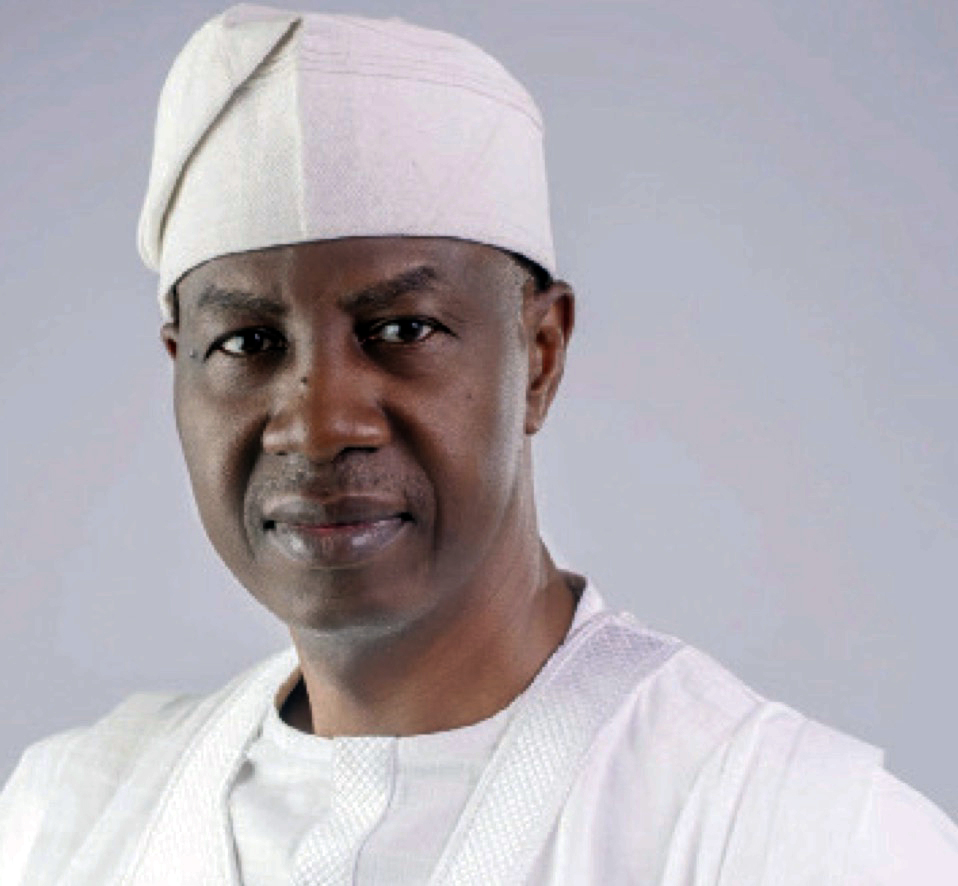
•It’s clear to me that INEC is determined to rig 2027 election
From Christy Anyanwu, London
Babatunde Olalere Gbadamosi, popularly known as BOG, was born in England in 1967 into the Gbadamosi family of Ikorodu, Lagos State. He has been politically active since the National Democratic Coalition (NADECO) era of the 1990s. He contested the Lagos State governorship election in 2011 and 2015, emerged as the governorship candidate of the Action Democratic Party (ADP) in 2019 and contested the Lagos East Senatorial District election on the platform of the Peoples Democratic Party (PDP) in 2020.
Known for his outspoken views on housing, infrastructure and governance, Gbadamosi’s emergence as the deputy governorship candidate of the African Democratic Congress (ADC) has surprised some political observers, particularly given his previous attempts to occupy the Lagos State Government House.
In this interview, he speaks on his political journey, his decision to settle for the deputy governorship position, his assessment of the Independent National Electoral Commission (INEC)’s preparedness for the 2027 general elections and his plans for Lagos State if his party wins.
What is your assessment of INEC’s preparations for the 2027 general elections?
It is clear to me that INEC is determined to rig this election, judging by its own pronouncements, which have been consistently contradictory, and its conduct. The commission violated the Electoral Act by failing to properly release and make available the voters’ register for inspection by voters, as stipulated by the law. When it eventually released the register, Nigerians discovered what I consider to be the fraudulent inclusion of 50 million fake AI-generated voter IDs.
When the alarm was raised, INEC suspiciously restricted online access to the register, once again effectively violating the Electoral Act’s provisions requiring the voters’ register to be made available for inspection. The latest indication of INEC’s resolve to rig the elections is its recent announcement that election results will no longer be uploaded at polling units but only at collation centres. Furthermore, it has indicated that RATECH officers will have access to edit uploaded results. Joash Amupitan and Lawrence Bayode have no technical grounds or legal justification for this strange and clearly criminal decision. It all points to a desire to achieve a predetermined result, regardless of the will of Nigerians as expressed through their votes.
Campaigns have commenced. What is your assessment of the activities of the various political parties across the country?
It is clear that the APC is very unpopular, judging by the disgracefully sparse attendance at its rallies in the North and the Middle Belt. However, the party has been unleashing violence against members of the ADC and other political parties in Lagos and across the country. This will not augur well for anyone, as Nigerians are now determined to meet fire with fire. It would be better if the APC ceases and desists from its trademark violence to prevent the country from plunging into chaos.
Why is your party campaigning for Nigerians to vote out the APC at all levels of government in the 2027 general elections?
It is abundantly clear, even to the blind, that the APC is not only incompetent but also reckless in its management of public finances and the economy at all levels. The party has borrowed Nigeria into a hole, accumulating a mountain of debt in just three years that is greater than the combined borrowing of all administrations since the beginning of the Fourth Republic. If it is allowed to continue, our great-great-grandchildren will still be paying off these huge debts, with little or nothing to show for them.
In Lagos State, residents are not only grappling with a mountain of debt but also an even more serious mountain of filth. The APC seems determined to expose as many Lagosians as possible to diseases through its abject failure to manage the waste generated daily across the state. When this is combined with its apparent inability to manage the built and natural environments, resulting in serious flooding, the poorly planned construction of the Coastal Road, its failure to provide adequate roads and drainage infrastructure, and its inability to maintain existing drainage channels, what emerges is a clear culture of ineptitude and mediocrity that must be completely removed from public life across Nigeria.
When you consider the destruction of the healthcare system it inherited, the systematic erosion of our educational standards and its total failure to address homelessness at any level, you realise that the APC is a plague that must be brought to a definitive end in the Nigerian polity.
You have sought to govern Lagos State for many years. What has kept you in the race, and what do you believe Lagos still needs that you can offer at this time?
Other News
I lived through the Jakande years as a young teenager. I enjoyed free education throughout my secondary school years and free healthcare. I also saw the parents of some of my friends benefit from affordable housing schemes that enabled them to own homes they would ordinarily have struggled to afford. As an adult, I watched in dismay as Tinubu and his political associates systematically dismantled the educational infrastructure established by Jakande, as well as access to what remained of it. I watched as they monetised healthcare and elevated thuggery and criminality into actual career paths.
By 2010, I had had enough. I realised that Lagos could do much better in providing water, improving access to quality education, fixing the dysfunctional healthcare system and eliminating agberoism as a career path. I also realised, from my direct experience in real estate development, that fixing our infrastructure was not as difficult as the Tinubu political establishment was making it appear. Providing affordable housing was also well within the reach of a revenue-rich state like Lagos. Furthermore, my experience taught me a great deal about utilities and essential services such as electricity, gas, sewage and water. I knew that providing these services on a much larger scale was achievable, given the resources available to Lagos State.
You have previously sought the governorship. What convinced you that serving as deputy governor on this ticket was the right way to serve Lagos at this time, and what do you bring to the ticket that complements the governorship candidate?
Chief Gbadebo Rhodes-Vivour reached out to me directly about the deputy governorship position. We had been in close contact since 2022, when he contested for the Labour Party governorship ticket, and I supported him because I saw certain qualities in him that Lagos would do well not to miss at this point in our history. He is very persuasive, and it did not take him long to convince me that Lagosians would benefit immensely from having me as his deputy.
He is an MIT-trained architect with about 20 years of cognate experience in the field, both as an architect and a town planner. I am a real estate developer with more than 20 years of experience in developing new communities, as well as a deep understanding of infrastructure, utilities and the planning, development and provision of essential services. The first thing we plan to do is undertake an immediate, comprehensive review of civil service salaries, with a view to bringing them in line with current economic realities.
Secondly, we will urgently tackle the waste management problem in Lagos State by empowering local government areas to manage their waste, as prescribed in the Fourth Schedule of the 1999 Constitution of the Federal Republic of Nigeria.
Thirdly, alongside these measures, we will prioritise the provision of electricity through Waste-to-Energy (WTE) plants and other energy sources. We will also focus on water supply and the development of well-engineered roads, drainage systems, jetties and railways to ease the transportation challenges facing Lagosians.
Criticism is easy from outside government. If your ticket wins, what two or three concrete policy differences will Lagosians experience under your administration compared with the current APC government?
Many APC policies are poorly thought out and are driven more by an insatiable desire to generate revenue than by a commitment to serving Lagosians. We will abolish oppressive policies such as borehole permits, solar permits and every duplicated levy, charge, tax or fee introduced by the Tinubu administration.
We will particularly review taxes, fees, charges and levies associated with real estate development, ranging from Certificates of Occupancy (C-of-O) costs to planning approval fees. This is intended to reduce the cost of development and hopefully usher in a regime of lower rents in new developments. We will immediately remove private consultants from the revenue collection and receipting process through which they have been fleecing the people of Lagos State.
We will also restore to local government areas every function assigned to them under Sections 1 and 2 of the Fourth Schedule of the 1999 Constitution of the Federal Republic of Nigeria. In addition, we will introduce legislation that will enable us to make vacant or uncompleted properties available to prospective tenants in ways that benefit both property owners and tenants.
The office of the deputy governor is often described as having no clearly defined constitutional responsibilities. If elected, how would you define your role, and what specific portfolios or assignments would you want to handle to ensure the office is not merely ceremonial?
Before Chief Gbadebo Rhodes-Vivour chose me as his deputy, he was already familiar with my skills and experience. I will put all of them at his disposal in the service of Lagos State, bearing in mind that the deputy governor serves at the discretion of the governor. I had already contested the controversial 2019 governorship election at the age of 51. Gbadebo Rhodes-Vivour is relatively younger at 43.
His age and experience offer Lagos State a unique and unprecedented opportunity to enjoy the vitality of youth and the benefits of experience in one package. I cannot, in good conscience, stand in the way of that. I prefer to champion such an opportunity for my people and ensure that we enter our promised land of genuine development by any means necessary.
For me, that means refusing to continue believing the lie my generation was constantly told: that the youths are the leaders of tomorrow. We can see the exploits of younger leaders across Africa and around the world. I refuse to allow governance and leadership to remain the exclusive preserve of tired gerontocrats. It is time for younger, smarter people to lead.