Follow Us on Google

•Russia has killed 17,605 Ukrainian civilians, injured 55,846 from February 2022 to Sept 2026
From Aidoghie Paulinus, Abuja
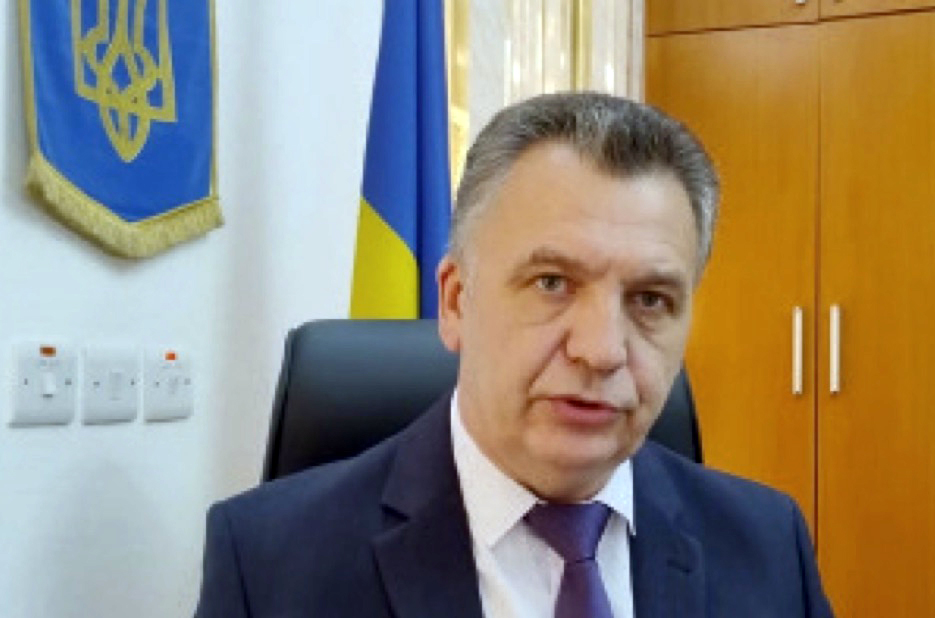
The Ukrainian Ambassador to Nigeria, Ivan Kholostenko, has explained that Ukraine has consistently supported efforts to achieve peace and remained fully committed to finding diplomatic solution in its war with Ukraine.
Kholostenko who spoke with Sunday Sun, following the four years and over nine months since the full scale war commenced, disclosed that 17,605 Ukrainian civilians have been killed by Russia, while 55,846 have been injured between 24 February 2022 and September 2026.
The envoy further disclosed that as of November 9, 2026, Russia’s estimated personnel losses reached approximately 1,609,380, saying that the most direct path towards ending the war is to create conditions in which Russia recognizes that continuing its aggression offered no sustainable political, military or economic advantage.
It has been four years and almost nine months since Russia launched its full-scale invasion on Ukraine. How has the war affected the lives and livelihoods of the Ukrainian people?
Russia’s full-scale invasion has affected virtually every aspect of life in Ukraine. Thousands of civilians have been killed or injured, millions have been forced to leave their homes, and entire communities have suffered extensive destruction.
Russian attacks continue to target residential areas, energy facilities, hospitals, educational institutions and other civilian infrastructure. As a result, many Ukrainians face daily challenges in accessing electricity, heating, healthcare and other essential services.
The war has also caused serious economic disruption, affecting businesses, employment, agriculture and international trade. These consequences extend far beyond the regions directly affected by hostilities.
Nevertheless, Ukraine continues to function. Our institutions remain operational, businesses are adapting, and our citizens continue to demonstrate remarkable resilience. Our immediate priorities remain protecting human lives, maintaining essential services and ensuring the country’s economic and social stability.
Some Ukrainian nationals fled the country to Canada, France and other countries. How has the reception been so far?
Ukraine is sincerely grateful to all countries that have provided protection and assistance to our citizens forced to leave their homes because of Russia’s aggression.
Countries across Europe, as well as Canada and many other partners, have demonstrated considerable solidarity by offering Ukrainians temporary protection, access to education, healthcare, employment and other essential services.
Millions of Ukrainian refugees remain across Europe. Their integration into host societies has generally been positive, although challenges relating to housing, employment, language barriers and family separation naturally remain.
We highly appreciate the support provided by host governments and local communities. At the same time, our long-term objective is to create the necessary security and economic conditions for Ukrainians who wish to return home to do so safely and voluntarily.
Considering the devastating effect of the war, why is it difficult for Ukraine to yield to Russia’s terms of settlement?
Ukraine has consistently supported efforts to achieve peace and remains fully committed to finding a diplomatic solution. We have repeatedly expressed our willingness to agree to an immediate, unconditional and comprehensive ceasefire. Ukraine has never stood in the way of peace, nor does it intend to do so.
At the same time, any lasting settlement must address the underlying reasons for the war, not simply its immediate consequences. No country should be expected to compromise its sovereignty, territorial integrity or fundamental right to defend itself against potential future threats.
Russia, however, continues to insist on territorial concessions, including demands that Ukrainian troops withdraw from parts of Ukraine’s internationally recognised territory. Such conditions cannot serve as a reasonable basis for a fair and sustainable peace agreement.
Despite these challenges, Ukraine continues to participate actively and constructively in diplomatic initiatives, including those supported by the United States. The recent trilateral talks in Abu Dhabi have shown that channels for dialogue remain open.
Ukraine’s position remains clear and consistent. Any peace agreement must respect international law, uphold the principles enshrined in the United Nations Charter and provide Ukraine with reliable security guarantees. Our objective is not simply to bring the current hostilities to an end, but to ensure that the conditions leading to this war cannot be repeated.
Is the support from the United States, the European Union, the G7 countries and other partners still as constant as when the war began?
Ukraine continues to receive substantial political, military, financial and humanitarian assistance from the United States, the European Union, G7 countries and other international partners. We are sincerely grateful for this support.
Naturally, the forms and mechanisms of international assistance have evolved since 2022. Our objective is to ensure that support remains predictable, sustainable and responsive to Ukraine’s changing needs.
Nevertheless, significant challenges remain. Strengthening Ukraine’s air defence is particularly important, especially in view of Russia’s continued attacks against civilian and energy infrastructure. We also require sustained supplies of ammunition, expanded drone and missile production, and additional investment in our defence industry.
At the same time, I would like to emphasise that Ukraine has gradually transformed from being solely a recipient of international assistance into a valuable contributor to our partners’ security. Over the past years, our defence industry has developed significantly, producing advanced technological solutions that have been tested and proven effective under real combat conditions. Ukraine has also accumulated some of the world’s most extensive practical experience in countering unmanned aerial vehicles and other modern threats.
Today, our international partners are increasingly interested in learning from Ukraine’s experience and expertise. We are pleased to share this knowledge, develop joint projects and strengthen defence cooperation with countries that have supported us throughout these difficult years. Ukraine has become stronger, more technologically advanced and increasingly capable of contributing to the security of its friends and partners.
International cooperation is therefore no longer a one-way process. It is becoming a genuine partnership based on mutual support, shared expertise and common security interests. Supporting Ukraine means investing not only in European security and international stability, but also in capabilities and experience that can benefit our partners around the world.
How many casualties have been recorded by Ukraine?
The human cost of Russia’s aggression has been extremely high, and the number of casualties continues to increase.
According to the United Nations Human Rights Monitoring Mission in Ukraine, at least 17,605 civilians had been killed and 55,846 injured between 24 February 2022 and the end of September 2026. The actual figures are believed to be considerably higher, particularly because independent verification remains difficult in temporarily occupied territories.
Other News
What is particularly disturbing is that even children, who bear no responsibility for this war, have become victims of Russia’s aggression. The United Nations has documented grave violations against Ukrainian children, including killings and injuries, attacks on schools and hospitals, and other serious abuses. Beyond the immediate physical suffering, thousands of children have been deprived of their homes, separated from their families and exposed to severe psychological trauma.
Of particular concern is Russia’s continued practice of unlawfully deporting and forcibly transferring Ukrainian children. Ukrainian authorities have verified 20,651 such cases, although the actual number is believed to be significantly higher. Reports have also documented attempts to change these children’s citizenship, place them with Russian families and subject them to systematic Russification. Despite significant obstacles, Ukraine, with the support of its international partners, has already succeeded in bringing thousands of children home. We will continue these efforts until every Ukrainian child can return safely to their family and homeland.
At the same time, the Russian leadership appears equally willing to accept enormous losses among its own citizens. According to the General Staff of the Armed Forces of Ukraine, as of 9 November 2026, Russia’s estimated personnel losses had reached approximately 1,609,380, including those killed and wounded.
These figures illustrate the extraordinary human and material cost of Russia’s decision to continue its aggression. They also raise serious questions about the Russian leadership’s disregard for human life, including the lives of its own citizens, in pursuit of its ambition to restore Russia’s imperial influence and establish a new form of neo-colonial dominance.
Every additional day of this war brings further suffering and unnecessary loss of life. This is precisely why Ukraine continues to advocate for a comprehensive, just and lasting peace.
How do you quantify the level of economic and infrastructural devastation since the commencement of the war?
The scale of destruction is extensive and affects virtually every sector of Ukraine’s economy and infrastructure. It cannot be adequately represented by a single financial figure.
Energy infrastructure has been particularly affected. Every power plant in Ukraine has suffered damage in one form or another. According to Ukraine’s Ministry of Energy, more than 800 pieces of energy equipment have been damaged by Russian attacks since September 2026 alone. The estimated needs of Ukraine’s energy sector over the coming decade amount to at least USD 91 billion.
The environmental consequences are equally serious with more than 12,500 documented cases of environmental harm.
Approximately 30 per cent of Ukraine’s territory, covering more than 133,000 square kilometres, remains potentially contaminated by mines and unexploded ordnance. This creates long-term obstacles to agricultural production, economic recovery and the safe return of displaced populations.
Our cultural heritage has also suffered considerable losses. As of the end of October 2026, 2,185 cultural heritage sites and 2,686 cultural infrastructure facilities had been damaged or destroyed.
These figures illustrate not only the immediate economic consequences of the war, but also the considerable resources and international cooperation that will be required for Ukraine’s long-term recovery and reconstruction.
Russia has always denied the allegation of recruitment of Nigerians and other Africans in the fight against Ukraine. What concrete evidence do you have in this regard?
This is an extremely sensitive issue, and I appreciate the opportunity to address it.
Ukraine’s concerns are based on documented cases, information obtained from captured foreign combatants, their testimonies and materials collected by the relevant Ukrainian authorities.
According to the Coordination Headquarters for the Treatment of Prisoners of War, Ukraine has identified almost 46,000 foreign nationals from 151 countries and territories who signed contracts with the Russian armed forces.
Not all circumstances of recruitment are identical. However, numerous documented cases involve misleading employment offers, financial pressure, concealment of the actual nature of military service and other deceptive practices.
Foreign prisoners of war captured by Ukrainian forces have described these experiences. Some have publicly warned their compatriots against accepting similar offers.
Ukraine has established the information resource https://stoprussianrecruiters.org/, where documented cases, personal testimonies and information about recruitment networks and their methods are made available to the public.
I would also like to draw attention to another concerning practice. Foreign women, including citizens of African countries, have been recruited through employment programmes such as Alabuga Start. Investigations have linked this programme to the production of military drones used by Russia against Ukraine.
Individuals who accept such employment find themselves working in facilities connected to Russia’s military-industrial complex. The facilities belonging to Russia’s military-industrial complex are legitimate military targets for the Armed Forces of Ukraine under international humanitarian law. Russia is fully aware of this, yet continues to knowingly expose foreign nationals employed at these facilities to serious risks, putting their lives and safety in danger.
Our message to Nigerian citizens as well as citizens of other friendly countries, is therefore clear: exercise extreme caution when considering employment or recruitment offers connected to Russia, particularly where the nature of the work and contractual obligations are not fully transparent.
Ukraine has no interest in seeing citizens of Nigeria or other African countries become victims of this war. Our objective is to prevent further exploitation and protect human lives.
Going forward, how can this conflict be brought to a close within the shortest possible time?
The most direct path towards ending the war is to create conditions in which Russia recognises that continuing its aggression offers no sustainable political, military or economic advantage.
Ukraine has repeatedly demonstrated its readiness for diplomatic engagement and an immediate ceasefire. However, diplomatic efforts must be accompanied by sufficient international pressure on Russia.
This includes strengthening sanctions, preventing their circumvention, restricting Russia’s access to technologies and financial resources used for military purposes, and taking further measures against the so-called Russian shadow fleet, which helps sustain revenues used to finance the war.
Reducing Russia’s capacity to finance and sustain its military operations is an essential component of this approach.
At the same time, continued military assistance to Ukraine remains indispensable. A country defending itself must have the necessary capabilities to protect its population and infrastructure and to prevent further territorial advances by the aggressor.
Ultimately, the decision to end this war rests with the Russian leadership, which initiated the aggression and retains the ability to stop it.
The international community should make clear that aggression cannot produce lasting political or territorial gains. Ukraine remains committed to a diplomatic resolution, but that resolution must establish a comprehensive, just and lasting peace rather than merely postpone another confrontation.