Follow Us on Google

From Okwe Obi, Abuja
A former Minister of Aviation, Osita Chidoka, has disclosed why he almost turned down former President Goodluck Jonathan’s ministerial appointment.
Chidoka said he insisted that his successor as corps marshal must come from the Federal Road Safety Corps (FRSC), to ensure that the gains recorded during his administration would not be swept under the carpet.
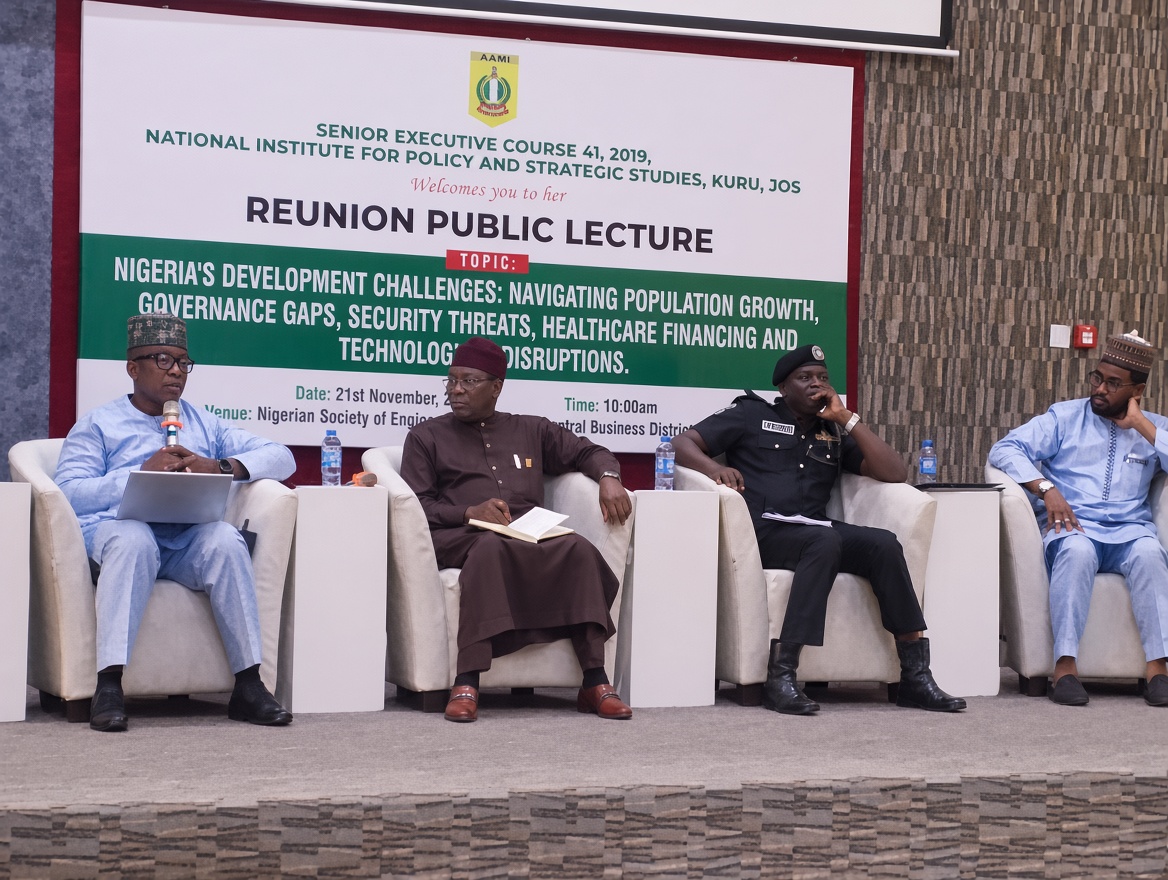
He spoke as a guest speaker at the reunion public lecture organised by the alumni of Senior Executive Course 41, 2019, of the National Institute for Policy and Strategic Studies (NIPSS), Kuru, Jos, Plateau State, yesterday in Abuja.
The theme of the lecture was ‘Nigeria Development Challenges: Navigating Population Growth, Governance Gaps, Security Threats, Healthcare Financing and Technological Disruptions’.
“I almost turned down my appointment under President Goodluck Jonathan. I said, sir, you have to appoint someone from within. I insisted. I said, Mr President, you have to say it. He told me to give him the list.
“I have given you the list of the staff. I have shown you the best. I have shown you number one, number two. So, make a choice now. He said, I will go with number one. I said, okay.
“Thank you, sir. Announce it, sir. So, he went into the hall and announced it. Because I just couldn’t imagine how what we have done for seven years will go down like that.
“And that was it. These are the questions that shaped what we tried to build. And in 2013, we earned our ISO 9000 award certification, which was a quality management system.”
The former FRSC Corps Marshal questioned the efficacy of the policies churned out from NIPSS, owing to the rise of insecurity and bad governance in the country.
According to him, graduates of NIPSS must justify taxpayers’ money by ensuring that they come out with workable policies to address the multidimensional challenges bedevilling the country.
“So normally, around this November, seven years ago, you were packing your bags from Kuru. You carried along tens of researches, arguments, and the company of colleagues drawn from parts of Nigerian life you might otherwise never have encountered. So seven years is long enough for that experience to have produced something.
“And long enough for us to ask, what has happened? Your members have gone on to become important members in your organisations. Some have become chief executives.
“Some have become influential in different fields. But what you learned in Kuru, what did it impact in any of the places where you controlled? It will have been nice for people to know where to go.
“Because it is our federal resources that we spend every year in Kuru. It has a budget line. It is Nigeria’s premier policy institute.
“It is the place where we have decided that we will retain our manpower, the finest training, before they get to the top. That we will give them the finest training. They will see all the facets of our society.
“They will come from the army, the navy, the air force, the police, the civil service. And they will interact. So that when there is a crisis, when you are a permanent secretary, you can pick up the phone and call the DIG, who was your course mate.
Other News
“You can pick up the phone and call the Anambra State Head of Service, who was your course mate. It was intended, not just for a badge, but for an opportunity for the organisation to build people who can produce results in Nigeria.
“So I asked that question as someone who has spent much of his working life inside public institutions and now spends his time trying to build them outside government, which is not easy.
“So Nigeria’s central difficulty is not a shortage of ideas about development. We have produced plans, we have produced strategies and sectoral reforms for six decades.”
But the Secretary General of Senior Executive Course 41, Dr Goddy Nnadi, complained that most policies sent to government were not implemented, even after students went through a strenuous academic exercise to graduate.
“It has been an issue because you meet for one whole year, and it is a very strenuous course. You go through it, and you are able to write policy papers, and they are sent to government.
“Just about a week ago, the current set presented their own to our president, President Bola Tinubu, and they presented their report.
“We expect that it should be implemented. Every government will promise you that it will be implemented, but unfortunately, most of the time, they are not really implemented.
“That is really sad, and that is why this reunion is important, because every set now meets to ask questions, just like the guest speaker, who said, what are you doing to make sure that what you recommended, what you worked on, was implemented? Now, it’s for you to look at all the states of the federation.
“Which states are implementing what you recommended? If they are not, ask questions, and then we have people in almost every area, in the armed forces, the civil service, the private sector.
“We have the capacity to now ask the states, what are you doing about what we recommended? And that is why this is very important for us.”
Regardless of the seeming rejection of policies, he identified the state police law as one of the policies implemented by NIPSS.
“Some of them actually have been implemented. Like this state police that we are talking about was actually recommended by sect 40.
“Our own was on the primary healthcare in Nigeria, and it has been implemented by some states gradually, but not at the same speed that we want.
“That is why this reunion is important, because all we do as the set, you look at the topic that you discuss with the whole year, because it is a lot. You do the states, you visit at least two states.
“Every of the study groups, you go and do one in the north, and you do one in the south, and you prepare your papers. On all of them, eventually we culminate into the presidential report, which is presented to the government yearly,” he added.