Follow Us on Google
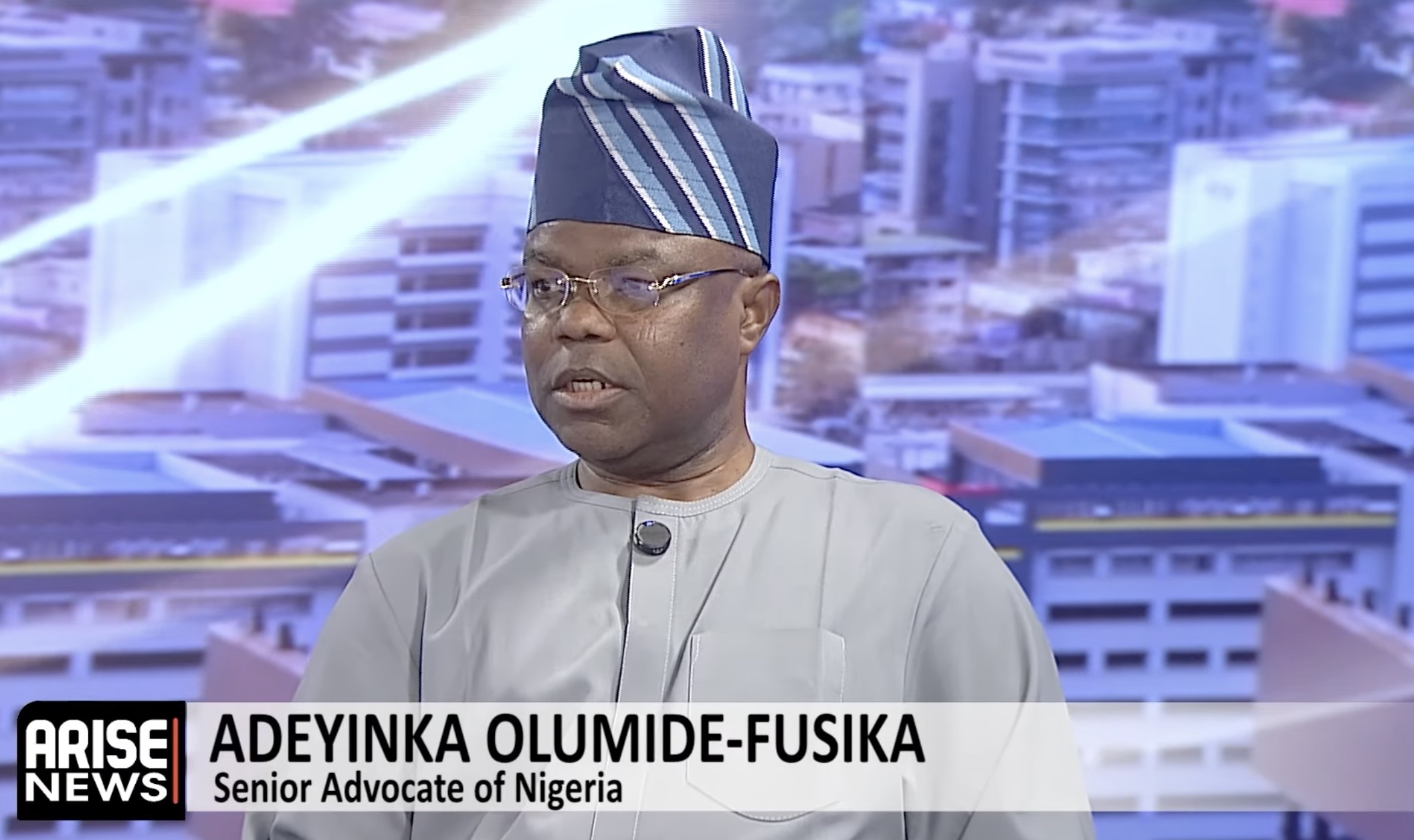
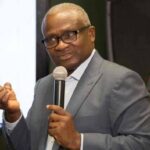
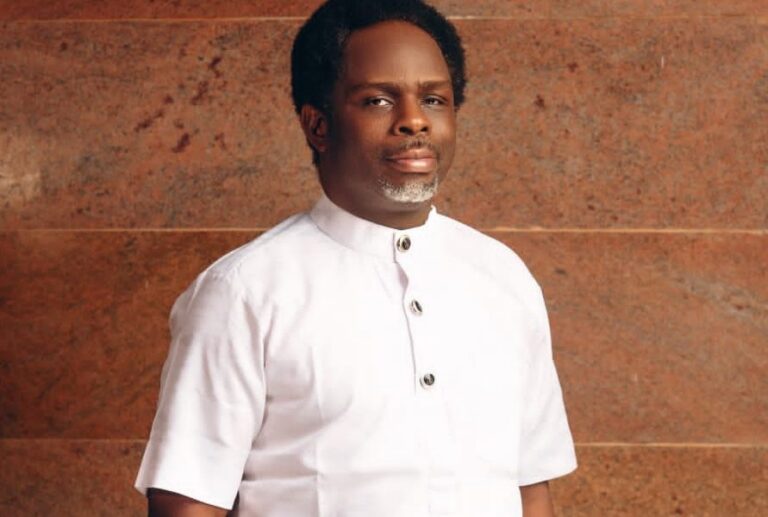
Senior Advocate of Nigeria, Adeyinka Olumide-Fusika, has said government funds that are not directed towards programmes and services that benefit Nigerians can create opportunities for public money to be stolen.
Speaking during an interview with ARISE NEWS on Wednesday, Olumide-Fusika said the fight against corruption should go beyond repeated promises, arguing that government must ensure available resources are properly budgeted and spent on the needs of citizens.
“If you have money belonging to Nigeria and you’re not spending it, you say, oh, it’s not meant for education, it’s not meant for health, it’s not meant for this, it’s not meant for that. So, what is the money meant for? It’s meant to be stolen. And that’s what they are doing.”
He said the country’s anti-corruption efforts had not produced sufficient visible improvements despite the establishment of institutions such as the Independent Corrupt Practices and Other Related Offences Commission and the Economic and Financial Crimes Commission.
“We can’t see the improvements. So, other than preaching to ourselves, there’s nothing to write home about, about fighting corruption.”
The senior lawyer linked the problem to the way government resources are prioritised, stressing that public funds should be channelled into essential services, particularly education.
“And I’ve come to the conclusion that if you have money lying fallow somewhere, you’re not using it for social programme, you’re not using it to benefit the people. Of course, it won’t be there for nothing. People will go there and take their share.”
He maintained that government had a responsibility to provide essential services rather than shifting the burden to citizens.
“Government money should be used for the people.”
Olumide-Fusika also questioned government spending on activities that, in his view, do not provide sufficient value to Nigerians.
“And you see the elaborate ceremony that was put up. It seems nothing to most people, but those who know will tell you that if you go and check how much was spent on that programme, it’s probably enough to restore one of the primary schools to a good position.”
He argued that the impact of public spending depends on how government resources are deployed, using education and investment as examples.
“So, if you use your own 100 Naira to gamble, to hire choruses, to go to the airport, to welcome the president, you know, those kind of things. And I use my own to educate the people to invest and to do things. You’ll see that my 10 Naira will bring more value than your own 100 Naira.”
On the removal of the fuel subsidy, the lawyer questioned whether the increase in government revenue had translated into improved public services.
“We have now removed the subsidy. What has happened? You have a company and they brag about it. We have more money going to the States. We have more money to share, so to say. What has been the effect on the people? Have you seen improvement on education? Have you seen.”
He said having more money available to government would not automatically improve citizens’ welfare unless such resources were properly budgeted for public needs.
“So, the point I was making earlier is if you have money and you are not budgeting for the people, you are budgeting for yourself.”
Olumide-Fusika also disagreed with calls for harsher penalties, including the death penalty, as the main solution to corruption.
“I don’t recommend the death penalty.”
According to him, the more important issue is effective enforcement, citing Nigeria’s experience with the death penalty for armed robbery.
“It’s not the, I don’t think it’s about the penalty or the stiffness of it. It’s about enforcement, ensuring that, you know.”
On the role of lawyers in corruption cases, he said defence lawyers were expected to challenge the evidence presented by prosecutors as part of the legal process.
“The role of the defence lawyer is to puncture holes in what you have presented.”
He added that corruption could also resist efforts to tackle it through legal processes.
“Corruption fights back. They fight with the court and they use lawyers. Fight back.”
Olumide-Fusika, however, rejected the suggestion that lawyers were the central reason for Nigeria’s difficulties in fighting corruption.
“As far as I’m concerned, lawyers are not your problem.”
He also called for reforms to the way political candidates and public officials declare their assets, suggesting that candidates should be required to submit their declarations as part of the process for contesting elections.
“Code of conduct. Declaration of assets. I would like to see a situation where anybody wants to say that I’m interested in contesting an election. Part of what is to submit to INEC is a declaration of his assets.”
He proposed that such declarations should be made public within the constituencies of candidates, with further declarations required after election and at the end of their tenure.
“Not only that he must submit it. Part of the things that must be publicised within the person’s constituency. This is the asset that this man says he has. If he’s elected, when he’s elected, he should do another declaration, publicise it. When he’s leaving office, he should do another one, publicise it.”
According to him, public access to asset declarations would provide a basis for questioning unexplained increases in the wealth of public officials.
“So when the man begins to live above his means, unexplained words, there will be concrete reasons to say this was what you declared. Where did you get this or that one and so on and so forth?”
Olumide-Fusika said tackling corruption would require stronger practical measures rather than repeated public statements and commitments, with greater attention to how public resources are allocated, spent and accounted for.