Follow Us on Google
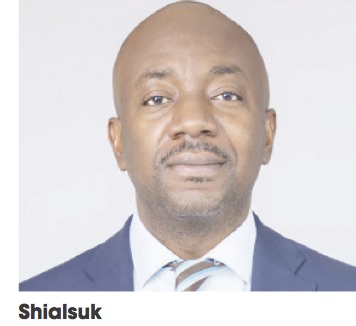


Norbert Shialsuk, a project development specialist and Chief Executive of Ecocity Projects Limited, recently spoke on varying issues in the oil and gas industry, urging the Federal Government to investment more on necessary infrastructure to drive its gas indusrialisation programme objectives. He also called for the renewal of gas production off take agreements with contractors to make gas distribution penetrate more of the nation’s grassroots.
Excerpts:
How Nigeria’s gas industry fits into the context of global race to net-zero emissions by 2050
Coming off of COP 26, Nigeria re-emphasised its commitment to ending climate change and also submitted its determination towards ending global warming.
Since then, Nigeria has declared a ‘Decade of Gas’ which defined the next frontier of Nigeria’s oil and gas sector.
There are basically two objectives that the government wants to achieve including – making the country both a leading producer and consumer of gas. Nigeria has over 206 trillion cubic feet (Tcf) of gas and another 600Tcf in probable reserves. So, it is a major gas country. One of the policy thrusts of the government was introducing natural gas vehicles and also gas to Nigerian homes and pushing for conversions from firewood and charcoal to gas as domestic fuel.
This is the direction that the world is going because by 2050, natural gas and renewables are expected to drive over 50 – 60 percent of primary energy consumption in the world. So, the future is gas and renewables, which means Nigeria is going in the right direction.
Challenges Nigeria faces in its effort to deepen the domestic gas market?
Let me address the four As of accessibility, affordability, availability, and awareness which are the challenges of energy access in Africa. Africa is energy poor. We as a country are dealing with the issue of biomass. Close to 80 percent of rural homes still rely on firewood and about 35 percent of the urban area also rely on firewood.
Let us start with availability. If you want to make Nigeria a leading consumer of natural gas, you must first make it available. Making natural gas available means deepening gas pipelines. Getting the distribution pipelines to every nook and cranny of Nigeria. If you look at the Ajaokuta-Kaduna-Kano (AKK) pipeline, this is laudable because it will open up the hinterland and deepen gas availability. For liquefied petroleum gas (LPG) also, you have to make the product available. The domestic gas (DOMGAS) project of NLNG has deepened LPG availability.
The next issue to be addressed is accessibility. People need to have access to these products. The cylinders have to be accessible. If you want someone to ride a natural gas vehicle that wasn’t built that way from the factory, the person needs to have the conversion kits.
For LPG, it simply means providing cylinders for homes to be able to access this product. These are key policy areas that government should focus on. I have talked with the leadership of the mid-stream and downstream infrastructure fund and this is one area they want to address. The Petroleum Industry Act (PIA) is spot on by introducing the midstream and downstream gas infrastructure fund to plug the infrastructure gap in the country and drive accessibility.
The third and most important challenge to overcome in transitioning Africa to cleaner fuels is affordability. For the past year, LPG prices have gone up. A study by African Clean Cooking Alliance that was carried out between 2020 – 2021 assessed Nigerian homes across Nigeria and estimated that Nigerian homes spend between N2, 000 and N3, 000 per month.
Roll back to 2015 in the study that was carried out by KPMG, that study showed that Nigerians who were using LPG were willing to spend N2, 000. If 2010 – 2015, the average price has been between N2, 000 – N3, 000 per cylinder. Now, LPG is at N10, 000. Affordability is a major hindrance; people cannot afford conversion kits. Government has to find a way to make that conversion kit available. If you made the conversion kit available, over time consumption will help grow the market and aid cost recovery.
The Nigeria mid-stream and downstream gas infrastructure fund is meant to appropriate 0.5 percent of the levy on the consumption of petroleum and gas products. This means people are already paying for gas infrastructure. So, I don’t see why the government cannot provide these conversion kits to people because the mechanism for recovering the cost has been provided for in the Petroleum Industry Act (PIA).
Similarly, the cylinder is between N20, 000 – N30, 000. The mimimum wage in Nigeria is N30, 000, how many Nigerians can afford to buy the cylinders?
The fourth and most important issue is awareness. It is known to all of us that there is a low level of education in the country and people are not necessarily aware of how efficient LPG is or whether it is a better fuel with less impact on the environment than firewood and their health because indoor smoke is a major health hazard.
Using kerosene or firewood indoors has many health hazards and, on the environment, due to tree felling. According to the Food and Agriculture Organisation, Nigeria has lost half a million hectares of land to deforestation. A lot of education is required. LPG is a safe fuel to use as long as you use it right. You need to create awareness of government schemes.
Threat of non-renewal of contract cycles of the off-takers under NLNG local LPG offtake programme
As of last year, Nigeria consumed about 1.3 million tonnes of LPG. The majority of that is actually imported, which is about 67 percent. Some of that comes from NLNG, with about 450,000 tonnes in 2021. They also announced their 100 percent commitment of about 1 million tonnes per annum for local consumption because they have seen the potential.
Now if the majority of the supply in the market is imported and also a majority of it comes from the NLNG, it buttresses the importance of NLNG to sustaining the growth within the market. There have been claims about NNPC, which is one of the biggest shareholders, wanting to take its own share of production.
Over the years, since 2007, these volumes have been available to all the off-takers, about 40 of them, who have gone on to invest on the back of the successful scheme to generate enough income to invest in retail infrastructure. Some of them invested in retail outlets, and this is the reason why the market is where it is today because they have deepened it by making investments on the back of the successful scheme, in which they participated.
This means that if their one-year contract cycle that has been renewed yearly in the last 15 years for supply, you are depriving them of the necessary volumes they need to feed the value chain that they have established. And where NNPC takes over 49 per cent of the share of LPG that comes from NLNG, other shareholders will start demanding their share, which would be exported. When that happens, the volumes that are available in the local market will no longer be affordable.
All the off-takers will be forced to go and import from Europe. And when they import from Europe and other places, the tax on the volume coming will be much higher than what is coming from the NLNG. Don’t forget we are talking about an era where LPG prices have been high for a long time. You are going to create chaos and deprive the value chain that has worked so well over the past 15 years.
And when you create a monopoly, basically you cannot have competitive pricing of LPG. What you will have will be a situation where you go back to the era of one person or two controlling the market, and then you cannot have the desired growth. For me, the contact circle of NLNG has worked perfectly over the past 15 years.
NNPC and the government must continue to develop the system. They must renew these contract circles. If they don’t, you are going to have a situation where we are today; we’ve grown the market to 1.30 tonnes but it has gone down to 840, 000 tonnes. You are going to go back to the period when we used to import 50,000 tonnes and people will start looking for Kerosene. The government will now be looking for where to find money to subsidise that kerosene. So, the cost to the government will be more.
How did we get here?
In the eighties, the refineries were designed to produce Nigeria’s LPG requirements. If you need LPG, you just drive to Kaduna, Port Harcourt or Warri and load. But over the years, the refineries stopped working and there was no LPG to consume.
People started clamouring for alternatives and the government started importing kerosene and subsidising it. So, over the years, the government spent billions subsidising kerosene. If you deprive people of LPG and the market goes down to where it used to be, you will have to go back to that era where you start subsidising kerosene for those local people that you deprived LPG. The government needs to look at this and say look NLNG, you’ve started a good job. You have to continue. Renew these contracts.
Allow the off-takers to continue to lift. If NNPC wants its own volume, it can also participate in the offtake and say if there is a 1 million volume available, we will also go and be part of the off-takers and take our own share. But it should not go to NLNG to interrupt a system that is already in place.
Where NNPC can make more impact
NNPC through the National Petroleum Development Company (NPDC) owns and controls more than 50 percent of the gas resources in the country. All of those gas resources are either associated or non-associated gas fields. Private companies such as Seplat Energy are building gas processing plants to make LPG and natural gas available. Those are the kind of investments that I expect NNPC to make.
So, they need to now look in the hinterlands where they can go and identify their gas fields that are rich in liquids and put up a gas processing plantS and generate LPG that they can now use to take over the market. This is where I expect the NNPC to make an impact.