Follow Us on Google

•Reserves lose $610m as Christmas, election pressures mount
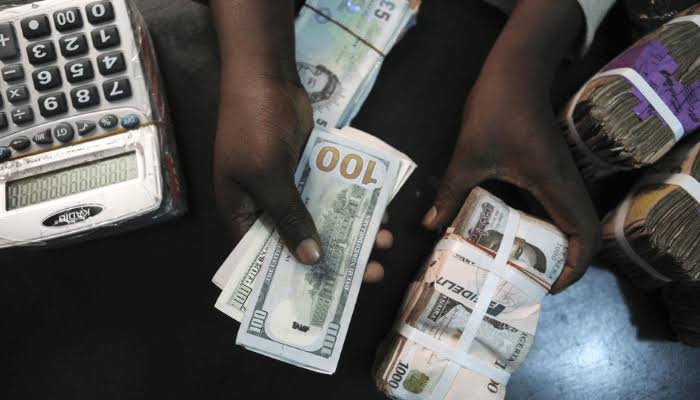
The Central Bank of Nigeria (CBN) is facing renewed pressure to defend the naira as the currency weakened towards N1,400 to the dollar last week, despite an estimated $1.30 billion injection into the foreign exchange market.
The development comes as demand for dollars rises ahead of Christmas and concerns grow that spending linked to the 2027 general elections could put further pressure on the exchange rate and prices of goods and services.
Data from the CBN showed that the naira weakened by 2.57 per cent at the official foreign exchange market within the week to close at N1,389.73 to the dollar. The country’s external reserves, which provide the CBN with foreign currency to support the naira and meet international payment obligations, also fell by $211.92 million to $54.65 billion as of November 19.
The naira’s decline came despite the estimated $1.30 billion supplied by the apex bank, suggesting that demand for dollars from foreign investors, importers and other users exceeded the available supply.
The pressure was more pronounced in the parallel market, where the naira depreciated by 2.33 per cent to about N1,458 to the dollar. Some market reports, however, quoted rates as high as N1,468.
With the official exchange rate approaching the N1,400 mark, analysts fear that expectations of further depreciation could encourage businesses and individuals to buy and hold more dollars, thereby increasing pressure on the local currency.
Although Nigeria’s reserves remain relatively strong, their steady decline is raising concerns about how long the CBN can continue supplying dollars to the market without significantly depleting its buffers.
The reserves have fallen from about $55.26 billion in October to $54.65 billion as of November 19, representing a loss of approximately $610 million in less than a month.
The decline reflects the continued use of reserves to support the foreign exchange market at a time when fresh dollar inflows have weakened.
Commenting on the development, Head of Research at FSL Securities, Chiazor Victor, said the CBN faces a difficult balancing act between supporting the naira and protecting the country’s external reserves.
“For the CBN, the dilemma is clear. Intervening too little could allow the naira to depreciate rapidly, fuel inflation and unsettle investors. Intervening too heavily could drain reserves and raise questions about how long the bank can sustain its defence of the currency. The bank’s task is therefore not simply to sell dollars, but to manage expectations, preserve liquidity and avoid a disorderly market move,” Victor said.
He explained that December traditionally brings increased demand for foreign currency as importers bring in goods for the festive season, families pay for travel and school fees, while companies settle outstanding obligations before the end of the year.
“That demand has collided with a softer supply of foreign currency, pushing the naira lower in both official and parallel segments of the market,” he added.
The pressure on the exchange rate could have wider implications for households and businesses, particularly as Nigeria depends heavily on imported goods and raw materials.
A weaker naira makes imported fuel, food, machinery, medicines and other essential products more expensive. Manufacturers that depend on imported materials may also face higher production costs, forcing them to increase prices or accept lower profit margins.
For consumers, the consequence could be another round of increases in the prices of everyday goods.
Beyond the Christmas season, concerns are also mounting over the possible impact of spending ahead of the 2027 general elections.
Other News
In their personal statements following the last Monetary Policy Committee (MPC) meeting, some committee members identified election-related spending as a major risk to economic stability.
Such spending could increase the amount of money circulating in the economy, raise demand for goods and services and put further pressure on inflation and the exchange rate.
CBN Governor, Olayemi Cardoso, has also identified election-related spending as an upside risk to inflation.
Cardoso said the apex bank had studied different election-spending scenarios and would closely monitor the amount of cash in circulation, money held by banks, overall money supply and demand for foreign exchange.
To contain possible excess liquidity, the CBN may deploy additional monetary policy measures, including Open Market Operations (OMO).
OMO involves the sale of government securities by the CBN to banks and investors to absorb excess naira from the financial system. By reducing the amount of money available for spending and speculation, the bank hopes to moderate inflation and pressure on the exchange rate.
Other options include adjustments to its liquidity-absorbing facilities and related monetary policy tools.
Reports indicate that the CBN had withdrawn more than N90 trillion through OMO securities between January and November 2026, highlighting the scale of its efforts to control excess money in the banking system.
Analysts, however, believe the country’s foreign exchange market will remain under pressure in the coming weeks.
Cordros Research said: “In the near term, we expect FX demand pressures to persist through the remainder of the year, reflecting relatively weaker net foreign inflows amid tight global monetary conditions and heightened investor caution ahead of Nigeria’s 2027 general elections.
“Seasonal import demand ahead of the festive period could further intensify demand-side pressures. Nonetheless, we believe the CBN’s external reserve buffers remain sufficient to support sustained intervention in the FX market, helping to bridge supply gaps, contain excessive volatility and limit the extent of naira depreciation.”
Similarly, analysts at Cowry Research said the naira would remain under pressure as demand for dollars increased ahead of the festive season, although better foreign exchange supply could reduce the pace of depreciation.
“Going forward, we expect the naira to remain under pressure amid sustained FX demand ahead of the festive season, although improved FX liquidity could moderate further depreciation. Meanwhile, oil prices may remain volatile as geopolitical tensions provide support, while oversupply concerns limit potential gains. These developments will remain critical to Nigeria’s external reserves and FX stability,” the analysts said.
Market watchers will therefore be monitoring the volume of foreign exchange traded, movements in external reserves, inflation figures and the CBN’s efforts to control excess money in circulation.
Businesses, meanwhile, will be watching the gap between the official and parallel market exchange rates, the cost of importing goods and the availability of dollars for their operations.
The coming weeks will test the CBN’s ability to keep the naira stable without rapidly exhausting the country’s reserves, particularly as seasonal dollar demand coincides with preparations for the 2027 elections.