Follow Us on Google
A few years ago, I started paying closer attention to the political history of Ontario, Canada, and one story stood out to me more than most. The story of former Premier of Ontario – Bob Rae. For an entire generation in Ontario, his name still sparks strong emotions. Not because he was corrupt. Not because he lacked passion. In fact, many would argue the exact opposite. Bob Rae came into politics with vision, energy, and big promises.
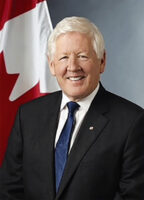
In 1990, he led the Ontario New Democratic Party to a surprise majority victory and became Premier of Ontario, the equivalent of a state governor in Nigeria. At the time, many people were frustrated with the status quo. They wanted change. Former Premier Rae spoke about worker protection, stronger social programs, and government investment that would improve lives. His message connected deeply with the ordinary Ontarian.
The citizens listened. They believed him. Then they voted for him.
But shortly after he took office, reality arrived with force.
Ontario entered a brutal recession. Unemployment climbed sharply. Manufacturing industries suffered. Businesses closed. Housing markets weakened. Government revenue dropped while social assistance costs exploded. Suddenly, the promises made during campaign season collided with economic reality.
To Bob Rae’s credit, he actually attempted to follow through on many of his promises. However governing is not campaigning. What sounds inspiring during an election rally often becomes painfully difficult once budgets, legal limitations, internal politics, economic downturns, and institutional resistance enter the picture.
The very policies meant to help people eventually created financial strain, political backlash, and deep frustration across the province. One of the most controversial moments came through what became known as “Rae Days,” unpaid leave days imposed on public sector workers to avoid mass layoffs and reduce the growing deficit.
Things got worse. Labour unions felt betrayed. Public workers were angry. Taxpayers became nervous. Investors lost confidence. Eventually, the government lost public trust. By the next election, the New Democratic Party didn’t just lose the election, they lost by a landslide.
To this day, Bob Rae’s premiership remains one of the biggest political cautionary tales in Ontario history. Be careful what you wish for.
The deeper lesson is not simply “don’t make promises.” The real lesson is this:
We as citizens must become more sophisticated in what we look for in leadership.
Before entering office, many people imagine leadership as a straight line. You promise something. You get elected. You implement it. Done.
Reality does not work that way.
There are countless forces that can affect whether a promise succeeds or fails. Sometimes leaders themselves do not fully understand the complexity until they enter office.
There is the power of context. You often do not know what you do not know until you arrive.
There is money. Every promise costs something. Sometimes far more than expected.
There are legal barriers and possible lawsuits. Want a road expanded, government might need to buy land from the land owners (God forbid they know it is the government looking to buy from them, which then leads to a high price). Want a state of the art road, the money has to come from somewhere.
There is internal politics. Not everyone around you wants you to succeed. Some other political members (from within or outside your party) could oppose ideas simply because they came from you.
There are competing priorities. You may believe your issue is urgent while ten other elected officials believe theirs matters more.
Other News
Then there is the internal battle inside every leader. Confidence. Learning curves. Fear of failure. Pressure from the media. Public expectations. Political survival.
By the way, we haven’t spoken about corruption within the system. Paying back your Godfather or Godmother (who have vested interests) and more.
Political leadership is far more complex than campaign slogans.
This is why citizens must become better at asking deeper questions.
Too often, politics becomes emotional theatre. Politicians speak and dance on stage. Citizens clap and rejoice. Elections happen.
Then silence follows. Disappointment follows.
We need less one way political communication and more meaningful two way conversations.
When politicians make promises, we should not only ask “what.” We should ask “how.”
How will this be funded? How will you build the alliances needed to pass it? What sacrifices will be required? What happens if the economy changes? What is your contingency plan? How will you navigate resistance? Can you actually influence the system you are trying to lead?
These are not hostile questions. They are intelligent questions.
Last year, I recall a constituent calling me to discuss an issue that I had hit a roadblock on. We sat on the phone together and brainstormed on a solution together. She saw I was hitting a roadblock and we pushed together to find a solution. She saw the issue as important and was willing to work with me to find a solution together.
That is an engaged citizen willing to see an issue to the end.
Unfortunately, many political conversations today are built around “gotcha” moments and embarrassing politicians rather than genuinely understanding governance. Democracy becomes healthier when citizens ask thoughtful questions instead of simply emotional ones.
Sometimes we also need to be careful what we ask for.
Every promise sounds wonderful in isolation. Free this. Lower that. Increase this. Eliminate that. What I have come to learn is that governance is a balancing act. Solving one issue can unintentionally create another. Reducing one risk factor increases another one. Responsible leadership requires weighing consequences, not just exciting crowds.
Bob Rae’s story reminds us of something important. Good intentions alone are not enough. Passion alone is not enough. Even honesty alone is not enough.
Leadership requires competence, strategy, resilience, influence, adaptability, and the ability to make painful decisions when circumstances change.
Trust me, Promises are the easiest part of politics. Execution is where leadership is truly tested.
As voters, we must evolve beyond simply being inspired by speeches. We must become active participants in governance. Curious citizens. Engaged citizens. Citizens willing to think deeply about not just what leaders say, but whether they possess the wisdom, skill, and maturity to deliver.
In the end, democracy does not only produce the leaders we admire. It often produces the leaders we ask for.