Follow Us on Google

Aloysius Attah, Onitsha
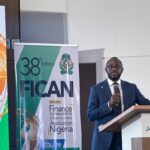
President and chairman, board of directors, African Export-Import Bank (Afreximbank), Prof. Benedict Oramah, has challenged government leaders in Africa to invest in the youth, noting that the youngsters hold the key to economic transformation in Africa.
Delivering the 14th convocation lecture of Nnamdi Azikiwe University, Awka, Anambra State, recently, Oramah posited that history holds the fact that where the youth are given the opportunity, they have been the force for positive change.
He said that the world is shaped by the youth. He recalled that in the 1920s, Albert Einstein as a young man in his 20s wrote three papers that redefined the understanding of the world today.
He posited that built into any ‘powerful’ population is a youthful working population that represents the agents of change across social, political, and economic spectra.
He said that around the world, history and contemporary evidence have shown that the youth have always been the catalyst to economic transformation.
“At the height of the industrial revolutions in advanced economies, the youth constituted the largest proportion of the labour force and the population. In 1900, when the United States’ ascendancy as a major industrial power became indisputable, the population of the US under 45 years was 83 per cent with 48 per cent within the ages of 15 and 45 years.
“Similarly in Canada, the population below 45 years and between 15 years to 45 years was 82 per cent and 47 per cent respectively in 1900. The youth were equally central to the so-called “Asian Miracle” that propelled South East Asia from poverty to prosperity during the 1970s to the 1990s. In 1980, the percentage of the population under 45 in China, Korea, Malaysia, Singapore and Taiwan ranged between 76 per cent and 80 per cent.”
The Afreximbank leader said that Africa has found itself in a similar situation today where it is estimated that the youth constitutes 45 per cent of Africa’s population. He said that some have referred to this development as the Youth Bulge and sounded a chilling alarm that it portends danger for Africa. He explained that high youth unemployment, rising crime rates and dangerous emigration practices that lead to drowning in the Mediterranean were the evidence of the grave danger ahead.
Explaining further, the professor said he considers the youth as Africa’s greatest resource, an asset much more valuable than all the oil and solid minerals frequently celebrated on the continent.
He said that to further understand the power and energy of the youth; one should look at the drivers of the fourth industrial revolution, the emergence of disruptive technologies, internet, robotics, virtual reality and artificial intelligence.
“The ubiquitous Social media platforms: Facebook, Twitter, Instagram, Facetime, Tech companies such as Apple and Microsoft, and e-commerce platforms, including Amazon and Alibaba, were founded by individuals or group of individuals at their youth. And these companies have over a short period become global giants disrupting incumbent technologies and changing the way we relate to one another, the way politics is conducted, the way we buy and sell, the way we study and much more.”
Moving forward, Oramah recommended that African governments must therefore support the growing and innovative youth entrepreneurs with leadership development opportunities, finance, and links to wider markets.
“Without access to markets, no business will thrive and because the businesses cannot create the markets, government must find ways to support the emergence of export trading companies. They must find ways to link creativity to markets. One way this can happen is to promote the emergence of an innovation ecosystem, such as the Silicon Valley to emerge. Why not a Nillicon Valley in Nigeria? Why not in Awka,” he queried.
Vice Chancellor, Nnamdi Azikiwe University, Awka, Prof Charles Esimone, who appreciated Prof Oramah for his incisive lecture had, during the convocation, pointed out that advancement, as part of his Project 200 administrative mission and vision aims at building on the efforts and achievements of past administrations of the university in all facets of operations.
He listed areas of attention to include infrastructure, human capacity, internally generated revenue, staff and students’ welfare and the peace and security of the university.
He said that within the first two years of his administration, there would be a comprehensive landscaping and beautification of all campuses and premises of the university in Awka, Nnewi, Agulu and Ifite-Ogwari.
Esimone said urgency would be given to the development of the Faculty of Agriculture at Ifite-Ogwari premises with a view to making the premises fully operational within two years of his administration.
He also stated that his management was working in concert with the governing council of the university to pursue a staff and student’s housing scheme using the Build-Operate and Transfer model. The intent, he said, was that by the end of his tenure, on-campus accommodation would have been provided for 50 per cent of the undergraduate students and 70 per cent for the post graduate students.
He stated that the staff housing scheme would give initial preference to staff whose nature of duties makes it desirable for them to live on-campus.
Chairman of the Convocation lecture, Prof Abubakar Rasheed, Executive Secretary, National Universities Commission (NUC), said it had become imperative for Nigerians to change the way they do things. He said citizens should realise the dangers facing the nation presently and accept the fact that business as usual should never be an option again in the country.