Follow Us on Google
…after the country’s decision to withdraw from global health body
____________________________
By Doris Obinna
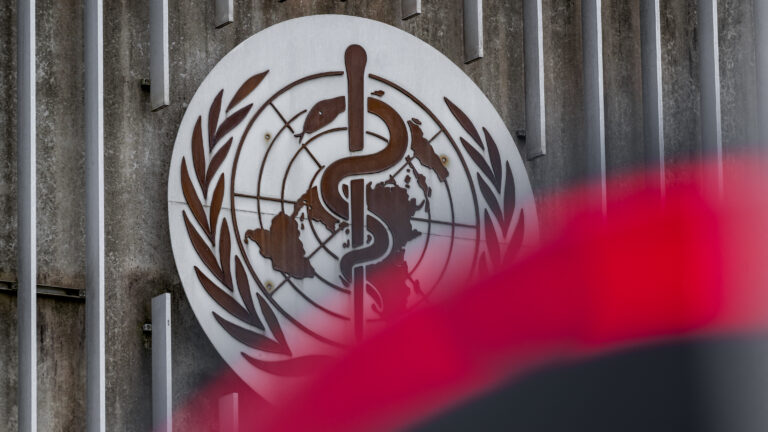
The World Health Organization (WHO) has expressed deep regret over the United States’ decision to withdraw from the global health body, saying the move undermines decades of cooperation and weakens international efforts to prevent and respond to major public health threats.
WHO, in a statement on Saturday, said the withdrawal would make both the United States and the wider world less safe, at a time when global health risks are growing more complex and interconnected. The United States, a founding member of WHO, has been a key contributor to some of the organisation’s most significant achievements, including the eradication of smallpox and major advances against diseases such as polio, HIV, Ebola, influenza, tuberculosis and malaria.
WHO said the formal notification of withdrawal raises legal and procedural questions that will be examined by its Executive Board when it meets on February 2, 2026, and later by the World Health Assembly at its annual meeting in May 2026.
Responding to criticism from the US government, which has accused WHO of compromising its independence and pursuing a politicised agenda, the organisation rejected those claims as false. WHO said it has always engaged with the United States, as with all member states, in good faith and with full respect for national sovereignty.
The United States has cited what it described as WHO failures during the COVID-19 pandemic as a central reason for its decision, including allegations that the organisation obstructed the timely sharing of information and concealed mistakes. WHO acknowledged that no institution or government responded perfectly to the unprecedented crisis, but said it stands by its actions and decisions.
According to WHO, it acted swiftly after receiving reports on December 31, 2019, of a cluster of pneumonia cases of unknown cause in Wuhan, China, immediately seeking additional information and activating its emergency incident management system. By January 11, 2020, when China reported the first death, WHO said it had already alerted the international community, convened global experts and published detailed guidance on how countries could protect their populations and health systems.
“WHO declared COVID-19 a public health emergency of international concern on January 30, 2020, the highest level of alert under international health regulations. At that point, there were fewer than 100 confirmed cases and no reported deaths outside China.”
In the weeks that followed, WHO said its Director-General repeatedly urged governments to act quickly, warning that the window for containment was closing and describing the virus as “public enemy number one”.
The organisation stressed that while it recommended measures such as mask use, vaccination and physical distancing, it did not call for mandates or lockdowns, noting that such decisions were taken by national governments. WHO said it provided advice based on the best available scientific evidence and shared information rapidly and transparently throughout the pandemic.
Following multiple independent reviews of the global COVID-19 response, including assessments of its own performance, WHO said it has strengthened its internal systems and expanded support for countries to improve preparedness and response capabilities. It said these systems now operate around the clock and continue to contribute to global health security, including in the United States.
WHO also rejected US claims that it is driven by nations hostile to American interests, saying it remains an impartial United Nations specialised agency governed by 194 member states and committed to serving all countries without fear or favour.
The organisation said it continues to receive strong backing from its remaining members, highlighting the adoption last year of the WHO Pandemic Agreement, which is expected to become a landmark international legal instrument once ratified.
“Member states are currently negotiating an annex on pathogen access and benefit sharing, aimed at improving early detection of emerging threats and ensuring equitable access to vaccines, treatments and diagnostics.”
While expressing hope that the United States will eventually return to active participation, WHO said it remains focused on its core mission: promoting the highest attainable standard of health as a fundamental right for all people.