Follow Us on Google
By Lukman Olabiyi
After eight years of absence, the return of the Eyo Festival in 2025 did more than restore a historic cultural tradition to Lagos Island; it delivered a significant economic boost, revitalised local businesses and reinforced Lagos’ growing status as a global cultural tourism destination.
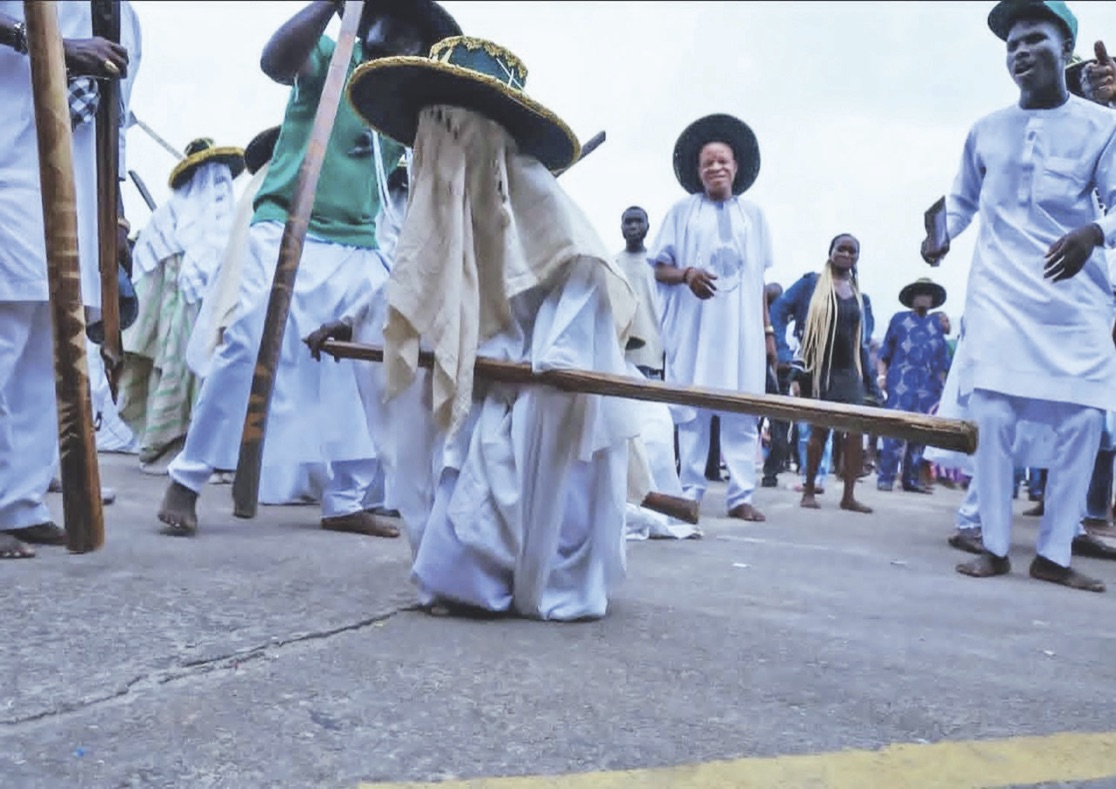
The rhythmic chants, flowing white robes and raised opambata staffs that filled the streets signalled not only the revival of the ancient Adamu Orisa Play, but also a resurgence of commercial activity across the historic city centre, from hospitality and transportation to retail, entertainment and creative industries.
The festival brought renewed pride, cultural awakening and a surge of economic activity to Africa’s most vibrant city.
The Adamu Orisa Play 2025 edition was not merely a ceremonial outing of masquerades; it was a powerful statement that Lagos remains firmly rooted in its ancestral heritage while confidently projecting itself onto the global tourism stage.
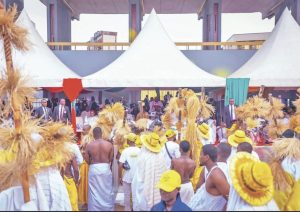
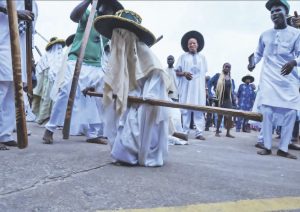
Dating back to 1854, the Eyo Festival is one of Lagos’ oldest and most revered cultural traditions. It is staged to honour the passage of prominent Lagos indigenes; traditional rulers, statesmen and illustrious citizens whose lives helped shape the state’s history and identity.
Clad in flowing white agbada-like robes, wide-brimmed hats and carrying symbolic staffs known as opambata, thousands of Eyo masquerades moved in grand processions through major streets of Lagos Island.
Their slow, deliberate steps and dance transformed familiar roads into sacred pathways, blurring the line between the past and the present.
The festival turned streets in Lagos Island to content hubs and tourism corridors as photographers, videographers and digital creators’ monetised the spectacle for local and global audiences.
This year’s festival was held in honour of several notable figures: Abibatu Mogaji, revered market leader and mother of President Bola Tinubu; Lateef Jakande, Lagos’ first civilian governor; Mobolaji Johnson, the state’s first military administrator; and Michael Otedola, former civilian governor of the state.
Their legacies, woven into the fabric of Lagos history, were celebrated through ritual, music and collective memory.
From the announcement of the festival on December 1, 2025, by the Oba of Lagos, Oba Riliwanu Akiolu, economic activity surged across Lagos Island. Traders increased stock levels, artisans produced cultural souvenirs, fashion designers supplied ceremonial outfits, while food vendors, photographers and content creators prepared for weeks of heightened demand.
Hotels within and around the Island reported increased bookings, while transport operators, tour guides and ride-hailing services recorded higher passenger volumes as visitors arrived from other parts of Nigeria and the diaspora.
For many small business owners, Eyo 2025 represented their most profitable period in years. Several traders and artisans reported record sales and patronages, with some inviting extra hands from neighbouring communities to cope with demand.
“This festival was not just culture for us; it was livelihood,” said Omotola, a Balogun Market trader who recorded more sales during the festival week than in the previous three months combined.
“This festival is a real blessing to me, I am currently overwhelmed with the number of customers on my neck who want me to sew their costumes”, Ismail, a tailor in Isale-Eko.
A hotel manager in Lagos Island, Baderin also gave insight on what people experience to secure accommodation during the period.
He said the festival caused a surge, which the limited hotels within Lagos Island were unable to cope with.
“For this season, for you to be able to secure accommodation, you must be ready to pay beyond imagination. Nobody cares about a small hotel or big hotel again. All that they care for is accommodation and they are ready to pay,” he said.
According to the industry expert, Joshua Akinfenwa, hotels around Lagos Island recorded occupancy rates above 90 per cent during the festival week, compared to an average of 55–60 per cent in preceding weeks.
The festival officially kicked off on December 21, 2025, with the Ijade Opa Eyo procession (the ritual outing of the Eyo masquerade’s staff).
This sacred ceremony symbolises guidance, protection and the transmission of tradition from one generation to another and it was accompanied by traditional songs, prayers and cultural performances linked to the Adimu Orisa tradition, the procession set the spiritual tone for the celebrations.
The Ijade Opa Eyo is performed for five days by sacred Eyo groups according to hierarchy: Adimu, Laba, Oniko, Ologede and Agere, each playing a defined role in preserving the ritual order of the festival.
Explaining the significance of the procession, the Olori Eyo, Chief Adebola Dosunmu, described the five-day activities as a critical preparatory phase ahead of the main festival.
According to him, the outing formally signals the certainty of the Eyo Festival. He noted that the procession involves visits to family houses, traditional palaces, the Oba’s Palace, the governor’s residence and other culturally significant locations, including paying homage at the residence of President Bola Tinubu.
Chief Dosunmu also outlined key cultural rules guiding the festival, including restrictions on footwear, caps and scarves, as well as a strict prohibition on photographing the sacred Eyo deity, though photographs of the masquerades themselves are permitted.
He stressed that tradition and religion are distinct, explaining that culture predates modern religions and remains an inherited identity passed from generation to generation.
By dawn on December 27, Lagos Island had transformed into an open-air economy.
Hotels were fully booked, tailors worked overnight and traders doubled prices, all before the first Eyo stepped onto the street.
The grand finale of the festival held at the iconic Tafawa Balewa Square (TBS), Onikan, attracted a distinguished gathering of national and state leaders, traditional institutions, residents, and visitors from within and outside Nigeria.
Those in attendance include President Bola Ahmed Tinubu; Lagos State Governor, Mr. Babajide Olusola Sanwo-Olu, and Imo State Governor, Senator Hope Uzodimma, Speaker of the Lagos House of Assembly, Rt Hon. Mudashiru Obasa; Oba of Lagos, His Royal Majesty, Oba Rilwan Akiolu, captains of industry, former and current public office holders, traditional and political leaders, celebrities as well as thousands of Nigerians from the diasporas and foreign visitors.
The list of dignitaries at the event also included former Lagos State governors, Babatunde Fashola and Akinwunmi Ambode; former Ogun State Governor, Chief Olusegun Osoba; former Deputy Governor, Mr. Femi Pedro; Chief of Staff to the President, Mr. Femi Gbajabiamila; Minister of Finance, Mr. Wale Edun; Chief Kensington Adebutu; members of the Lagos State Executive Council, wife of late Alhaji Jakande, Abimbola, Women Leader of the All Progressives Congress, (APC), Jumoke Okoya-Thomas, Iyaloja General, Folashade Tinubu-Ojo among others.
The President in his speech made available at the event, described the Eyo Festival as a rekindling of Nigeria’s rich cultural heritage and a celebration of achievements, outstanding contributions, and exemplary lives of distinguished and eminent Lagosians.
He said: “It is heart-warming to witness the Eyo 2025 Festival being held in honour of our late distinguished leaders – Brigadier-General Mobolaji Olufunsho Johnson (rtd), Alhaji Lateef KayodeJakande, and Chief Michael Agbolade Otedola, as well as my beloved mother, Alhaja Abibatu Mogaji, the Iyaloja General of Nigeria and a highly revered women leader.
“The Eyo Festival is a vibrant expression of the rich traditions of Lagos. It celebrates the achievements, outstanding contributions and exemplary lives of distinguished Nigerians, not only eminent Lagosians.
“The festival is more than a celebration. It reflects the rich culture and belief of the people of Lagos and underscores the rich culture of our dear country, Nigeria.
“The timing of this festival is significant, coinciding with Detty December, a period when Lagos attracts thousands of Nigerians from the diaspora and foreign visitors. It is a reminder that our culture and traditions hold great tourism potential. Indeed, our cultural assets can serve as valuable resources for destination promotion.
“The glamour of white-robed figures parading our streets in celebration of distinguished Lagosians sends a resounding message about our identity and our country.”
President Tinubu also appreciated Governor Sanwo-Olu, his deputy, Hamzat, and the State Executive Council on behalf of the Johnson, Jakande, and Otedola families for the remarkable honour.
He said he is especially grateful for the honour bestowed upon his late mother, Alhaja Abibatu Mogaji.
Tinubu also congratulated the people and government of Lagos State, as well as the traditional institutions in the state, especially the Oba of Lagos, Oba Rilwan Akiolu, on the success of the 2025 Eyo Festival.
Speaking at the event, Governor Babajide Sanwo-Olu reaffirmed his administration’s commitment to safeguarding Lagos’ cultural identity in alignment with the THEMES Plus development agenda, stressing that the Eyo Festival represents unity, pride and a bridge between tradition and modernity.
“The Eyo Festival is a powerful demonstration of our commitment to preserving Lagos’ cultural heritage. It reminds us of who we are, where we come from and the responsibility we bear to pass our traditions on to future generations,” the governor said.
He expressed appreciation to President Tinubu for his presence and continued support for Lagos, as well as to the Oba of Lagos, Oba Akiolu, for approving the staging of the festival.
The Commissioner for Tourism, Arts and Culture, Mrs Toke Benson-Awoyinka, described the festival as a defining moment in Lagos’ cultural renaissance, noting that its revival reflects deliberate leadership, strategic planning, and a conscious investment in preserving traditions that define the soul of Lagos.
While welcoming President Tinubu and other dignitaries, the Commissioner stated that the Eyo Festival goes beyond pageantry, serving as a living symbol of Lagos’ history, unity, and resilience that has endured for over three centuries.
“This celebration is our heritage, our Christmas, and our identity as a people. Culture defines who we are and today, we proudly showcase over 300 years of Lagos history in one sacred space,” Benson-Awoyinka said.
Mrs. Benson-Awoyinka described late Chief Abibat Mogaji as an enduring symbol of enterprise, leadership, and service, whose influence transcended the marketplace to shape public life and community development, particularly for women
She further explained that the Eyo tradition, historically staged to escort the souls of distinguished contributors to the ancestral realm, remains one of Africa’s most profound cultural expressions, symbolising purity, continuity, discipline, and communal strength.
The Commissioner also noted that the peaceful conduct of the festival, marked by a massive turnout, joy and discipline, reflected effective planning, strong inter-agency collaboration, and the collective ownership of Lagos with its cultural heritage.
Mrs. Benson-Awoyinka, however, invited the global community to experience Lagos through its culture, stating that the successful staging of the 73rd Eyo Festival reinforces the state’s reputation as a vibrant, safe, and globally relevant cultural destination.
“Lagos is open. Lagos is vibrant. Lagos is proud of its heritage. And we will continue to preserve our culture while confidently advancing into the future,” she said.
Chairman of Itire-Ikate Local Council Development Area, Mr Femi Odunayo affirmed that the Eyo Festival is “the living heritage of Lagos’ indigenous people”, making its revival worth celebrating.
The chairman enjoined every Lagos indigene and residents to continue to work together for the betterment of the state and the country as a whole.
A Nollywood actor, Wole Ojo praised the Eyo Festival as a breathtaking cultural treasure, urging that it must remain an unbroken part of the state’s living tradition.
Ojo hailed the festival as world-class, noting that it attracted some of his friends from Mexico.
“We need more people to come in here and really experience it,” he said.
The actor, however, urged the organisers to ensure that the festival remained peaceful and free of hoodlums that would want to use it as a means to commit crime.
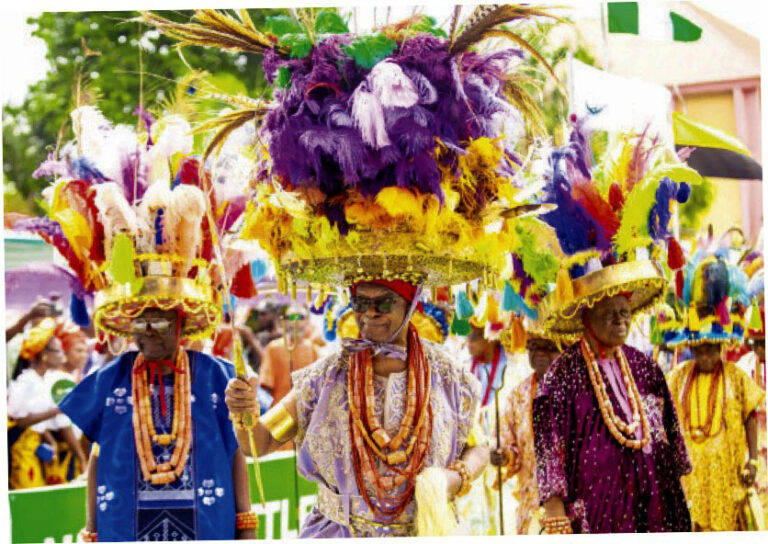
The festival grounds came alive with a colourful procession of several Eyo Igas (houses), led by the Special Adviser to Lagos State Governor on Tourism, Arts and Culture, Mr. Idris Aregbe.
The Eyo Igas were resplendent in their traditional white robes and symbolic Opambata staff, reinforcing the spiritual and cultural essence of the ancient tradition.
Among the Eyo groups on display were Akintoye, Ashogbon, Aromire, Ajagun, Arobadade, Akogun Olofin, Apena, Ojon, Etti, Kakawa, Ajanaku, Asesi, Aiyeomosan, Alaagba, Asajon, Awise, Bajulaiye, Bashua, Egbe, Elegushi, Faji, Jakande, Kosoko, Dosunmu, Olofin, Ojora, Oloto, Olumegbon, Erelu Kuti, Eletu Odibo, Oshodi Tapa, Suenu, Taiwo Olowo, Oniru, Elemoro, among others.
Despite the success, some residents complained of gridlock and rising accommodation costs, underscoring the need for better crowd and tourism infrastructure planning.
Besides, issues of breach of security, harassment of residents by some Eyo masquerades were also recorded in some area.
As the white-robed masquerades disappeared from the streets and normalcy gradually returned, one thing remained clear: Eyo 2025 did more than revive a festival. It reawakened Lagos’ collective memory, strengthened cultural pride and demonstrated how heritage, when preserved and celebrated, can also drive economic growth. In the dance of tradition and progress, Lagos once again found its rhythm.