Follow Us on Google
Inside Nigeria’s jungle justice culture
From Jude Chinedu, Enugu
On August 15, 2026, what should have been an ordinary academic day at Nnamdi Azikiwe University, Awka, Anambra State, descended into a terrifying scene.
Professor Ifeanyi Odinye, a lecturer in the Department of Chinese Studies, found himself being pursued by students following an allegation by a female student that he had attempted to sexually assault her.

According to accounts surrounding the incident, Odinye was chased by students, beaten, stomped on and stripped. He was reportedly left wearing only an academic gown.
The allegation against him was serious. So was the response.
But the events at the university exposed the dangerous territory Nigeria enters when an accusation becomes a conviction in the eyes of a crowd before investigators, university authorities or a court have established what actually happened.

The university subsequently suspended Odinye for three months on half salary following a preliminary report by a six-member panel constituted to examine the incident.
The panel, whose preliminary report was dated August 21, 2026, cited procedural breaches relating to examination misconduct involving a student, Chikamso Favour Okechukwu. It also indicated that further investigation was required into allegations of sexual harassment, the identities of those who assaulted the lecturer and claims surrounding possible kidnapping.

In other words, even after the mob attack, the facts were still being investigated.
That distinction matters. An allegation is not a conviction. A suspicion is not evidence. And anger, no matter how intense, does not confer judicial powers on a crowd.

The UNIZIK incident therefore belongs at the centre of Nigeria’s continuing conversation about jungle justice because it demonstrates that mob action is not restricted to allegations of robbery or theft. It can erupt around accusations of sexual misconduct, blasphemy, child theft, kidnapping or any allegation capable of generating instant outrage.

It also demonstrates another uncomfortable reality: mob justice can occur in places where people are expected to understand procedure, evidence and due process.
A university campus, populated by students and academics, should ordinarily be one of the places where allegations are subjected to inquiry rather than physical punishment.
Yet on August 15, the lecturer was allegedly subjected to a brutal assault before the issues surrounding the accusation had been fully established.
Odinye was suspended. A panel investigated. Issues were identified. Further investigation was ordered.
But none of those institutional processes required students to beat him. None required him to be stripped. None required a crowd to determine his guilt. And none could justify violence.
The case is particularly significant because it forces Nigerians to confront an uncomfortable question: If an allegation is serious enough to demand investigation, why is it suddenly considered serious enough to justify punishment before the investigation is completed?
That question runs through almost every major case of mob action in Nigeria.
On Saturday night, August 29, 2026, residents of Calabar South, Cross River State, witnessed another grim episode.
Two men suspected of robbery were beaten to death by a mob and their bodies abandoned along Ekpo Abasi Street, near Yellow Duke.
By Sunday morning, the bodies had become a grim reminder of what happens when suspicion is converted into punishment without trial. A crowd gathered around the scene until the police arrived and evacuated the remains.
There were conflicting and unconfirmed accounts about the identities and activities of the two men. One report suggested that one of them might have been a scrap metal dealer.
But the essential point remained unchanged: they had been accused of robbery, and a crowd had punished them with death before a court could determine whether they were guilty.
Cross River State Police Public Relations Officer, ASP Eitokpah, confirmed the preliminary findings, saying residents had apprehended the men on suspicion of robbery.
The police condemned the incident in unequivocal terms. “No individual has the right to take the law into their own hands,” the police said.
That sentence captures the fundamental issue.
The criminal justice system may be slow. It may be imperfect. Police investigations may frustrate citizens. Courts may take years to determine cases.
But none of those failures transfers the power of life and death to a crowd. The bodies were deposited for preservation and identification while investigation continued.
The men could no longer defend themselves. They could no longer tell their side of the story.
Whatever they were accused of became irrelevant to the fact that the legal process had been replaced by violence.
In Kaduna State, the consequences were even more devastating. Malama Ummulkhair, an Islamiyya teacher and mother of four, was reportedly accused of stealing children in Maraban Jos, Igabi local government area.
She was not taken to court. She was attacked.
Police officers reportedly took her to a station for safety, but the crowd followed. The situation deteriorated until the station itself came under pressure.
According to accounts from witnesses and relatives, the crowd overpowered the officers, took the woman and killed her by burning.
Her husband, Aliyu Mohammed, was left to explain to their children why their mother was never coming home.
“I am confused and heartbroken because she did nothing wrong,” he said. “What pains me most now is that I am left alone with the children.”
Those words are important because they move the story beyond statistics. Jungle justice does not end when the victim dies.
It continues in the lives of husbands, wives, children, parents, siblings and friends who are left to live with the consequences.
The husband had been waiting for her. “I wished her safe return,” he recalled. Instead, he received news of her death.
Village head, Suleiman Isa, and Imam Umar Yusuf also gave accounts of the incident. Imam Yusuf questioned the accusation itself.
“She had no child with her. If she had kidnapped children, where are the parents of those children?” he asked.
He said he had attempted to intervene. “I also went there to tell them she was not a thief, but they took my motorcycle, placed it on her, and burned both of them.”
That account, if established by investigation, presents another disturbing dimension of mob action: once a crowd becomes emotionally committed to an accusation, evidence to the contrary may no longer matter.
The allegation becomes stronger than the facts. The victim’s denial becomes proof of guilt. Anyone attempting to intervene can become a target. And the crowd begins to see itself as an institution above the law.
The case has also raised serious questions about the responsibility of law enforcement officers to protect people in their custody.
Malama Ummulkhair had reportedly been taken to the police station. That should have meant protection. Instead, the station itself became the site of a struggle over her safety.
Her sister-in-law, Zainab Aliyu, alleged that the DPO led the victim out despite warnings that the crowd was dangerous. Those claims require proper investigation, because once a person is in police custody, the responsibility of the state becomes even more direct.
Hamza N. Dantani, a lawyer, who petitioned the Inspector-General of Police, said: “Once a suspect is taken into police custody, the Nigeria Police Force assumes a legal duty of care and responsibility for the safety and protection of that individual.”
He also stressed the principle at the heart of every justice system: “Justice must not only be done but must manifestly be seen to be done.”
The Kaduna police later announced the arrest of more than 80 suspects. Police spokesman, DSP Mansur Hassan, said: “From yesterday (Sunday) to today (Monday), we have arrested over 80 people.”
He added: “Anyone found culpable will be dealt with in accordance with the law. Investigation has already shown that the victim was wrongly accused.”
That last statement is perhaps the most devastating part of the entire incident. She was wrongly accused. Yet the accusation had already become a death sentence.
The UNIZIK case presents the same underlying problem in a different setting. An allegation of attempted sexual assault is not trivial. Such allegations deserve immediate and serious attention, protection for complainants, careful investigation and, where evidence supports it, appropriate disciplinary or criminal proceedings.
But those safeguards exist precisely because serious allegations must be properly investigated. They cannot be replaced by violence.
The treatment of Prof. Odinye demonstrates how quickly a crowd can move from outrage to physical punishment. Students allegedly pursued and assaulted him after the accusation. He was beaten, stomped on and stripped, reportedly left with only his academic gown.
Then the formal process began.
A six-member panel examined the incident. Its preliminary report, dated August 21, identified examination-misconduct procedural breaches involving Chikamso Favour Okechukwu. It also left questions about the sexual harassment allegation, the identities of those who attacked the lecturer and possible kidnapping issues for further investigation.
The university suspended Odinye for three months on half salary. But suspension is not conviction. A preliminary report is not a final determination.
And an allegation remains an allegation until the relevant investigative and judicial processes establish what happened.
This is precisely why the UNIZIK case should be viewed alongside other cases of mob action.
Nigeria’s jungle justice problem is not simply about people killing suspected criminals on the streets.
It is about the gradual erosion of the idea that allegations should be tested against evidence.
It is about the dangerous belief that once an allegation provokes enough anger, punishment becomes permissible.
It is about the transformation of crowds into informal courts.
And it is about the consequences when people forget that due process protects not only the accused but society itself.
A system that allows punishment before investigation eventually creates a situation where anyone can become a victim.
Today, the allegation may be robbery. Tomorrow, kidnapping. The next day, blasphemy. Then sexual assault. Then witchcraft. Then political disagreement. The allegation changes but the principle remains the same.
Who has the right to punish before guilt is established?
The answer under Nigerian law is clear: not the crowd.
In May 2022, Nigeria witnessed one of its most shocking recent examples of mob killing when Deborah Samuel, a 25-year-old 200-level student of Home Economics at Shehu Shagari College of Education, Sokoto, was killed by fellow students after being accused of blasphemy.
The incident reportedly began with an argument in a WhatsApp group. A student witness said Deborah had made a comment including the words “Jesus o”.
Some students demanded that she retract the statement. A voice note later circulated, intensifying the situation. Then the mob came.
Students reportedly tried to rescue her and take her to the police, but she was dragged away, beaten, stoned, killed and burned.
One witness recalled her final words: “What do you hope to achieve with this?”
It is a haunting question. What, indeed, did the mob hope to achieve?
If the allegation was considered a religious offence, why was the criminal justice system not allowed to determine what offence had been committed? Why was a student beaten and killed instead of being investigated and tried?
The killing triggered widespread condemnation. The then president, Muhammadu Buhari, ordered an investigation. The Christian Association of Nigeria (CAN) condemned the killing. The British High Commissioner called for justice. Northern Christian elders demanded prosecution.
Force Public Relations Officer at the time, Olumiyiwa Adejobi, described the act as “barbaric, uncivilized and criminal.” The Sokoto police announced arrests.
NASFAT Chief Missioner, Imam Abdul-Azeez Onike, also rejected extrajudicial killing, saying such acts were unacceptable in Islam and called for investigation and arrests.
Yet other voices appeared to justify the killing through the language of religious “red lines.” That contradiction exposes another danger.
Once society accepts the principle that certain allegations justify immediate violence, the rule of law becomes conditional. And the rule of law cannot survive on conditions. It either applies to everyone or it does not.
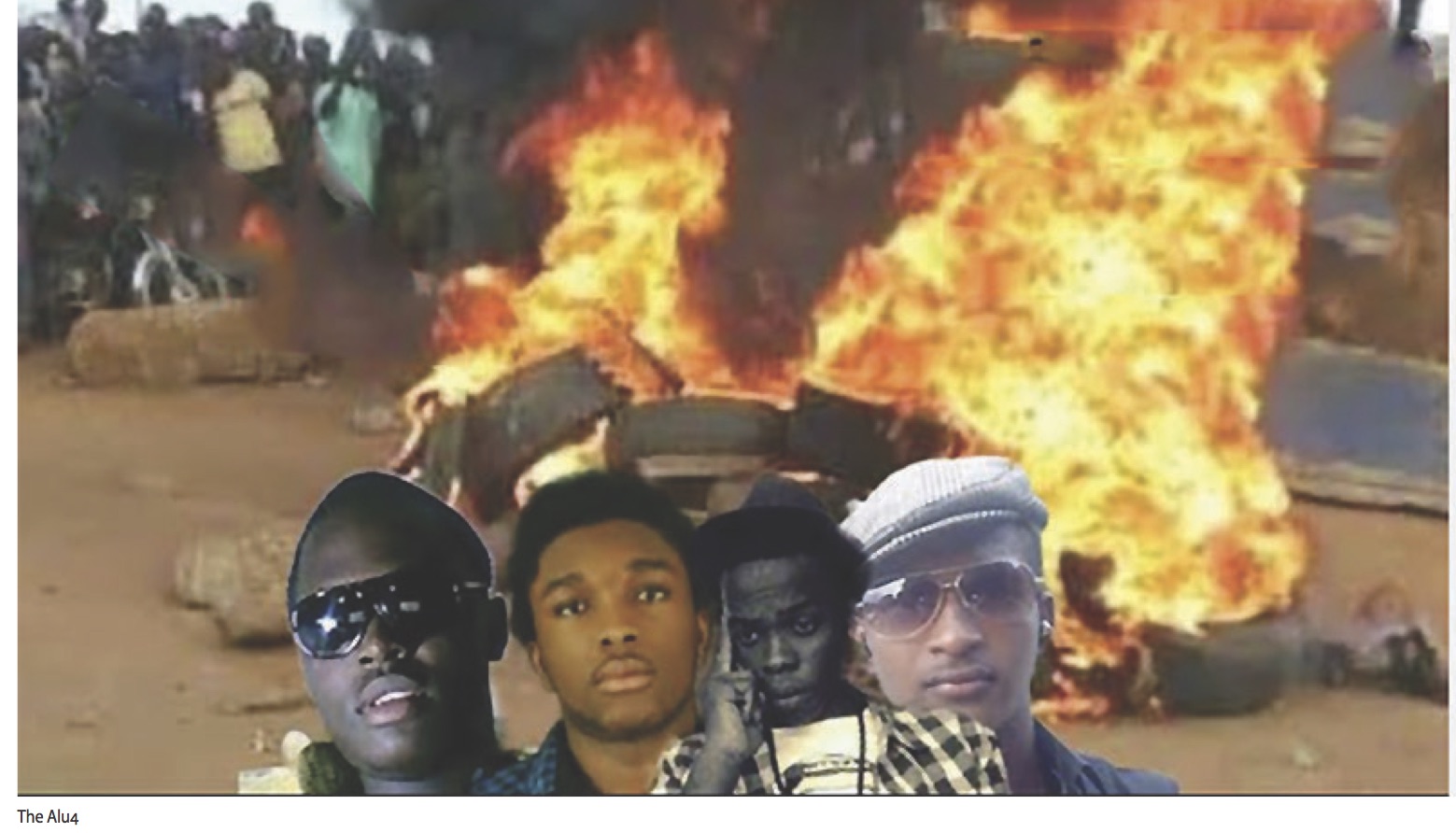
Before Deborah Samuel, there was the case that became synonymous with jungle justice in Nigeria: the Aluu Four. University of Port Harcourt students – Chiadika Biringa, Ugonna Obuzor, Lloyd Toku and Tekena Elkanah went to Aluu community in Rivers State.
According to Chiadika’s mother, Chinwe Biringa, Obuzor was owed money and the young men had gone to collect it. A rumour that they were thieves spread. What followed became one of the most horrifying mob killings in the country’s recent history.
The four students were reportedly stripped, beaten, “necklaced,” doused with petrol and burned. The attack was filmed and circulated. For the families, the images became permanent scars.
Chinwe Biringa wanted the world to understand that her son was more than the label attached to him by the mob.
“I want the world to know how our security failed us. I want the world to know that my son and his three friends are innocent of what they said they did.”
She remembered her son as a warm person.
“He was a very kind-hearted boy and we were so close. If my son sees you 100 times, he will greet you 110 times.”
His father, Steven Biringa, struggled to understand how human beings could treat other human beings that way.
“Even your worst enemy should not be treated in such form in the 21st century…”
The boys had a song they liked: “Ain’t No Love in the City.” Years later, the words carry an unbearable irony.
Human Rights Watch researcher, Eric Guttschuss, linked vigilante and mob justice to a culture of impunity and failures to adequately crack down on such acts.
The message is simple. When people see others commit mob killings and escape meaningful punishment, they learn that the consequences are manageable.
That encourages the next crowd. There is no legal vacuum in Nigeria that gives citizens permission to kill suspected criminals.
The 1999 Constitution protects the right to life under Section 33 and guarantees fair hearing under Section 36. Those provisions do not disappear because a crowd believes a person is guilty.
The Criminal Code, Penal Code and Administration of Criminal Justice Act provide legal mechanisms for investigating, prosecuting and punishing offences.
The Nigerian Senate also passed a Bill in September 2017 seeking to prohibit and punish lynching, mob action and extrajudicial execution.
The proposed legislation was designed to discourage jungle justice, criminalise crowd lynching and mob action, and impose accountability on security agents who fail to prevent such incidents or protect victims.
Senator Chukwuka Utazi presented the report. But legislation alone cannot solve the problem.
Nnamdi Okeke put it plainly: “Jungle justice has no place under Nigerian law. Every person, however, strongly suspected of a crime, retains the constitutional right to life under section 33 of the 1999 constitution and the right to fair hearing under section 36. Nobody has the power to try and execute a person on the spot.”
Okeke said Nigeria’s problem was not necessarily the absence of laws.
“The problem isn’t a lack of law; it’s poor enforcement. The Criminal Code, Penal Code, and Administration of Criminal Justice Act already criminalise these acts.”
And then came perhaps his most important observation: “Nothing emboldens a mob more than watching previous killers walk freely.”
That is the heart of the impunity problem. If people believe there will be no consequences for killing a suspect, the next mob becomes easier to form.
Moses Obeta agreed that no alleged offence, however serious, gives citizens the right to impose punishment themselves.
“No matter how grave the alleged offence is, the only permissible avenue is through the judicial process where the suspect is found guilty. So jungle justice, as the name implies, is a violation of the right to life and the dignity of the victims.”
Simon Nwobodo also stressed the importance of prosecution.
“Average Nigerians learn from experience. When one or two are prosecuted for their actions, it serves as a deterrent. But when we keep suppressing the issue and the people involved are not punished or penalised for the act they perpetrated, then we can’t eradicate mob justice.”
The Nigeria Police Force has also taken a harder position on mob action.
Inspector-General of Police, Tunji Disu, directed state commands to treat every case of mob action as homicide. The directive followed the killing of 25-year-old University of Jos graduate, Ibrahim Mbaya, popularly known as “Ibee,” who was allegedly attacked after being accused of stealing an iPhone 12.
The police warned that anyone involved in jungle justice could face criminal prosecution. The warning extended beyond those who physically killed victims.
Organisers, encouragers, facilitators, people who mobilise crowds, those who block police intervention and people involved in filming or circulating the violence could potentially face consequences, depending on their role and the evidence established.
The police boss referenced provisions including Section 319 of the Criminal Code, Section 221 of the Penal Code and Section 516 of the Criminal Code.
The significance of this approach is that mob violence rarely happens spontaneously in the way people sometimes imagine.
For all the condemnation, there is an uncomfortable question that cannot be avoided: Why does jungle justice continue? The answer is partly rooted in distrust.
Some Nigerians believe police investigations take too long. Others believe suspects are arrested and later released.
Some victims of crime feel that reporting to the police produces little result. Others believe the courts are too slow.
Lawyers who spoke on the problem acknowledged this crisis of confidence. Okeke said: “People resort to mob action largely because they don’t trust the police or courts to act faster, visibly functioning police response is the real deterrent.”
That does not excuse mob violence. It explains one of the conditions in which it flourishes.
A citizen, who believes that a thief will be arrested today and released tomorrow may decide to punish him immediately. A community that has repeatedly seen criminal cases collapse may decide that formal justice is useless.
A crowd that has watched previous mob killers escape prosecution may assume that it too will get away with murder. But this creates a vicious cycle.
The failure of formal justice produces informal violence. Informal violence further weakens public confidence in institutions. The result is a society where people increasingly believe that whoever can gather the biggest crowd has the greatest power.
There is another player in the modern jungle justice crisis: social media. Rumours can now travel across communities in minutes. A photograph can be accompanied by a false caption. A voice note can trigger panic. A video can be edited and stripped of context. A claim can be repeated so many times that repetition itself begins to look like proof.
By the time police arrive, hundreds of people may have already formed an opinion about an incident they did not witness.
The danger is particularly severe in cases involving allegations of child theft, kidnapping, blasphemy and sexual offences because such accusations trigger strong emotions.
The UNIZIK case demonstrates how allegations involving sexual misconduct can produce immediate outrage. The Kaduna case shows what can happen when rumours of child theft spread.
Deborah Samuel’s death demonstrates the explosive power of religious accusations.
The Aluu Four case remains a warning about what happens when a theft allegation becomes a mob verdict.
The killings in Calabar shows that suspicion of robbery can end in death. Different allegations but same dangerous mechanism: accusation, crowd, violence, death.
It is easy to reduce jungle justice to numbers. But each case represents a human being with relationships, ambitions and people who expected them to return home.
For Malama Ummulkhair, there were four children. For Deborah Samuel, there was a family that expected to see her complete her education.
For the Aluu Four, there were parents who believed their sons would come home. For the Calabar victims, families may still be trying to establish exactly what happened.
For Prof. Odinye, the physical assault became another dimension of an unresolved institutional process.
The human cost is therefore not measured only in deaths. There is trauma. There is grief. There is fear. There is reputational damage. There is the possibility of wrongful accusation. There is the psychological burden carried by witnesses.
Most regrettably, there is the damage done to society when people begin to believe that violence is a legitimate substitute for justice.