Follow Us on Google
• Tinubu unveils 295,000 lifelines for Nigerian mothers, babies
By Juliana Taiwo-Obalonye
For many Nigerian women, pregnancy should be a journey of hope, anticipation and preparation to welcome a new life. But for millions, giving birth remains a dangerous gamble.

A Nigerian woman faces about a one-in-19 lifetime risk of dying from pregnancy-related causes, compared with about one in 4,000 in the world’s most developed countries, the Minister of State for Health and Social Welfare, Dr Iziaq Salako, said on Monday.
More troubling, Nigeria accounts for about 39 per cent of global maternal deaths, making the country one of the most dangerous places for a woman to give birth.
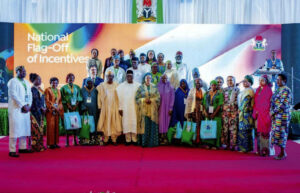
It was against this grim backdrop that the Federal Government, on September 14, 2026, rolled out a fresh package of incentives designed to persuade more vulnerable women to use maternal and newborn healthcare services.
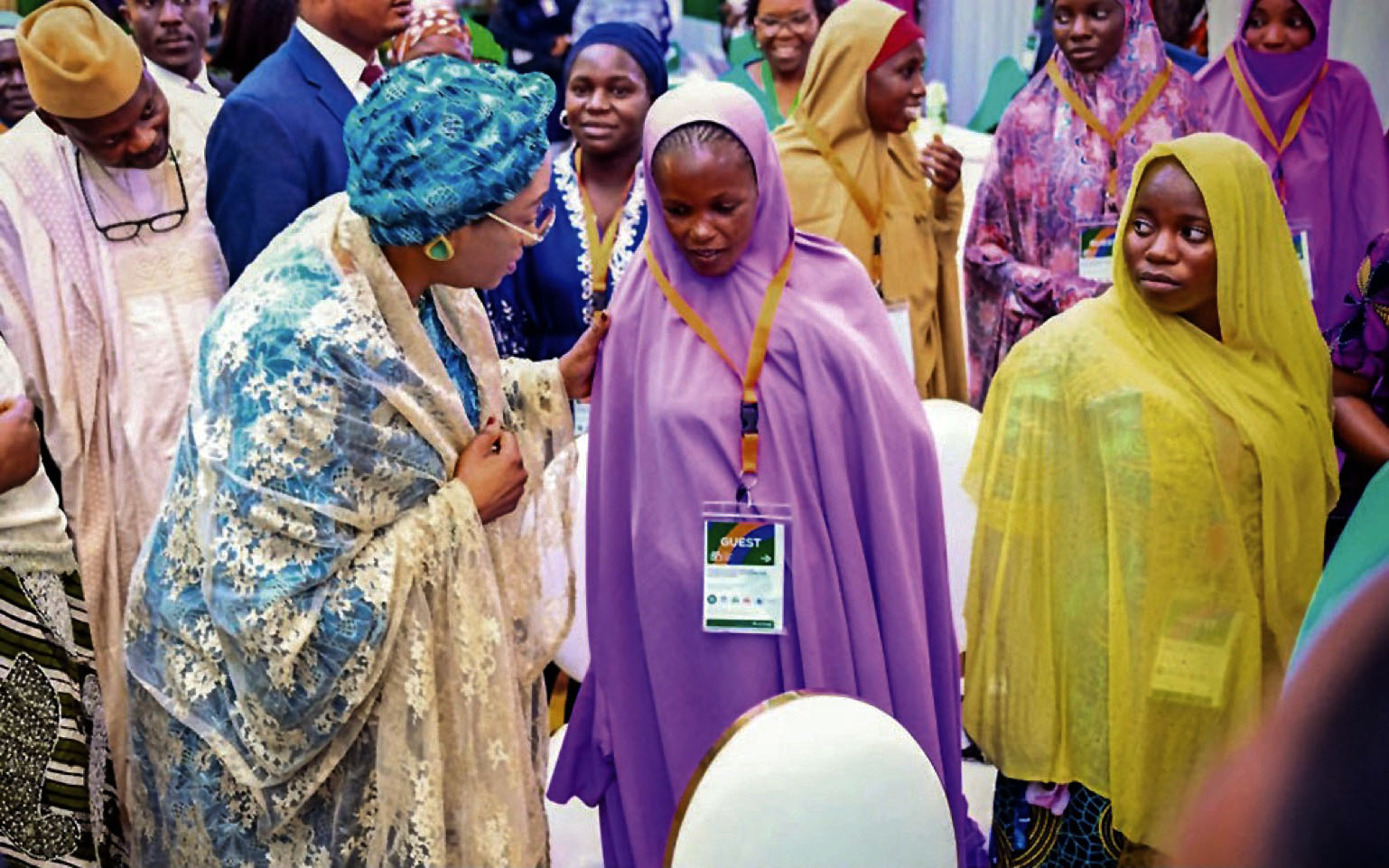
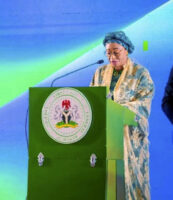
At the State House Banquet Hall, Abuja, First Lady of Nigeria, Senator Oluremi Tinubu, flagged off the distribution of 295,000 new incentives, comprising 215,000 MAMaCare kits and bags, 40,000 maternal food-support packs and 40,000 newborn care sets.
The latest intervention, under the Maternal and Neonatal Mortality Reduction Innovation Initiative (MAMII), comes on the heels of the distribution of 110,000 MAMaCare kits in 2025.
For a woman struggling to feed her family, living far from a health facility or unable to afford basic items for childbirth, the contents of a MAMaCare package may represent more than material assistance. It could be the small push that gets her through the doors of a clinic.
“As a mother, I believe pregnancy and childbirth should be moments of hope and joy, with every woman having access to quality care,” Tinubu said.
“However, social, economic, cultural, and logistical barriers still exist. This is what makes today’s flag-off particularly significant.”
She described the intervention as more than the distribution of materials, saying it represented another step towards giving Nigerian children a healthy start in life.
“This occasion represents a further step towards ensuring that every Nigerian child has a healthy start in life and that no woman loses her life while giving birth,” she said.
According to her, the intervention aligned with President Bola Ahmed Tinubu’s Renewed Hope Agenda for Health, which recognises health as “an essential pillar of development.”
Tinubu said MAMII was a “bold national intervention” bringing stakeholders together to reduce preventable maternal and newborn deaths through improved awareness, emergency care and referral systems.
The 215,000 MAMaCare kits and bags constitute the second batch of the programme, while the maternal food-support packs and newborn care sets will be extended to additional Local Government Areas recording low uptake of MAMII services.
She said the incentives would encourage less-privileged pregnant women to attend antenatal clinics, prepare adequately for delivery and continue receiving essential care after childbirth.
“The newborn clothing represents the administration’s commitment to welcoming every Nigerian child with dignity, warmth, and care,” she said.
“The maternal food support equally recognises that the health and nutrition of a mother are essential to a healthy pregnancy, safe delivery, and a healthy newborn.”
The First Lady urged state and local governments, traditional and religious leaders, development partners and philanthropists to help ensure that the intervention reached women in vulnerable and underserved communities.
She also commended Coordinating Minister of Health and Social Welfare, Pate, and his team for their commitment to the programme. “It’s been a joy working with you,” she told the minister and his team.
Salako, however, provided the statistics that underscored the urgency of the intervention.
He described Nigeria’s maternal mortality situation as “one of the most sobering realities of our nation,” saying the one-in-19 lifetime risk was unacceptable.
He said MAMII, launched by the Tinubu administration in November 2024, was being implemented in 172 Local Government Areas across the 36 states, with more than 250 health facilities participating, including facilities in Bauchi, Borno, Kaduna, Kano and Katsina.
More than 32,000 women and 1,700 newborns have benefited directly from emergency obstetric and newborn care services under the initiative, while mentorship and emergency medical services have reached nearly 79,000 beneficiaries.
Pregnant women account for about 60 per cent of those transported to healthcare facilities, he said.
Salako added that fourth-visit antenatal care attendance increased by 20 per cent in one quarter in MAMII implementing Local Government Areas.
The government is targeting a 30 per cent reduction in maternal mortality and 20 per cent reduction in neonatal mortality by 2028, while seeking to reach approximately 2.9 million pregnant women and families.
“Help continues to come and help is very, very close, and it is coming faster,” Salako said.
He acknowledged the contributions of the World Health Organisation (WHO), UNICEF, UNFPA, Global Financing Facility, USAID and other development partners.
Salako also highlighted the First Lady’s interventions in maternal and child health, including the distribution of professional kits to midwives across the six geopolitical zones, support for the training of 120,000 frontline health workers, and advocacy through the Free to Shine campaign against mother-to-child transmission of HIV, syphilis and hepatitis.
He said her interventions had also helped mobilise more than N100 billion for vulnerable women, children and families.
For Pate, however, incentives are only one part of the solution.
“MAMII is a targeted initiative designed to address maternal and newborn mortality in high-burden areas by improving access to quality services, strengthening health facilities and addressing financial and other barriers preventing women from using available services,” he said.
He put the tragedy in stark terms: “Pregnancy is not a disease, but yet many mothers lose their lives in the course of delivery.”
Pate disclosed that more than 60,000 women had benefited from free Caesarean sections and other emergency obstetric services through the National Health Insurance Authority in the last two years.
More than 120,000 frontline health workers have been retrained through the National Primary Health Care Development Agency, while almost 4,000 primary healthcare facilities have been revitalised or are undergoing revitalisation.
More than 6,000 women have also received treatment for obstetric fistula, with beneficiaries supported to rebuild their lives.
“The results are there. Now we need to intensify, accelerate and communicate those results more,” Pate said.
Other News
He stressed the importance of maternal nutrition and multiple micronutrient supplementation, noting that the condition of a mother directly affects the wellbeing of her unborn child.
The government also disclosed that about 642,000 pregnant women had been moved to healthcare facilities within their communities, while more than 85,000 women had been transported for emergency care.
More than 93,000 women had benefited from free life-saving surgical procedures, while the interventions had contributed to a reported 22 per cent reduction in maternal mortality in facilities empowered to provide the relevant services.
But WHO Representative in Nigeria, Dr Pavel Ursu, warned against measuring success simply by the number of women persuaded to visit health facilities.
The real challenge, he said, was ensuring that they received quality care when they arrived.
The incentives could encourage families to seek essential services, Ursu said, but women must find “safe, respectful and timely services.”
“Primary health care is so important. It brings life-saving care closer to families, builds trust and it connects communities to wider health systems,” he said.
Ursu urged stakeholders to ensure that rural women, adolescent girls, women living in poverty and families in underserved communities were not left behind.
“We must ensure that no woman is left behind,” he said.
He called for stronger data collection and accountability, saying: “Data should show us who is being reached, where gaps remain and where action is most important.”
He added: “Implementation will therefore matter as much as the ambition.”
Ursu also called for stronger state ownership and sustainable domestic financing.
“Lasting progress must be rooted in Nigerian institutions, budgets, and accountability,” he said.
He paid tribute to Nigerian health workers, saying: “Every day, often in difficult environments, they stand behind women and families at the most vulnerable moments.”
“Their skills, dedication and compassion turn policies into lifesaving,” he added.
Nigeria Country Director of the Gates Foundation, Uche Amaonwu, said the ultimate test of the intervention was whether it translated into fewer deaths.
“The ultimate measure of the initiative should be whether more mothers and babies survived and fewer deaths from preventable causes were recorded,” Amaonwu said.
He pledged the foundation’s continued collaboration with government and other partners, saying its aspiration was that “no mother or child should die from a preventable cause.”
Beyond government and development partners, religious and traditional institutions are being enlisted to take the campaign into communities.
President of the Christian Association of Nigeria, Archbishop Daniel Okoh, said the Church had a responsibility to protect mothers and newborns.
“Every mother and newborn is precious,” Okoh said, adding that the Church must “protect lives, support families and ensure that women do not suffer needlessly during childbirth.”
He said cost, distance and lack of information remained barriers for many families.
“We are really grateful to the development partners and donors that are working with the Federal Ministry of Health,” he said.
Okoh pledged to deploy church clinics, pulpits, women’s fellowships and community networks to educate and mobilise families.
“You have partners with us because we are the closest to the grassroots,” he said.
The Sultan of Sokoto, Alhaji Muhammad Sa’ad Abubakar III, similarly pledged the support of traditional and religious leaders.
The Sultan said he “solidly identifies” with the initiative, describing it as more than an incentive and saying it would empower women to utilise maternal and newborn healthcare services.
“As a gesture from the Sultan, he promises to avail all the network of the religious leaders and traditional leaders under his constituency to support this initiative,” he said.
For the National Assembly, sustainability will depend heavily on financing.
Chairman of the Senate Committee on Health (Secondary and Tertiary), Ipalibo Banigo, said the Vulnerable Group Fund under the National Health Insurance Act was designed to provide health insurance coverage for children under five, pregnant women, internally displaced persons, persons with disabilities and retirees.
She also cited efforts by the 10th National Assembly to increase the Basic Health Care Provision Fund allocation from one per cent to two per cent of the Consolidated Revenue Fund.
But Banigo warned that appropriating money was not enough.
“For health financing to produce meaningful results, funds must not only be appropriated but also released, disbursed, accounted for and monitored,” she said.
The Senate committee, she added, would continue to monitor health financing to ensure that allocations translated into better services.
The World Bank and other development partners also delivered goodwill messages, stressing the need for sustained financing, stronger health systems, accountability and interventions that reach hard-to-reach communities.
Their message reinforced the warning that incentives alone cannot save lives without functional facilities, skilled personnel, essential medicines and effective emergency referral systems.
Pate therefore urged state governments and commissioners of health to take ownership of the programme.
“All that we ask is that this effort is sustained, and states and the commissioners of health who are here take the message that it doesn’t stop with the Federal Government’s intervention,” he said.
For the woman at the centre of Monday’s campaign, however, the figures are not merely statistics.
The one-in-19 risk represents the possibility that pregnancy could end with a family mourning instead of celebrating.
The 295,000 new incentives — 215,000 MAMaCare kits and bags, 40,000 maternal food-support packs and 40,000 newborn care sets — are therefore being presented as practical tools to remove some of the barriers standing between vulnerable women and care.
But the ultimate measure will be far beyond the number of kits distributed.
It will be whether more women seek care early, whether health facilities are ready when they arrive, whether emergency referrals happen in time, and whether mothers and babies return home alive.
For Nigeria, where nearly four in every 10 maternal deaths globally are recorded, that is the real test of the Federal Government’s latest lifeline.
And for every mother who survives childbirth with her newborn in her arms, the statistics will have acquired a human face.